Autumn
Ronja, the Robber's DaughterAutumn marks the turn from the forest’s summer freedom toward winter’s practical and emotional demands. Its arrival changes the weather, the risks of moving through Matt’s Forest, and the availability of food; it also tests Ronia and Birk’s effort to live in the present while knowing their refuge cannot remain untouched by the seasons.
Arrival and Signs
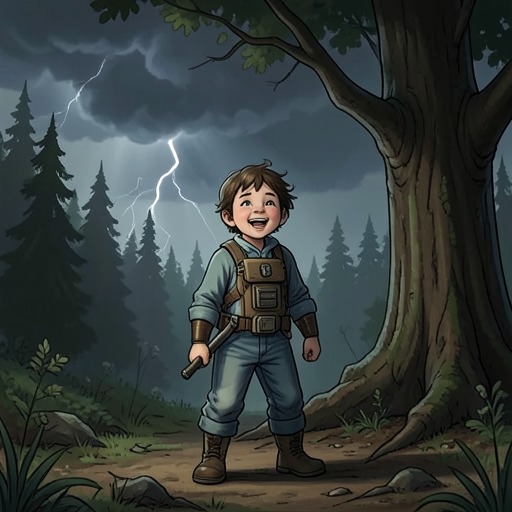
For Ronia, autumn first appears as a change in the year and in the danger of the woods. Although she is lonely, she misses no one in particular: her days are full of life and pleasure, yet pass quickly. The wild harpies grow more dangerous in autumn, and on one pursuit Ronia has to use her knowledge of the forest and escape by diving through a pool before hiding under a fir tree. The season therefore brings no sudden end to her independent life, but makes its hazards more immediate.
The season also alters the forest’s human affairs. As autumn sets in, the Sheriff’s men find Borka’s former robber den deserted, while the Robbers’ Walk becomes unexpectedly peaceful. Matt, meanwhile, spends much of his time scouting the North Fort for signs of Borka’s band. The autumn clouds and the robbers’ enforced inactivity leave them restless, extending the season’s effects beyond the landscape into the strained relations between the rival groups.
The Turn from Winter to Spring
Autumn’s hardships are sharpened by the winter that follows. Birk explains that his family’s supplies are running out: they have lost their goats and sheep, their remaining flour, turnips, peas, and salt fish are dwindling, and they have had to melt snow for water when they could not reach the buried stream. Their horses have been kept with a farmer beyond Borka’s Forest, a measure that has spared them from being eaten. The scarcity makes Ronia feel responsible for Birk’s thinness and hunger, even though he can still laugh about their poverty.
Spring eventually arrives as a vivid counterpoint. Snowmelt runs down the cliffs into a river that roars and foams, and Matt and his robbers ride through Wolf’s Neck as their outlaw life begins again. Ronia, kept indoors until then because Matt considers the spring forest dangerous, is finally allowed to return to the woods she has missed. The sequence makes seasonal change concrete: winter scarcity gives way to movement, flowing water, and renewed freedom outdoors.
Refuge, Supplies, and the Passing Year
When Ronia and Birk settle in Bear’s Cave, they make their independence practical. They arrange food, weapons, and tools, collect spring water, set a net in the river, and build a hearth from flat stones. Ronia cuts a bow and two arrows, using a length of her leather rope as the bowstring. Their choice not to live in fear of dangers that have not yet happened is balanced by the work of preparing for what they may need.
Their provisions remain tied to the forest’s seasonal resources. When the flour Ronia brought from home is gone and their final hard loaves have been baked on heated stones, they expect to manage through fish, forest birds, edible herbs and leaves, and the fruit ripening around fallen trees. Wild strawberries are already plentiful, while blueberries are still to come. Milk also runs short when their mare, Lia, no longer gives more than a few drops. They will not starve, Ronia believes, but the prospect of losing bread and milk makes the change in their diet a real cost of their chosen life.
Summer Held in Memory
During their refuge, Birk names the season directly: it is summer. Ronia says she will carry that summer in her memory for as long as she lives. Their words give the season a double meaning: it is the warmth and ease they are experiencing, and a memory they can keep when circumstances change.
They know summer cannot last, but begin living as if it will, trying to draw sweetness from every hour and pushing painful thoughts of winter aside. Ronia describes gathering summer into a great lump to live on later. This image makes their happiness neither ignorance nor a promise that hardship will not return; it is a conscious effort to preserve what the present offers against the coming season.
Autumn’s Return
The Unearthly Ones’ singing signals that the year has turned again. Ronia recalls Noddle-Pete’s association between their laments and autumn, and the narrative confirms the sign: summer has faded slowly, and persistent autumn rain sets in. Ronia, who usually likes rain, becomes troubled by its relentlessness.
The weather confines the pair in the cave for days. They cannot keep a fire going, and the cold drives them out to run in the forest for warmth; they return wet, wring out their clothes, and sit wrapped in furs watching for a break in the sky. Instead, they see only a wall of rain. Autumn thus returns as more than a calendar marker: it makes the limits of their summer refuge tangible, bringing the winter they had tried not to anticipate back into view.