Robber identity and moral choice
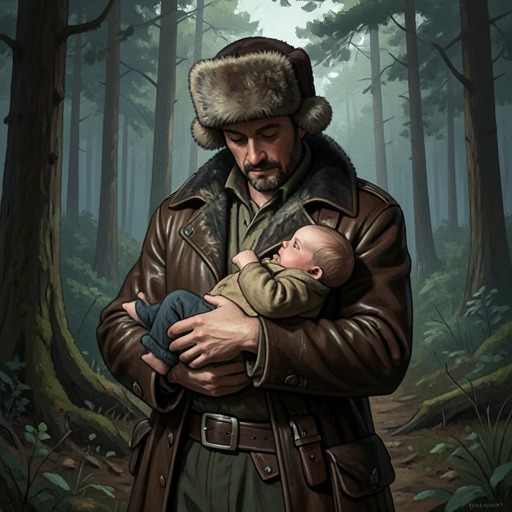
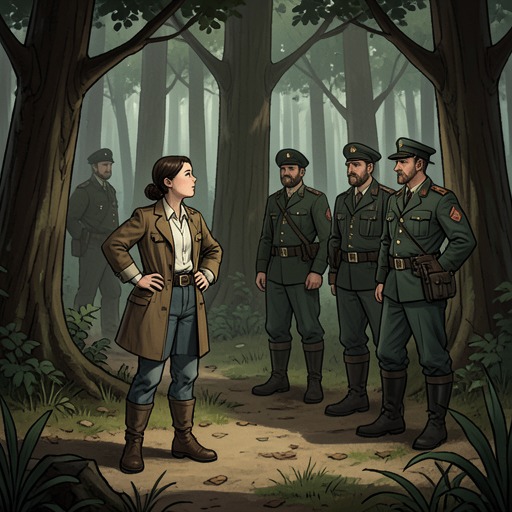
Ronja, the Robber's DaughterRobber identity and moral choice are tested against a plain fact: the goods the robbers bring home belong to other people. Matt calls robbery a family calling, a source of pride, and a role he expects Ronia to inherit; Ronia instead judges it by what it does to those who lose their possessions. Her developing refusal makes the difference between loving her father and accepting his conduct impossible to ignore, and later grows into a broader objection to continuing the robber’s life at all.
What Robbery Means
When Ronia asks what a robber really is, Matt explains that a robber takes things without asking and without permission. The explanation comes after the other robbers have gone to their rooms; Lovis is outside settling the animals, leaving Noddle-Pete as the only listener. Matt has usually boasted of being the greatest robber chieftain in the woods and mountains, but explaining the occupation to his daughter is harder. He admits that he had meant to tell her eventually, while wishing to delay the conversation because she was still an innocent child.
Ronia now understands where the clan’s goods come from. The things she has seen carried home on horses in sacks and bundles, and stored in chests and boxes, do not grow in the forest: her father takes them from other people. Her question about whether those people become terribly angry shifts the conversation from the robbers’ loot to its owners’ response. Noddle-Pete confirms that they rage; he adds that some cry. Their anger and grief are not abstractions to Ronia but the immediate human consequence of the acts Matt has been describing.
Matt insists there is no need to make a fuss: this is how things are and how they have always been. His appeal to custom makes the occupation seem settled, almost ordinary. Noddle-Pete’s answer undermines that reassurance: people do not simply get used to being robbed, but continue howling, crying, and swearing. The exchange exposes the distance between the robbers’ familiar language about their work and the distress of the people from whom they take things.
Inheritance and Justification
Matt presents his identity as inherited and honorable. His father and grandfather were robber chiefs, as was his great-grandfather; he says he has not let them down and calls himself the mightiest robber chieftain in the woods and mountains. He then treats Ronia’s succession as the natural continuation of that family line: she, too, is to become a robber chief. For Matt, tradition and filial inheritance turn a contested occupation into a source of belonging and pride.
Ronia’s answer is immediate: never, even if the robbed people become angry and cry. Her refusal directly connects the victims’ pain, already made vivid by Noddle-Pete, to her judgment of the profession. Matt is troubled because he wants his daughter both to love and admire him; her rejection of his calling threatens the approval he hopes to receive from her. He tries to persuade her that his conduct is right and good, first claiming that he takes only from the rich, then insisting that he gives to the poor.
Noddle-Pete punctures the generosity claim with a concrete measure of its rarity: Matt gives to the poor about once every ten years, give or take a year. The joke does more than tease Matt. It makes his self-defense answerable to its actual frequency, turning a grand moral claim into an occasional exception that cannot erase the recurring practice of taking from others. Matt’s satisfaction at first gives way to anger when Noddle-Pete supplies that measure.
Love, Responsibility, and Refusal
After Matt’s explanation and argument, Ronia can still lie listening to Lovis’s Wolf Song and love him as her Matt, whatever he does. That affection is not the same as agreement or admiration for his occupation. The scene holds both truths together: Ronia’s attachment to her father survives her discovery, while her understanding of what he does has already produced a clear moral refusal. Love does not make her adopt his account of robbery as harmless or inevitable.
The conflict sharpens when Matt’s pursuit of Birk becomes entangled with his claim to the family fortress. Ronia tells him that he can rob money, goods, and rubbish, but cannot rob people; if he does, she does not want to be his daughter anymore. Matt answers by describing Birk with contemptuous animal insults and presenting the removal of Borka’s people from his father’s fortress as a matter of finally putting the place in order. His language recasts a conflict involving people as the cleanup of a fortress, but Ronia refuses that distinction: her objection is not limited to the value or ownership of particular goods but to robbing people.
Her ultimatum makes kinship conditional on conduct in a way Matt’s inherited account of his calling had not allowed. He has presented the robber’s life as something passed down through generations and expected to pass to his daughter; Ronia insists that being his daughter cannot require accepting harm to other people. The dispute therefore reaches beyond whether Matt is personally loved. It asks whether family loyalty can serve as permission to continue a way of life that Ronia recognizes as injurious.
The Alternative to the Robber’s Life
Later, while Noddle-Pete imagines a single combat that might humble Borka and unite the two robber bands at Matt’s Fort, Ronia proposes a different solution: the most cunning idea would be to stop robbing. Her response rejects the assumption that the best outcome is simply a more coordinated robber band, even one that could misdirect the soldiers. The proposal extends the judgment she first formed when she understood where the sacks, bundles, and chests came from: the answer to conflict among robbers is not merely to arrange their robbery more effectively.
Noddle-Pete agrees that Ronia is right, but says he is too old and feeble to drum the idea into Matt’s skull. His response leaves a gap between recognizing the moral alternative and being able to bring it about. The episodes thus trace a shift from discovery to refusal to a broader principle. Matt’s defenses rely on inherited custom, selective charity, and the separation of robbing goods from robbing people; Ronia keeps returning attention to the people affected. Her refusal to inherit the robber’s identity is not a rejection of her father’s existence in her life, but a refusal to let love or tradition settle what is right.