Matt
Ronja, the Robber's DaughterMatt is the formidable chief of Matt’s robbers, but his defining conflict is not simply with Borka: it is the widening divide between his inherited robber identity and the values Ronia develops for herself. He loves his daughter deeply and wants her admiration, yet repeatedly defends a life built on taking from others. His eventual willingness to welcome Ronia and Birk back, followed by his negotiated settlement with Borka, shows a man capable of changing his relationships even when he does not abandon his position as chief.
Identity and Background
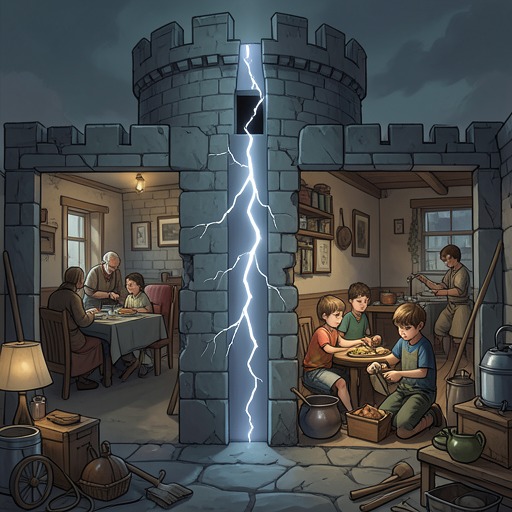
Matt belongs to a robber dynasty locked in a longstanding feud with Borka’s family. The hostility reaches back through their fathers and grandfathers, and their bands compete for plunder along Robbers’ Walk, the narrow mountain pass between Borka’s Wood and Matt’s Wood. To travelers, which band robbed them made little difference; to the two chiefs, the rivalry was a matter of life, livelihood, and inherited honor. The history gives Matt’s authority a family legacy, but also traps him in a cycle he treats as natural and enduring.
The contrast between public reputation and private affection is present from Ronia’s earliest understanding of him. She knows him as the bearded father who laughs, sings, and gives her porridge, not as the feared chieftain feared by people traveling through the woods. Matt’s tenderness is genuine, but it exists alongside the violence and theft that make his position possible. The story does not let either side cancel the other.
Fatherhood and the Robber Calling
On the night Ronia is born, a thunderstorm drives the forest’s goblinfolk into hiding while harpies circle the stronghold. At Lovis’s request, Matt shoots arrows through an arrow slit to drive the noisy creatures away so she can sing while giving birth. The episode places him in a protective domestic role: he obeys Lovis’s request and tries to make the fort quiet for the arrival of their child.
When he first holds Ronia, however, his love is bound to an image of himself. He studies her small features and hands, trembles with affection, and says that she already holds his robber heart in her little hands. Later he explains that his father, grandfather, and great-grandfather were robber chiefs and declares that he has not let them down; he expects Ronia to become a chieftain too. For Matt, passing on the calling is an act of family continuity as well as a claim about what a daughter’s future should be.
That expectation falters when Ronia understands where the robbers’ goods come from. She asks whether the people whose belongings are taken become terribly angry, and Noddle-Pete confirms that they do. Matt tries to guide her toward his own justification, insisting that he takes only from the rich. But when she refuses to become a robber chief, he is troubled less by a practical threat to his band than by the loss of her admiration. He wants her to believe that his conduct is right and good, and his unease exposes how much his authority as a father depends on her moral approval.
Conflict with Ronia and the Limits of His Defense
Matt’s defense of robbery rests on distinctions that Ronia will not accept. He treats wealth and goods as legitimate targets, but she draws a line between possessions and people. When she tells him he may rob money and goods but cannot rob people without losing her as a daughter, the dispute becomes a direct test of whether affection can survive a clash over his conduct. Matt answers by describing Birk as a thief and a captive to be used against Borka, and insists that Ronia may choose whether to remain his daughter. His language turns a personal and ethical protest into a contest of authority, deepening the estrangement she fears.
The conflict becomes concrete when Matt holds Birk with a rope around his neck and bargains with Borka over his departure from the North Fort. Borka condemns Matt for using his child to get what he wants. Matt refuses to discuss Borka’s judgment and presses for an answer about when he will leave. Although the exchange is conducted between rival chiefs, Ronia is close enough to see what her father’s power means in practice: the feud makes Birk an instrument in a territorial negotiation.
After the exchange, Matt says that he has no child. Borka had expected to return Birk and get his own son back in return, but Matt refuses that description of what has happened: he tells Borka to take his son, while insisting that he himself has no child to receive. The statement gives voice to the rupture between father and daughter. It does not erase his love for Ronia, but it shows him answering her rejection by disowning the relationship rather than resolving the moral disagreement.
Estrangement, Reflection, and Reconciliation
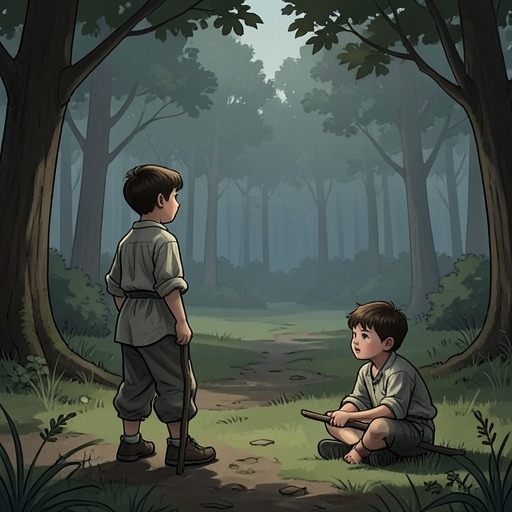
During Ronia and Birk’s separation from the fort, Matt remains present in her emotional life. When she tries to sing Lovis’s Wolf Song in the cave, remembering Lovis singing it for her and Matt back when life at Matt’s Fort was as it used to be brings such longing that she cannot continue. The remembered family ritual makes the cost of the estrangement visible without suggesting that Ronia has changed her decision to stand by Birk.
Months later, Matt asks Ronia with all his heart to come home. She is still choosing to remain with Birk, whom she cannot leave alone in the winter forest, and understands that answering Matt honestly will hurt him. Matt then turns to Birk and asks him to return to Matt’s Fort as well. He admits he does not yet like Birk, but recognizes that Ronia does and says he has had time to think. The invitation is a change in action and outlook: instead of demanding that his daughter separate herself from Birk, he makes room for the person she regards as her brother.
Matt’s words release Ronia from what had felt like an impossible choice between the two people she loves. Her relief is immediate, but Birk remains suspicious and uncertain, so reconciliation is not automatic. The scene’s significance lies in Matt’s opening of a way back: he cannot undo the estrangement by decree, but he can offer a home that no longer requires Ronia to abandon her chosen family.
Leadership, Rules, and the New Brotherhood
Matt’s final settlement with Borka also changes the shape of his inherited feud. Noddle-Pete proposes that the two chiefs settle their rivalry in single combat, after which their men can form one band and evade the sheriff’s men together. Ronia offers a more fundamental alternative, saying the most cunning idea would be to stop robbing. Matt does not take up that proposal. Instead, when he and Borka accept the prospect of one combined band, each claims the right to lead it, and Matt challenges Borka to fight for the position.
The contest follows the robber custom of a wild beasts’ match, in which nearly every trick and hold is permitted, with a specific prohibition on striking between the legs. Matt wins. Bloody-faced and wearing the remains of a torn shirt, he is recognized by the assembled robbers as chief. His victory resolves the immediate question of command, but his response to Borka is not simple humiliation: he calls him brother and promises that Borka may keep a chieftain’s name and continue with his own men. Matt also makes clear that his word will count for more from then on. Brotherhood and hierarchy thus coexist in the settlement.
That evening, Matt holds a feast in the stone hall for both groups of robbers. The united band marks a real change from the old division, though not a renunciation of robbery: Matt’s authority now extends over Borka’s men as well as his own. Set beside Ronia’s insistence that the robbers should stop robbing, the ending preserves the difference between reconciliation and moral conversion. Matt can soften the terms of kinship, welcome his daughter’s chosen brother, and make peace with his archenemy; the evidence does not show him giving up the calling Ronia rejects.