Ronia and Birk move back to Bear’s Cave
Ronja, the Robber's DaughterRonia and Birk move back to Bear’s Cave in spring, where their return marks a renewed choice of wilderness life rather than a break with family. Matt makes the move possible by accepting it without the tears and shouts Ronia had expected; the cave is again their home, and her spring yell turns arrival into an affirmation of freedom, familiarity, and the natural world they have learned to share.
The Decision to Return
As spring grows more vivid, Ronia begins to worry about telling Matt that she plans to live in Bear’s Cave again. The worry matters because her earlier departure from Matt’s Fort had made the cave a refuge from conflict, and she has reason to anticipate that her father may resist another move. Instead, Matt surprises her: he calls his old cave a fine place to live at this time of year and asks Lovis whether she agrees. His permission changes the emotional character of the return. Ronia does not have to leave in defiance or brace for a renewed quarrel; Matt himself opens the way.
Lovis tells Ronia to go if her father says so, while admitting that she will miss her. Matt treats the seasonal move as something that can happen again: he expects Ronia to come home in autumn, as usual. Ronia agrees, pleased and surprised that the arrangement has proved easy. She had imagined tears and shouting, but Matt appears happy at the prospect, remembering his own childhood pleasures in the old pigsty. His response does not erase the earlier strain between father and daughter, but it makes room for a form of closeness that does not require Ronia to give up her chosen life.
Matt also reminds Ronia that the cave is his and says he may visit from time to time. The detail keeps the move from becoming a simple severance: Bear’s Cave is the children’s home for the season, but it remains connected to Matt and to the family life at the fort. Birk welcomes the possibility of a visit, while privately anticipating the relief of not having to see Matt’s black curly head every day. The exchange holds affection and irritation together without undoing the practical agreement.
A Home in the Wilderness
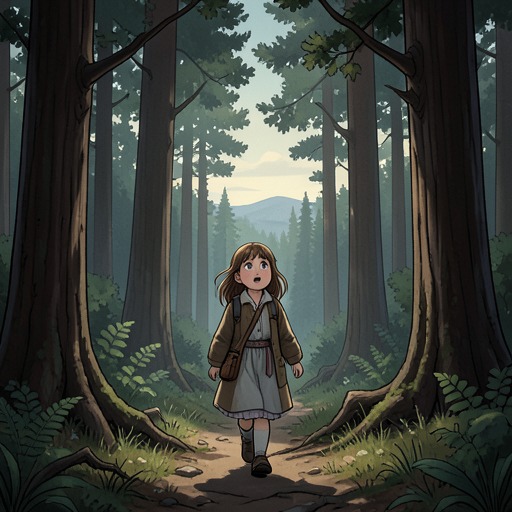
The return is presented as a walk through spring rather than as a flight from danger. Early in the morning, Ronia and Birk stroll through the woods toward the cave, surrounded by trees, water, green thickets, and a chorus of living sounds: twittering, rushing, buzzing, singing, and murmuring. The scene makes the move feel like a renewed entrance into a place already known, not an expedition into an unfamiliar refuge.
At the cave, everything is as before: safe and familiar, with the river rushing below and the woods in the morning light. This recognition gives the home its particular force. The cave is not valuable because it changes with the season, but because it remains dependable as spring changes around it. The text places novelty and recurrence side by side: spring is new, yet it is also the same as ever. For Ronia and Birk, returning therefore means recovering a familiar shelter without separating themselves from the living landscape around it.
Their choice also echoes the principle that the woods are not private property in any simple sense. Earlier, Birk had challenged Ronia’s claim to the fox cubs and to “her” woods, insisting that the forest belonged to the animals and other living things as well. The spring scene’s abundance—trees, water, thickets, and the sounds of life—makes the cave a home within a shared wilderness, not a territory the children can own or command. Their return renews their place in that world on terms shaped by coexistence.
Seasonal Life and the Animals
The move follows a season in which Ronia and Birk have repeatedly had to adjust their wishes to the needs and choices of animals. Sitting together in spring, they watched fox cubs play outside their den, squirrels moving through the treetops, hares crossing the moss, and a pregnant snake resting in the sun. They left the animals undisturbed; Ronia recognized that spring was for everyone. That moment prepares the ethic of their return: the wilderness is not merely a backdrop for human freedom but a home shared with other lives.
Their experiences with the horses have made the same point through struggle. Ronia persisted in learning to ride Villain, holding fast when he bolted through the forest and threatened to throw her. Birk caught up on Savage and stopped the runaway horse, giving Ronia the chance to regain her seat and calm Villain. Yet the children’s relationship with animals is not simply one of mastery. When Lia’s milk was nearly gone, Ronia thanked the mare and acknowledged that the milk belonged to Lia’s next foal. Lia later returned to her herd and remained wild, answering Ronia’s calls with a whinny but never leaving the other horses to join the children. The distinction between affection and possession is central to the life Ronia and Birk resume at the cave.
The Meaning of the Return
The return also stands against the way Ronia first came to understand her father’s calling. Hearing the robbers’ talk, she realized that their goods came from other people, and she asked whether those people became terribly angry when their possessions were taken. Matt then described robbery as a family inheritance, expecting Ronia to become a robber chief after him; she rejected that future. Later she drew a sharp boundary between taking goods and robbing people, telling Matt that she would no longer be his daughter if he harmed people. And when Noddle-Pete devised a plan to unite the robber bands, Ronia stated that the most cunning idea would be to stop robbing. Those refusals establish that her freedom at Bear’s Cave is also a moral choice: she will not make her father’s occupation the condition of belonging to him.
The spring return does not resolve that conflict by persuading Ronia to become a robber or by erasing her differences with Matt. Instead, the seasonal arrangement allows the relationship to continue without that submission. She can leave for the cave and still promise to come back in autumn; Matt can accept the choice while keeping a connection to her and the place. The pattern makes home plural and movement recurring, rather than forcing Ronia to choose between wilderness and every family tie.
At the cave, Ronia tells Birk not to be afraid because her spring yell is coming. She then cries out, shrill as a bird, with a shout of joy that carries far through the forest. The yell gathers the scene’s central contrasts: a familiar cave reached in a newly alive spring, a child’s independence held alongside family connection, and a human voice joining rather than silencing the wilderness. Ronia and Birk are home again, not because the world has become theirs, but because they can live freely within it.