Rumphobs
Ronja, the Robber's DaughterRumphobs are friendly, peaceable inhabitants of the forest who live in underground holes and speak in a distinctive dialect. Their encounters with Ronia and Birk turn small mishaps into vivid reminders that the woods have inhabitants and purposes beyond the children’s own: a rumphob’s roof can be broken, a baby can be woken, and even a rescued mare’s fate can be understood from a rumphob’s unsparing point of view.
Identity and Habitat
Rumphobs are recognizable by their broad rumps, wrinkled little faces, and scrubby hair. The narrator describes them generally as friendly and harmless, but also shows them responding with displeasure when someone damages their home. They make underground holes when they cannot find a suitably rotten tree in which to live. In winter, a layer of snow can conceal those homes from people moving across the surface, turning ordinary ground into a roof that can be broken through without warning.
They are part of a forest community that Birk insists does not belong to humans alone. When Ronia claims the fox cubs and the woods as her own, he names the foxes, wolves, bears, elk, wild horses, owls, buzzards, wood pigeons, hawks, cuckoos, snails, spiders, and ants as fellow inhabitants; then he adds the wild harpies, gray dwarfs, rumphobs, and murktrolls. The exchange gives the rumphobs a place within a crowded, interdependent woodland, rather than treating them as a strange exception to a human-owned landscape.
The Snow-Covered Home
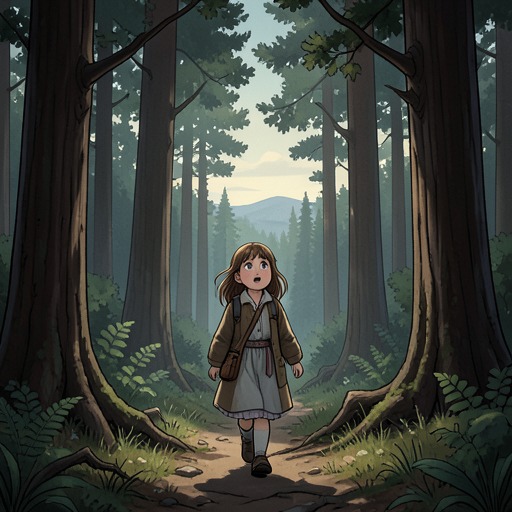
One winter, Ronia races down a steep slope on skis. She loses one ski in midair and lands with her foot wedged in a deep hole, stuck up to the knee. At first she laughs, but she soon realizes she cannot pull herself free. A party of rumphobs comes laboring up through the snow, and their puzzled annoyance makes clear that Ronia has not merely trapped herself: she has broken into their home.
The rumphobs repeatedly ask why she has broken their roof. Their distressed refrain presents the incident from the residents’ perspective: what Ronia experiences as a skiing accident is, for them, a breach of the shelter they made underground. When Ronia tugs at her leg, she discovers that something heavy is hanging from her foot. The rumphobs explain that their little boy is hanging there in his cradle. Their practical concern is not an abstract fear of intrusion but the immediate danger to a baby and the indignity of having a human foot lodged in their ceiling.
Ronia asks them to help her, but they continue to stare and lament rather than freeing her. Birk eventually arrives and lies beside the hole, reaching in to work her leg loose. Once he succeeds, the rumphobs are angry: their little one has been woken and has dirt in his eyes. Ronia cries, while Birk hands back her ski and urges her to stop so she can get home. The episode ends without a reconciliation or a formal apology; instead, its comic mismatch of scale leaves the rumphobs’ domestic grievance plainly intact.
Encounters Beyond the Snow
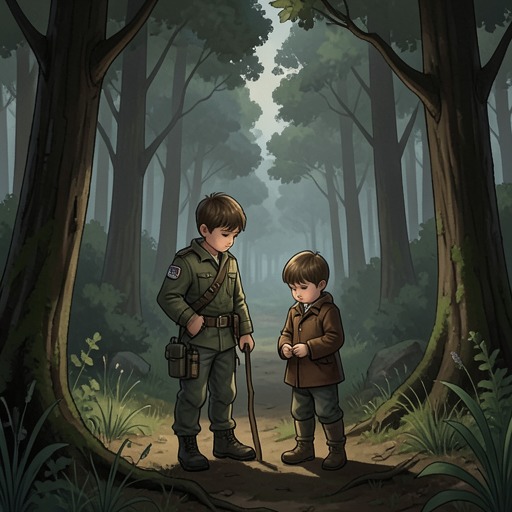
Rumphobs appear again during Ronia and Birk’s care for an injured wild mare. The children have pressed moss into the mare’s wound and bound it with leather ropes. A rumphob unexpectedly peeks out from behind a pine and asks darkly what they are doing. His question punctuates a scene already shaped by danger: the children understand that a bear has gone, because bears and wolves avoid the shadow folk, including rumphobs, murktrolls, harpies, and gray dwarfs. The first smell of the shadow folk is enough to send a bear silently away into the forest.
The rumphob then comments on the foal, observing that it is finished and no longer running. Ronia answers sadly that they know. The remark is brief, but it gives the creature a blunt, independent presence within the vigil: he does not share the children’s human circumstances, yet his words register the foal’s death without sentimentality. Ronia and Birk stay with the injured mare all night, while the rumphob’s observation frames the loss they cannot undo.
Narrative Significance
The rumphobs’ appearances make the forest’s hidden life visible through its vulnerabilities. Snow is not just a surface for Ronia’s skiing; it is a roof. A hole is not empty ground; it is a home with a child sleeping in a cradle. Their repeated, plaintive questions turn an adventure into an encounter with the consequences of crossing into another creature’s living space.
Their presence also sharpens the book’s rejection of human possession as a natural right. Birk’s insistence that woods belong to all their inhabitants supplies the broader principle, while the rumphobs embody it in specific, memorable circumstances: they have built shelter, raised a child, and suffered an intrusion. In the mare episode, their relationship to the shadow folk further shows that the forest’s inhabitants occupy their own network of danger and avoidance, not merely a backdrop to human affairs. Across these scenes, the rumphobs are comic without being disposable: their dialect invites laughter, but their home, baby, and judgment of loss remain real within the story.