The Unearthly Ones
Ronja, the Robber's DaughterThe Unearthly Ones are mysterious beings from the underground whose plaintive songs rise through the forest when fog settles. Their power is shown not through a visible encounter but through its effect: Ronia nearly abandons the path and everything she knows to follow the music, while Birk’s memory of that danger later turns an ordinary mist into a threat. Their song is both an enchantment and a seasonal signal, joining supernatural peril to the slow passage from summer toward winter.
Identity and Appearance
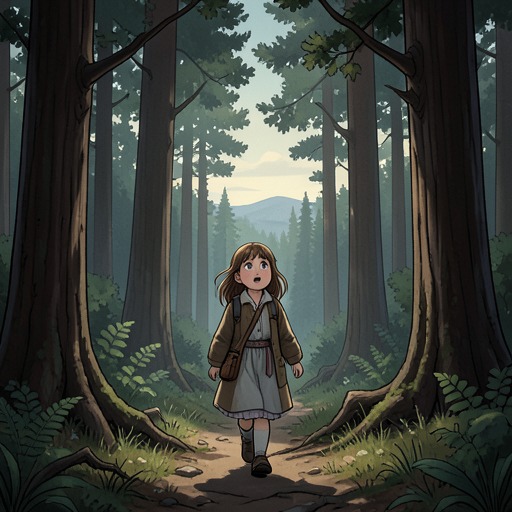
The beings are associated with dark places beneath the forest and with the fog that closes in over the woods. Ronia knows of them before hearing them, having heard that they come up from underground only when the mist gathers. The narrative offers no bodily description or account of their underground world; instead, it makes their presence audible. Their song is soft and sweetly plaintive at first, then grows louder until it seems to fill the forest. That emphasis on sound leaves the singers unseen while making their influence unmistakable.
Their music is beautiful rather than immediately frightening. It comforts Ronia when fear has overwhelmed her in the fog, but the comfort carries an invitation away from safety. She senses that the singers want her to leave the path and follow them into darkness. As the song strengthens, she forgets the Wolf Song she expects to hear at home and loses sight of everything except the desire to go to those calling from the mist. The danger works by turning solace into longing, not by confronting her with a visible enemy.
The First Luring and Birk’s Intervention
During the first encounter, Ronia is already frightened and calls to Birk, but her voice is little more than a squeak. The singing then reaches her from the thickest mist, and its beauty briefly stills her fear. When she steps off the path and cries that she is coming, Birk pulls sharply on the leather rope linking them, sending her headlong. He warns her that if she lets herself be tempted away by the Unearthly Ones, she will be lost.
Ronia knows what the beings are, yet knowledge does not protect her from the song. She wants to follow them wherever they go and would accept spending the rest of her life underground. Birk holds her fast as she repeatedly tries to go, even after she shouts at him and strikes out. The song becomes so powerful that she cannot hear his efforts to calm her; she hits, scratches, screams, cries, and bites his cheek. His physical restraint is the decisive counterforce to a lure that has taken over her attention.
The danger ends when the fog lifts as swiftly as it came, and the song dies at the same moment. Ronia looks around as if newly awakened from a dream: the path home is visible, the red sun is sinking behind the wooded ridges, and Birk is still beside her. The abrupt return of ordinary surroundings makes the episode feel like a crossing into and back out of an altered state, while the bite leaves a lasting trace. Birk later remembers the little scar on his cheek as evidence of the encounter and of how fiercely he had to hold on to her.
Memory, Attachment, and Recurrence
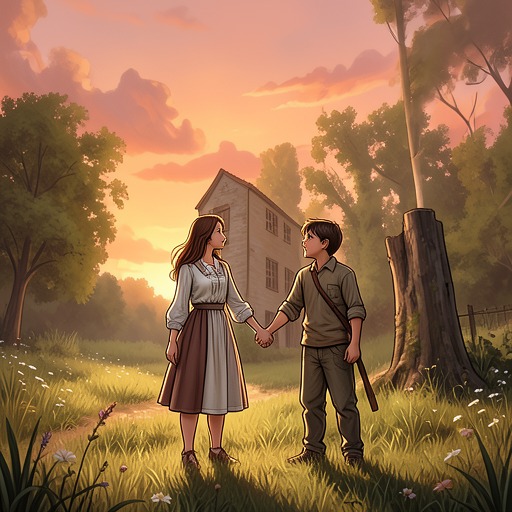
Years later, as evening mist moves over the river, Birk recalls fighting the Unearthly Ones for Ronia. He believes she may not even know that she was once susceptible to their power, since they never spoke about what happened afterward. In the same memory he admits, to himself, that he liked her from the first time he saw her, although he never told her. The remembered rescue therefore binds supernatural peril to a private history of affection, silence, and hurt.
When Ronia has not returned to Bear’s Cave, Birk’s recollection intensifies his anxiety. He imagines the mist spreading through the woods and wonders who will protect her from the beings’ wiles this time. Though he tells himself that her safety is no longer his business, he goes searching for her. The earlier encounter has taught him that the threat can make Ronia leave the path while believing that she is choosing to answer a welcome call; his fear is not simply of fog, but of losing her to a danger she may not recognize.
A later gathering of mist brings the song back within their shared life. As Ronia and Birk go down to the stream for water, the fog rises over the forest. Birk puts down his bucket and takes a firm hold of Ronia’s arm without telling her what he fears. When the familiar lament comes from far away, she recognizes it and exclaims that at last she can hear the Unearthly Ones. Birk asks whether she has heard them before. She says she has not, despite the earlier episode, and explains that they want to lure people down to the Underworld. The contrast between his protective memory and her apparent lack of recollection leaves the old danger present but differently understood by each of them.
Seasonal Meaning and Narrative Role
The later scene also gives the song a meaning beyond immediate peril. Ronia remembers Noddle-Pete’s saying that when the Unearthly Ones come up into the forest with their laments, it is autumn and winter will soon follow. As she and Birk wait for the mist to lift enough to find their way home, the eerie music becomes a sign of the year’s turning. The beings’ appearances connect a particular supernatural threat to a recurring natural pattern: their lament sounds the end of summer and the nearness of winter.
The Unearthly Ones thus occupy two registers at once. In the first encounter their song threatens Ronia’s freedom and safety by overwhelming her judgment; in the later one, its recurrence also names the season changing around her and Birk. The narrative keeps the singers largely out of sight, concentrating instead on what the music does: it draws, disorients, leaves a scar in memory, and returns with the fog. Their absence from view preserves the mystery of who they are, while the concrete consequences of their song make the danger—and Birk’s vigilance—real.