Wolf's Song
Ronja, the Robber's DaughterWolf's Song is the lullaby Lovis sings at the close of each day, first in the stone hall of Matt’s Fort and later in the cave where Ronia and Birk make a home. Its significance lies in that movement: the familiar song marks the security of Ronia’s childhood, then follows her into exile, where singing it cannot erase the distance from her mother but helps give a new household its own rituals.
The Song at Matt’s Fort
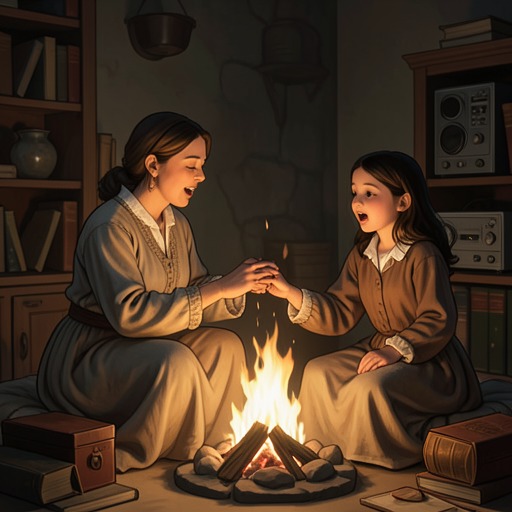
Ronia has heard Lovis sing Wolf's Song at night for as long as she can remember. In the stone hall, where only Ronia, Matt, and Lovis sleep, the song has a practical place in the household’s rhythm: it tells the robbers that it is time to leave the fire and go to their bedrooms. For Ronia, however, the ritual is more intimate than a signal to sleep. She lies in bed watching the fire flare and die through a gap in the curtains while her mother sings, and the familiar sound accompanies her happy thought that she will wake again tomorrow.
The song also gives shape to the recurring end of the day. After Ronia learns that Matt is a robber chief and refuses to follow him into that life, she still loves him as her father. At the close of that evening, Noddle-Pete leaves, Ronia goes to bed, and the fire dies as Lovis sings. The song’s routine does not settle Ronia’s judgment about robbery; instead, it holds together the ordinary family tenderness that persists even as her understanding of Matt’s work changes.
Leaving the Familiar Ritual
When Ronia decides to leave Matt’s Fort for Bear’s Cave, the nightly song becomes part of the cost she knows she will pay. Lovis sings as she always has, at the end of the day, whether it has been glad or sorrowful. Ronia thinks that it will be the last night she hears it. Leaving her mother is hard, but ceasing to be Matt’s child feels harder; nevertheless, she believes she must go into the woods, even if that means never hearing the song again.
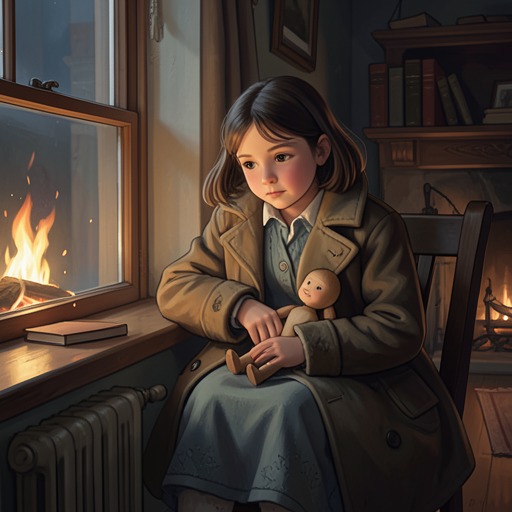
The departure is rendered through listening and waiting rather than a spoken farewell. Ronia lies in bed watching the fire until Lovis falls asleep, then creeps out and stands for a long time looking at her sleeping mother in its light. The song is absent from this final vigil, but its habitual place at bedtime gives the silence its force: Ronia is leaving not merely a fortress but the nightly sound by which home has repeatedly been made familiar.
Carrying the Song to Bear’s Cave
At the cave, Birk has prepared a fire, food, and fir-branch beds for Ronia. He has cleaned the space after a bear’s winter sleep and gathered kindling and branches, making a practical shelter where the two can begin living together. He jokes that she should eat before she sings Wolf's Song, and Ronia tries to sing it for him as they lie down. Remembering how Lovis sang for her and Matt when life at Matt’s Fort was still as it had been, she feels such a pang of yearning that she cannot continue.
The failed attempt marks the difference between carrying a custom and recreating its original comfort. Ronia has left the song behind in one sense, but she brings its memory into the cave, where it makes the former home newly present. Birk’s patient preparation and the shared fire offer the beginnings of another home, yet they do not replace Lovis’s voice or undo the separation.
A New Household’s Nightly Practice
The next time Ronia sings in the cave, after a day of walking, running, carrying, and organizing, she manages to finish more successfully. The pair have eaten bread, sheep’s cheese, and mutton and drunk spring water; as night comes, tiredness gives way to thoughts of the family they left behind. Singing the song for Birk, Ronia asks whether their parents are thinking about them and whether they will be sorry. Birk answers that it would be odd if they were not. The familiar lullaby thus becomes a passage from shared work into homesickness and concern for both families.
Its meaning changes without losing its connection to Lovis. At Matt’s Fort, Lovis’s song repeatedly closes the household’s day; at Bear’s Cave, Ronia offers it to Birk, attempting to give their new life a remembered form of comfort. The attempt is not effortless or emotionally neutral: the first night she cannot sing through her yearning, and even the later performance brings sadness. Yet the song can be shared, and the cave’s fire and beds become the setting for a new nightly bond rather than a return to the old household.
The Song Beside the Forest’s Other Lives
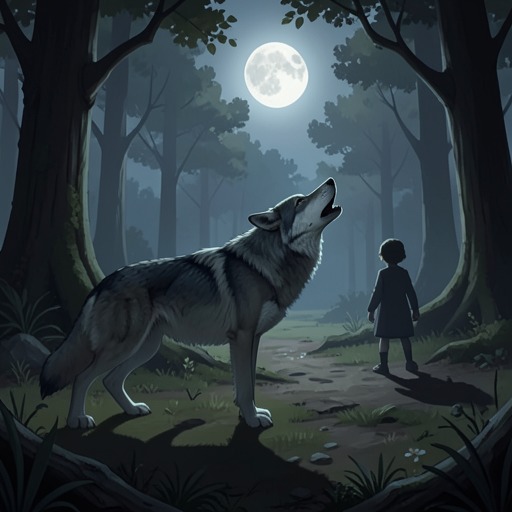
The story places this human ritual within a woodland world that Ronia and Birk learn not to treat as their possession. When Birk challenges Ronia’s claim to the fox cubs and the woods, he names the many creatures who live there; later, the children sit among birds, squirrels, hares, fox cubs, and a pregnant snake without disturbing one another. Ronia agrees that a horse should not simply be taken from the woods where it belongs. These scenes give the song’s domestic meaning a wider setting: home is made through care and coexistence, not merely through a claim of ownership.
The distinction is also visible in the children’s relations with the horses. Ronia persists in learning to ride Villain, gripping his mane and holding on as he bolts through the trees; Birk has to overtake him on Savage and stop him before Ronia is thrown. By contrast, when the injured mare Lia no longer wants to be milked, Ronia thanks her and acknowledges that the next foal’s milk will belong to the foal. Lia returns to her herd and answers when called but never leaves it to join the children. The text thus lets animals retain their own choices even as Ronia makes a home and builds rituals among them. Against that larger movement toward respect for other lives, Wolf's Song is not a claim on the forest but a small human inheritance: a mother’s familiar nightly care, remembered, mourned, and offered anew.