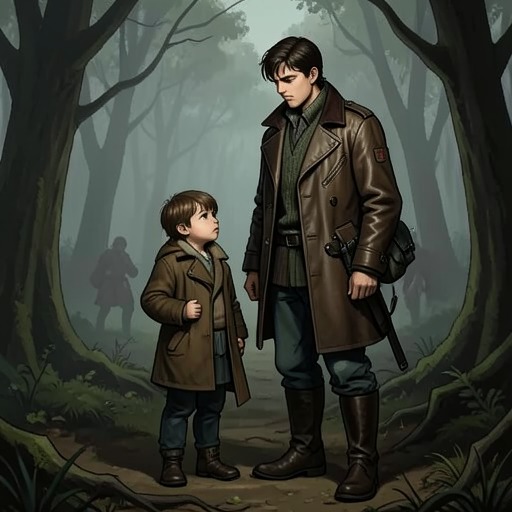
Birk swears never to become a robber
Ronja, the Robber's DaughterBirk’s oath never to become a robber is the decisive refusal in the reconciliation of Matt and Borka: just as the two fathers reunite their bands and imagine their children carrying on the tradition, Birk publicly rejects that future. His spoken vow changes the meaning of the feast. The old chiefs can settle their rivalry, but they cannot command their children to inherit their calling.
Background: A Calling Expected to Continue
Matt has described robbery not as a choice but as a family inheritance. He tells Ronia that his father, grandfather, and great-grandfather were robber chiefs and declares himself their successor, the mightiest chief in the woods and mountains. He expects Ronia to become one too. She answers with an emphatic refusal, insisting that she will not be a robber even if the people robbed grow angry and cry. Her judgment begins with the people who suffer the theft, while Matt tries to defend his occupation by saying that he takes only from the rich.
The dispute becomes more than a clash over what Ronia should do when Matt’s conduct threatens the children’s bonds of kinship. Ronia tells him that he may take goods, but he cannot rob people without risking her rejection as his daughter. Later, when Matt holds Birk with a rope around his neck to pressure Borka into leaving, Borka calls using his child to achieve that aim vile. The fathers’ inherited code of force and authority is therefore already being tested against the children’s independent moral judgments before Birk makes his own vow.
Ronia’s objection is not merely personal distaste for a dangerous occupation. She has asked whether the robbed people become terribly angry, and heard Noddle-Pete relish their howling, crying, and swearing. The pleasure the old robber finds in their distress makes plain the gap between the robbers’ amusement and their victims’ suffering. Ronia’s later judgment that the cleverest plan would be to stop robbing altogether gives that objection a direct, practical form.
The Feast and the Assumption
The oath takes place after Matt and Borka settle their rivalry through a wild beasts’ match. In this contest, the men may break, tear, bite, scratch, and kick, but a blow between the legs is forbidden and brings immediate defeat. Matt wins, bloody-faced and in the remnants of his shirt, and declares that Borka will keep a chieftain’s name and fame and continue with his own men, while Matt’s word will carry greater authority.
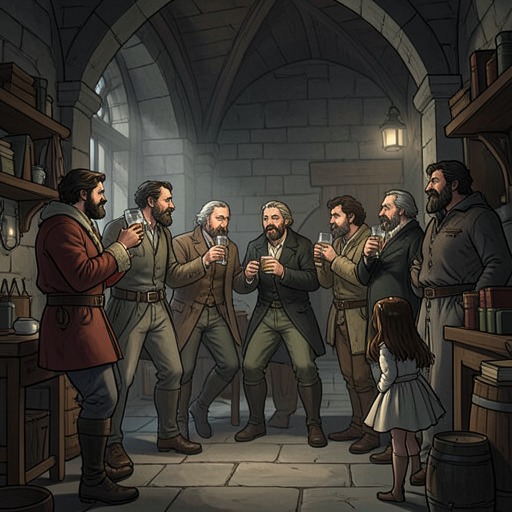
That evening Matt holds a feast for both bands in the stone hall. As the beer and food go around, the chiefs recall childhood adventures, including hunting rats together in an old pigsty. Their laughter and tears turn a long-standing feud into something resembling brotherhood. Birk and Ronia sit at the far end of the table, and their laughter delights the fathers, who have scarcely become accustomed to having the two children back in Matt’s Fort.
In this mood of reunion, Matt consoles Borka by imagining a future succession. Better times may come for Borka’s band, he says: when the two chiefs are gone, Borka’s son will presumably lead, since Matt’s daughter refuses the role. He adds that Ronia’s refusal comes from her mother. Borka is delighted by this prospect, but Ronia calls across the table to ask whether Birk actually wants to become a robber chief. Borka answers confidently that he does.
The Oath and Its Immediate Effect
Birk does not leave the assumption unanswered. He strides across the floor to a place where everyone can see him, raises his right hand, and swears solemnly that he will never become a robber, no matter what happens. The gesture makes the refusal public: this is not a private hesitation or a promise made only to Ronia, but a declaration addressed to the assembled robbers and to his father, who has just assigned him a future without asking him.
The hall falls into dismal silence. Borka tearfully laments that his son has let the family down, while the certainty with which he had predicted Birk’s succession gives way to grief. Matt responds by drawing on his own experience with Ronia’s refusal: he has had to get used to children doing as they like, he says, and Borka will have to do the same. His words offer sympathy, but they also concede the limit of a father’s authority. Neither chief can make a child embrace the inherited life.
Meaning and Aftermath
Birk’s vow echoes Ronia’s earlier rejection of Matt’s claim that robbery is a family duty. The children reach the same refusal from different positions: Ronia directly challenges the harm done to people, while Birk’s oath rejects the robber’s identity and future he is expected to inherit. Together their decisions expose the contrast between the chiefs’ pride in lineage and the children’s insistence on choosing for themselves.
The oath does not dissolve the newly united band or immediately end the robbers’ way of life. After the silence, Matt and Borka gradually return to their childhood memories and decide to enjoy the feast despite their headstrong children. The robbers answer the gloom with songs and vigorous dancing; Birk and Ronia join in, and Ronia teaches him robber leaps. That ending holds inheritance and refusal side by side: Birk can participate in the community’s dance without accepting its calling. The chiefs, meanwhile, sit looking toward a future in which their proud robber life may exist only as a legend.