Borka’s Wood
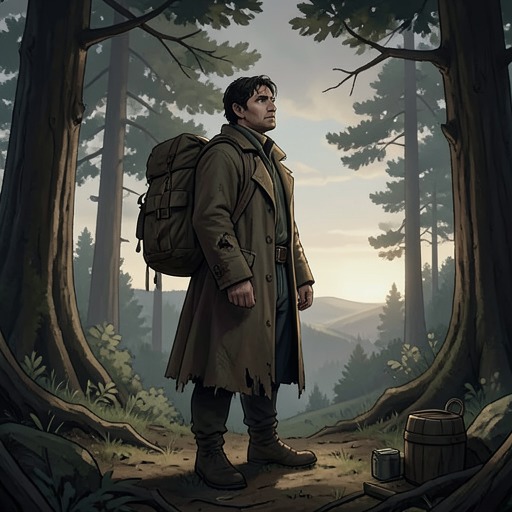
Ronja, the Robber's DaughterBorka’s Wood is the forested territory associated with Borka and his robbers, and one side of the narrow mountain pass called Robbers’ Walk. The place gives the feud between the Borkas and the Matts a landscape: people passing through risk robbery, rival bands contest the same routes, and the woods remain home to a far wider community of living things than either clan can claim.
Territory and the Robbers’ Walk
For generations, the Borkas and the Matts have been archenemies. Both families are known as robbers and terrorize travelers with horses and wagons in the deep forests where they lie in wait. Robbers’ Walk, the narrow pass between Borka’s Wood and Matt’s Wood, is a focal point of that danger. To the people who are robbed, it scarcely matters which gang takes their goods; to Matt and Borka, the distinction is enormous. They fight over the booty and even rob one another when too few merchants pass through the route.
The forest is therefore not merely a backdrop to the feud. Its paths sustain the rival gangs’ livelihood and bring them into competition, while its reputation reaches beyond the people who inhabit it. The saying that travelers should fear a journey along Robbers’ Walk reflects the everyday danger created by the men who watch the pass.
Borka’s Stronghold and the Pursuit
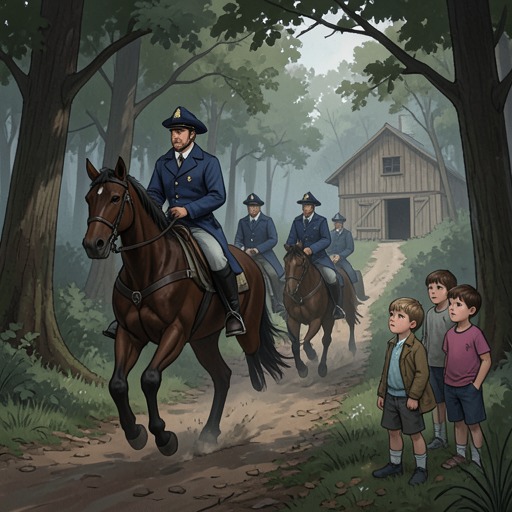
Borka’s Wood is also the setting for the authorities’ pursuit of Borka’s band. Matt hears that the sheriff’s men are hunting Borka there and may soon drive him from his robbers’ den. Although Matt regards Borka as a scoundrel, he admits that the relentless pursuit leaves his enemy no peace; his sympathy is qualified by the rivalry between them.
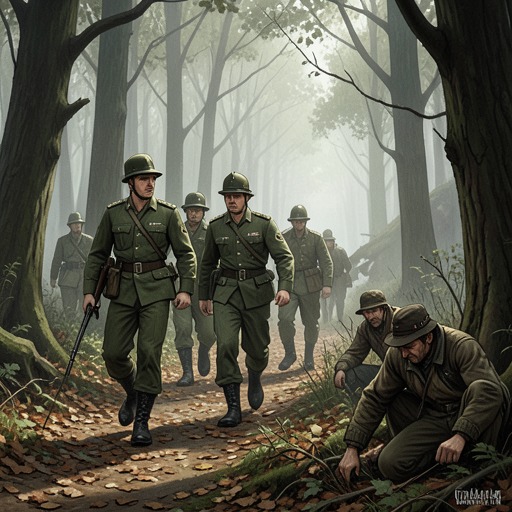
By autumn, the sheriff’s men find the cave that had served as Borka’s den, but it has been abandoned and stripped of loot. There is no sign of Borka. The soldiers, glad to leave the dark, cold, rainy forest, do not discover where the band has gone. Their departure leaves the woods without the visible presence of Borka’s gang, but does not resolve the conflict: Borka’s robbers have moved to the North Fort, and Matt spends his time scouting for them there.
The change is also felt along Robbers’ Walk. With the Borka band occupied elsewhere and Matt’s men less active amid the standoff, travelers are surprised to find the pass unusually free of robbers. The apparent peace is a consequence of the bands’ preoccupation, not evidence that the robber threat has ended. The sheriff’s men know robbers remain elsewhere in Matt’s forest, but consider that territory too dangerous to pursue them into.
A Shared Wilderness
The forest’s ownership is challenged directly when Ronia and Birk quarrel over fox cubs near their den. Ronia calls them her cubs and insists that Birk leave her woods. Birk answers that fox cubs belong to themselves, and that the wood is also home to wolves, bears, elk, wild horses, birds, insects, wild harpies, gray dwarfs, rumphobs, and murktrolls. His answer shifts the argument from competing human claims to the many lives that already inhabit the place.
That principle is borne out in the spring clearing where Ronia and Birk sit without disturbing the animals around them. Blackbirds and cuckoos sing; fox cubs play nearby; squirrels cross the treetops; hares appear and vanish among the bushes; and a snake about to give birth lies in the sun. Neither the children nor the snake disturbs the other. The scene presents spring as shared among different kinds of life, rather than as property reserved for human use.
Horses and the Limits of Possession
The wild horses make that boundary between human desire and animal freedom concrete. After watching them graze, Ronia accepts Birk’s point that she should not take a horse away from the woods where it belongs, even though she still wants to ride. Later, she persists in trying to ride Villain. When he bolts through the firs and pines, she clings to his mane and grips with her knees; Birk catches up on Savage and brings the pursuit to a halt, and Ronia stays on Villain and praises his running until he calms.
Lia, the mare the children have been milking, sets a different limit. When she gives only a few drops and makes clear that she has had enough, Ronia recognizes that the milk is for Lia’s coming foal, not for the children. She thanks the mare, and Birk does the same. Lia follows them a little way before returning to her herd. They later see her and hear her whinny when called, but she never leaves the herd to join them: she remains a wild horse, not a domestic animal. Villain and Savage, by contrast, run eagerly to Ronia and Birk and enjoy racing with riders through the forest.
The forest’s inhabitants also shape what the riders can do. When a wild harpy pursues Ronia and Birk one evening, the horses panic and cannot be guided. The children have to dismount and let them run; the harpy’s hostility is directed at the human beings, not at the animals. Across these encounters, Borka’s Wood and the surrounding wilderness appear not as empty territory to be claimed, but as a living place whose inhabitants act, resist, and set terms of their own.