Borka’s band moves into the North Fort
Ronja, the Robber's DaughterBorka’s band moves into the North Fort, transforming the empty northern half of Matt’s lightning-split fortress into a rival stronghold and making an old family feud impossible to ignore. The occupation begins as a surprise, becomes a source of escalating conflict between Matt and Borka, and ultimately exposes the difference between inherited hostility and the bonds the younger generation chooses for itself.
The fortress divided
The move depends on a division made before Borka’s band arrives. Lightning cleaves the ancient fortress on Matt’s Mountain from battlements to dungeon vaults, leaving a chasm between its two halves. Matt is furious that his forefathers’ stronghold has been split, while Lovis stands with the baby Ronia beside the shattered wall and observes the disaster. The break is physical, but it also makes rival occupation possible: the northern half can be entered and held apart from Matt’s side.
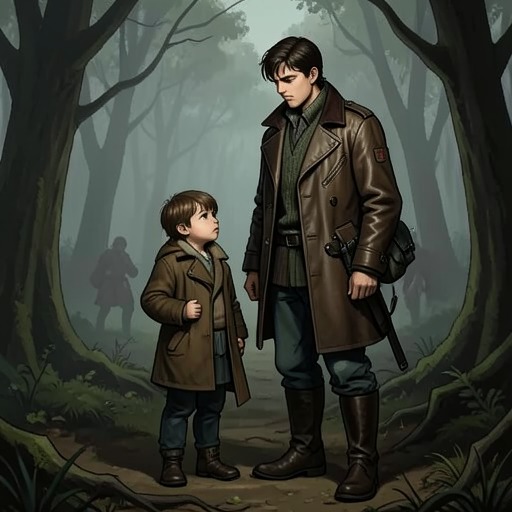
Borka’s announcement gives that altered geography a new political meaning. When Ronia discovers Birk in the woods, he tells her that he lives there and that his family moved in the previous night. Asked who has come, he names Borka, Undis, himself, and their twelve robbers. Ronia struggles to accept that the whole North Fort is occupied, and her first response is to call its new residents enemies in the language her own side has taught her. Birk answers with the mirror image: the Borka robbers are decent, he says, while Matt’s side is supposedly full of villains.
The conflict is not only about who sleeps behind which wall. Birk insists that the northern half is no longer the North Fort: since the move, it is Borka’s Keep. Naming the place asserts a claim to it. Ronia hears the name as an insult and threatens that Matt will scatter Borka’s men, but the new title has already made the division tangible in speech as well as stone.
Entry through an old passage
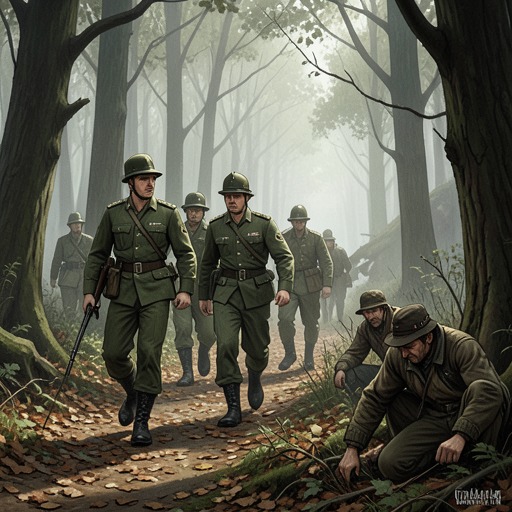
Borka later explains how the band got inside. He describes Birk as a little climber who scaled the steep wall with a long, strong rope trailing behind him. Birk secured the rope above, allowing the rest of the band to follow; once up, they could walk into the keep and set about making it their robbers’ den. The account turns the occupation into an act of practical ingenuity rather than a breach of the fortress by force.
The route also reveals that the supposedly sealed stronghold was never entirely inaccessible. Borka reminds Matt of a small door on the north side, built so servants could go out to feed the pigs when the fortress functioned more like a gentleman’s home. He connects the entrance to their shared childhood: the place of the old pigsty where the boys once caught rats before Matt’s father found them and boxed Borka’s ears. Matt remembers his father approvingly; Borka recalls the same man as a bully who taught him that every member of Matt’s clan was his enemy. The entrance is therefore both a neglected architectural feature and a reminder of how old hostility was made and passed on.
The occupation changes daily life beyond the keep as well. During the period of confrontation, little robbery takes place: the Borka robbers have other concerns, and travelers on Robbers’ Walk find the route unexpectedly peaceful. The sheriff’s men discover that Borka’s former cave den has been abandoned and emptied of loot. With autumn arriving, they are glad to leave Borka’s Wood; they know robbers remain in Matt’s Forest but prefer not to pursue Matt there. The bands’ relocation thus alters not just control of the fortress but the pattern of danger across the surrounding roads and woods.
A feud held in suspense
Matt responds to the occupation by spending much of his time trying to work out what the Borka robbers are doing and how he can reach them. He scouts the northern wood with one or two men, but the invaders remain difficult to see. Their silence makes the keep seem nearly empty, even as they prepare for defense. The rope ladder is lowered only once in Matt’s sight, and he rushes toward it with his robbers close behind. Arrows from the keep’s loopholes drive them back; Little-Snip is wounded in the thigh and has to stay in bed for two days. The failed rush shows the cost of trying to turn the division into a direct assault.
Ronia, meanwhile, comes to see the occupied half differently. While shoveling snow, she realizes that she has opened a way into Borka’s Keep—a route Matt might use to attack Borka if he learned of it. She does not want the Borka robbers expelled any longer, because Birk lives among them. She therefore resolves not to let anyone use the opening she has made and to keep Noddle-Pete from guessing her secret. The occupation that first appeared to her as an intolerable seizure now shelters someone she refuses to treat as an enemy.
That change becomes acute when Matt holds Birk as leverage against Borka. Ronia sees Birk standing beside Matt with a rope around his neck, and Borka protests that using his child to achieve Matt’s purpose is vile. Matt’s demand is that Borka leave; Borka says he must first find a safe place for his family and asks Matt to return his son. The North Fort dispute has reached beyond rival claims to the fortress: it now places a child’s safety and a father’s obligation at the center of the confrontation.
From rival holds to shared life
The occupation also prepares a different answer to the question of who belongs where. Ronia and Birk choose the Bear’s Cave as a place to live together. The cave lies high above the river between two rocky cliffs, reached by a narrow ledge that broadens into a stone platform outside the entrance. Ronia knows it from earlier visits and from Matt’s account of having lived there as a boy; bears used it for winter sleep. The two young people make the cave a refuge beyond the divided fortress, converting a place associated with seasonal animal shelter into a home of their own.
Their new life does not erase the old one. At night Ronia tries to sing the Wolf Song to Birk, but remembering Lovis singing it for her and Matt in the days before the split overwhelms her with longing. The song carries the lost household into the cave: the move away from Matt’s Fort has created independence and chosen companionship, but it has not severed Ronia’s attachment to her mother and father.
Later, the old feud is brought into a formal contest between Matt and Borka. The rules of the wild beasts’ match permit almost every kind of rough hold and attack—breaking, biting, scratching, and kicking—while forbidding a blow between the legs, which would mean immediate defeat. Matt wins and remains chief, but he answers victory with an offer that revises the relationship between the men: he calls Borka brother, grants him a chieftain’s name and continued command of his own men, while making clear that Matt’s word will carry greater authority. That evening, the robbers of both sides share a feast in the stone hall.
The arrival at the North Fort is therefore more than a transfer of shelter. A lightning-struck wall creates the opening; a rope, an old service door, and a contested name turn that opening into a rival stronghold. The occupation disrupts robbery and provokes assaults and hostage-taking, yet it also makes visible the inherited story that keeps the clans apart. By the time the two bands feast together, the fortress’s division has not simply vanished: its political meaning has changed, as the old opponents negotiate a shared order and Ronia and Birk have already made a home outside it.