Ronia and Birk’s chosen sibling bond
Ronja, the Robber's DaughterRonia and Birk’s chosen sibling bond is a form of kinship the children name and affirm for themselves, crossing the feud between Matt’s and Borka’s families. It begins as a wish spoken at a winter parting, but its meaning is tested by hunger, secrecy, and the danger of being associated with the enemy clan. Their repeated acts of rescue and care make the sibling name more than an affectionate gesture: it becomes a commitment that challenges inherited loyalties and helps the children imagine a different life from the one their fathers expect.
Naming a Chosen Relationship
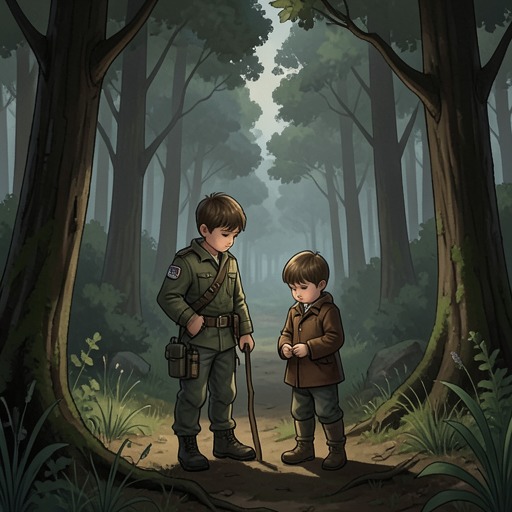
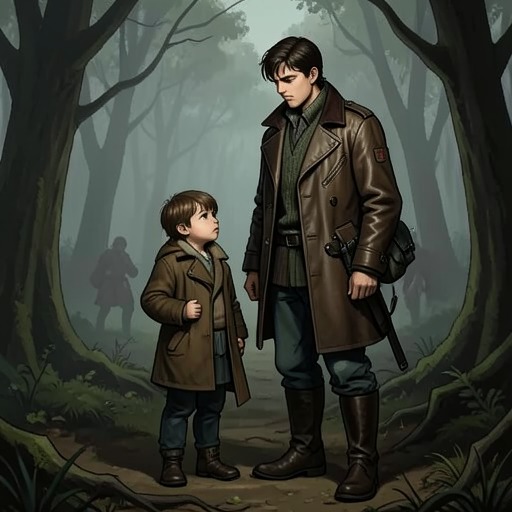
The bond takes shape when Ronia and Birk must part near Wolf’s Neck in a snowstorm. Ronia tells Birk she wishes he were her brother. He answers that he can be, if she wants, and she accepts on the condition that he call her Ronia. Birk then addresses her as his sister before leaving by a secret route to Borka’s Keep. The exchange is mutual and deliberate: neither child is merely assigned a family role by birth, and Ronia’s insistence on her own name makes recognition of her person part of the offer.
The timing matters. They are separating at the boundary between their routes home, and Ronia is afraid that Birk may disappear and leave her alone. The new kinship gives their parting a promise of continued attachment rather than making the danger or distance vanish. The next morning, heavy snow blocks Wolf’s Neck, leaving the children on opposing sides of a feud that is older than either of them. Their relationship must therefore persist not through ordinary family life together, but through choices made across the division.
Care Under the Feud
When Birk tells Ronia that his family has gone without enough food for a long time and is running out of provisions, she gives him bread. Her response marks a change in the meaning of their bond: she recalls that she had wished for spring to come, but says that was before she had a brother. Birk eats the bread and drinks the milk she offers. The food is not simply a token between friends; in the circumstances he describes, it answers an immediate need and gives their chosen relationship practical force.
Birk objects that he could have saved bread for his mother, Undis, but explains why he cannot take food home without revealing its source. Borka, he expects, would be furious to learn that he accepted bread from Ronia and had become her brother. The family feud thus reaches into the most intimate consequences of their bond: accepting help risks exposing the relationship, while keeping it secret leaves Birk’s family’s need unresolved by this particular gift. Ronia understands that Matt’s and Borka’s hatred of each other complicates everything for the children.
They conclude that they can meet only in secret. Ronia nevertheless keeps her promise to return. Every morning for the rest of the winter, she meets Birk in the cellar vaults and sustains him with food from Lovis’s larder. Birk sometimes feels as though taking the gifts is theft; Ronia answers that, as a robber’s daughter, she might as well steal. Her joke draws on the very world that divides them: much of the stored food, she knows, came from merchants robbed in the woods. The exchange is therefore not detached from the adults’ violent economy, but it redirects provisions toward a relationship formed against the feud.
Mutual Dependence and Rescue
The children describe their bond as reciprocal rather than as charity flowing in one direction. Birk asks how many times Ronia intends to save his life, and she replies that she will do so as many times as he has saved hers. She adds that they cannot manage without each other. Their words make shared dependence the basis of the sibling relationship: each has both received and given help, and neither is represented as the sole protector.
That reciprocity is visible again when they care for an injured wild mare. After Birk returns with moss, the two work together to press it into the mare’s wound and bind it with leather ropes. The scene extends their cooperative care beyond their own survival: acting together, they try to help another living creature. Their bond is expressed in coordinated action as much as in the family name they use for each other.
Public Recognition Across the Divide
The private relationship becomes visible during the exchange of Ronia and Birk at Wolf’s Neck. Lovis sees them looking at one another as if they were alone, and understands that a bond exists between them. When Undis challenges what is between the children, Birk answers that Ronia is his sister and that she saved his life. Ronia, leaning against Lovis, adds that Birk saved hers too. The exchange publicly confirms the reciprocal account they had already given in private.
Borka reacts angrily to the disclosure that his son has kept company with the offspring of his enemy. Birk does not withdraw the claim: he repeats that Ronia is his sister while looking at her. Undis also tries to pull him away. These reactions show that the chosen relationship does not dissolve the family division simply by being named; instead, it brings that division into sharper view. The children maintain their kinship openly at the very moment their parents’ hostility demands separation.
Kinship Against Inherited Roles
The bond develops alongside Ronia’s rejection of the robber identity Matt expects her to inherit. After she understands that the robbers take goods from other people, she refuses to become a robber chief like her father. Later, she tells Matt that he may rob money and goods, but he cannot rob people without losing her as his daughter. Her judgment makes clear that affection for family does not require acceptance of the family’s occupation. Chosen siblinghood with Birk belongs to that broader refusal to let inherited allegiance decide what is right.
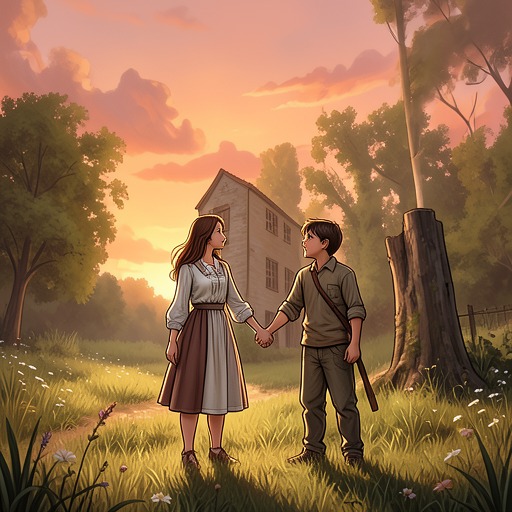
The feud is described as passing through generations: Borka’s father and grandfather were enemies of Matt’s father and grandfather, and the two families have long fought over robbery and its spoils along Robbers’ Walk. Against this history, Ronia and Birk’s sibling claim creates a different kind of inheritance—one made through recognition, mutual aid, and responsibility rather than descent. Their bond cannot end the feud on its own, and the children remain exposed to the adults’ choices. But when Matt eventually suggests joining forces with Borka, he speaks of unity between the robber bands; the possibility of cooperation echoes, on a larger scale, the cross-clan connection the children have already practiced as brother and sister.