
The Moral Cost of Strategic Convenience
September 11Traces how governments and commentators accept civilian suffering when it serves strategic aims, then resist comparisons that expose the bargain.
increasing Bearing strength in each event
 decreasing
Bearing strength in each eventdecreasingA Calculated Policy

A Calculated Policy
American policy supports attacks on vulnerable Nicaraguan targets, including communities unable to defend themselves.
Strategic Rationale
Chomsky cites public arguments that weigh blood and misery against political objectives.
Human Cost
The calculation makes civilian suffering part of policy rather than an accidental afterthought.
Children in Iraq

Children in Iraq
Chomsky recalls an American official’s acceptance of a large child death toll as a price worth paying.
Policy by Calculation
The statement presents civilian deaths as tolerable collateral to a strategic objective.
Moral Consistency
He asks why such suffering receives less attention than the deaths of Western civilians.
Sudan’s Medicines Lost

Sudan’s Medicines Lost
The destruction of Al-Shifa removes a major source of affordable medicine from Sudan.
Slow Consequences
Illness and death follow as treatment becomes unavailable or unaffordable.
A Quiet Cost
The delayed and dispersed nature of the harm helps it disappear from public debate.
The Comparison Provokes Anger

The Comparison Provokes Anger
Chomsky’s comparison of Al-Shifa’s consequences with the September attacks draws intense condemnation.
A Revealing Response
He treats the anger as evidence of a taboo against comparing Western violence with violence against Western targets.
The Question Remains
The dispute shifts attention from the number of victims to who is permitted to count them.
Counting Every Consequence
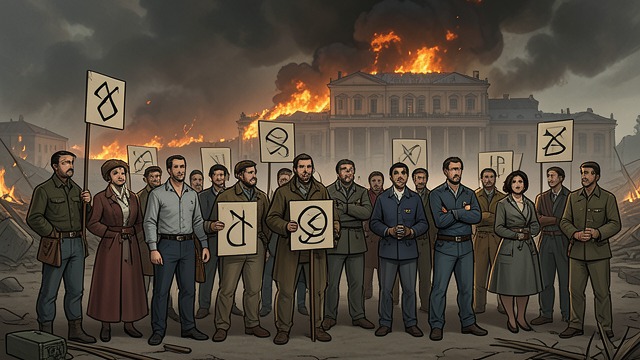
Counting Every Consequence
Chomsky argues that moral accounting must include people who die later because an attack destroyed essential systems.
One Standard
The same method is used for the crimes of official enemies and should apply to Western actions.
Public Accountability
Counting delayed harm makes strategic convenience harder to separate from responsibility.
During the American campaign against Nicaragua in the 1980s
During the 1990s sanctions period
After August 20, 1998
September 2001
In the postface
