
The Author's Intellectual Lineage
September 11This thread traces the book's closing movement from its political argument toward recommended reading and a brief account of the author's public work.
increasing Bearing strength in each event
 decreasing
Bearing strength in each eventdecreasingA Body of Political Writing

A Body of Political Writing
Earlier arguments gathered
The recommended list includes several works by Noam Chomsky on political culture, human rights, and international power.
A reading path
The appendix positions the present argument within a larger body of writing rather than as a standalone intervention.
Collaborative Critique

Collaborative Critique
Shared authorship
Several recommendations are coauthored works, including studies of human rights, media, and the political economy of terrorism.
An intellectual network
The list indicates that the book's questions have been developed through collaboration and debate.
International Terrorism Studies
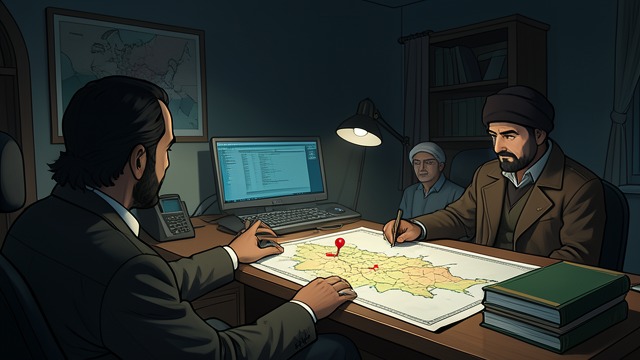
International Terrorism Studies
Multiple perspectives
The recommendations include books by John Cooley and other writers examining Afghanistan, statecraft, and terrorism.
A field of inquiry
The reader is directed toward a wider literature in which the book's claims can be explored and tested.
Linguist and Political Writer

Linguist and Political Writer
Academic career
The biography describes Noam Chomsky as a linguist, writer, and professor who had taught at the Massachusetts Institute of Technology since 1955.
A wide-ranging body of work
His writing and lectures address linguistics, philosophy, and politics.
Public Recognition

Public Recognition
Political engagement
The biography emphasizes Chomsky's political commitment alongside his academic work.
Social movements
It notes recognition from movements concerned with social justice and peace, closing the book by situating the author within public life.
In the recommended-books appendix
As the recommended list broadens
In the middle of the recommended-books list
In the author's biographical note
At the end of the biographical note
