
The Principle of Universal Scrutiny
September 11This thread traces the argument that moral standards should be applied to one's own side as well as to declared enemies.
increasing Bearing strength in each event
 decreasing
Bearing strength in each eventdecreasingThe Good and the Bad
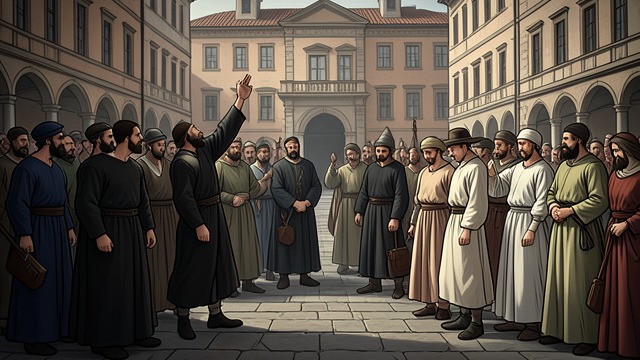
The Good and the Bad
A familiar division
The passage describes the simple claim that one side is good and the other bad as a powerful way to defeat argument.
Moral exemption
When accepted without proof, the division can exempt one's own side from the scrutiny applied to opponents.
History as a Test

History as a Test
Recalling conduct
Rare observers bring historical, recent, or contemporary facts to test the moral assumption.
Standards applied consistently
The challenge asks whether the same principles can be used to evaluate powerful actors and their adversaries.
Resistance to Comparison
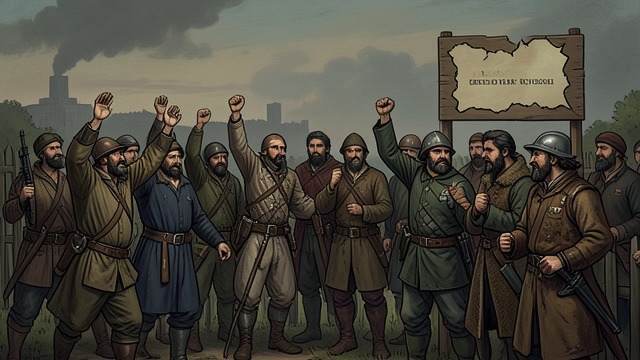
Resistance to Comparison
Backlash as evidence
The passage describes interesting waves of resistance that arise to prevent such comparisons from being made.
A cultural boundary
These reactions reveal which forms of criticism dominant norms permit and which they treat as heretical.
No Special Invention

No Special Invention
An older pattern
The author cautions that the moral division is not an invention of contemporary influential circles or dominant intellectual culture.
Avoiding a narrow explanation
The criticism concerns a broader recurring habit, not simply the misconduct of one modern institution.
Understanding Our Position

Understanding Our Position
Why attention matters
The author argues that the pattern deserves attention for anyone seeking to understand the present situation.
The future at stake
Examining moral standards and their enforcement may help clarify what could await society in the future.
At the start of the closing reflection
When observers challenge the division
After the historical challenge is raised
As the author qualifies his account of dominant culture
At the end of the ethical reflection
