
The Division’s Moral Contradiction
Serve the People!The language of streamlined service promises collective benefit while the division’s dissolution leaves individuals facing loss and uncertainty.
increasing Bearing strength in each event
 decreasing
Bearing strength in each eventdecreasingThe Ideal of Simplification
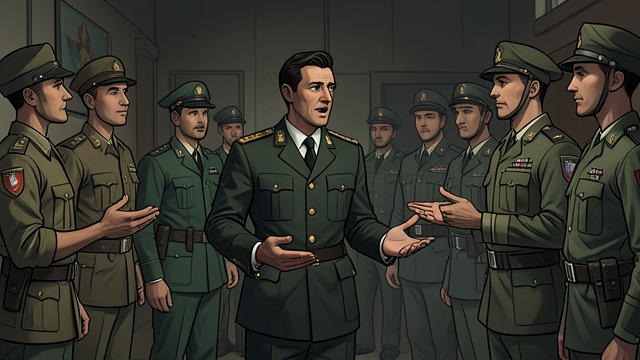
Efficiency as Principle
A historical precedent
The novel recalls the argument that fewer, better troops and a simplified administration can benefit the people. The Division Commander invokes this rationale while discussing collective work.
Policy gains moral weight
Administrative change is framed as self-sacrifice for the wider public. The language makes resistance appear selfish even when the costs fall on soldiers and families.
The Commander Volunteers
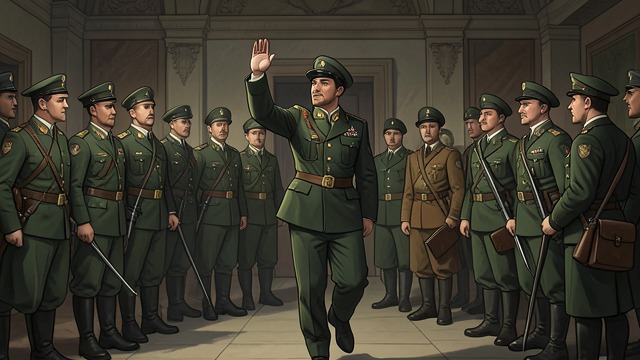
A Division Offered
An unusual decision
The Commander volunteers his formation for a pilot streamlining scheme when other divisions are unwilling. His choice sets the dissolution in motion.
Consequences withheld
The soldiers are not initially shown as participants in the decision. The policy arrives from above, while those who will bear its consequences remain uninformed.
The Empty Noticeboards
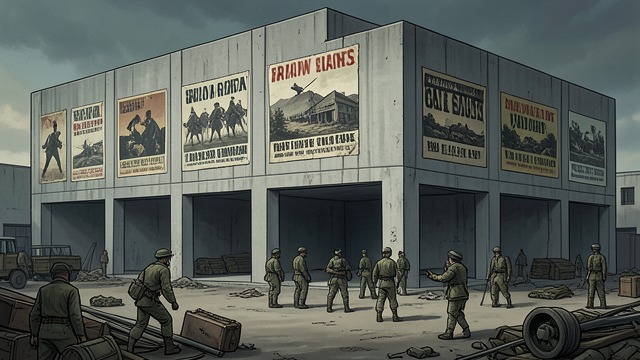
War Readiness and Uncertainty
Slogans change
Posters calling for preparation, grain stores, and victory in a future war replace the usual lists of honors. The barracks appear mobilized even as units are being scattered.
Contradictory signals
The institution speaks of strength and readiness while dismantling its own formation. The gap between propaganda and material experience widens for the soldiers.
Farewell Destruction
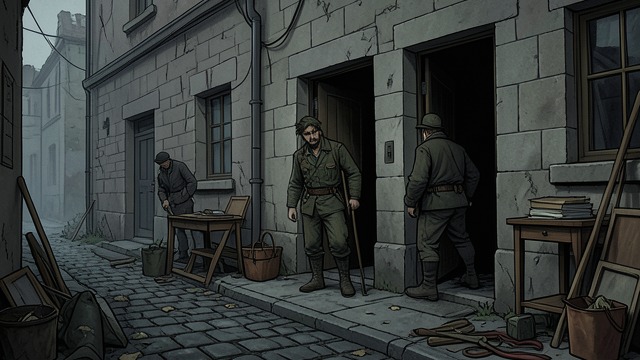
Anger Made Material
Barracks damaged
Soldiers leave a once-decorated building in disorder, with equipment damaged and hostile words scrawled across a noticeboard. Their departure expresses despair rather than celebration.
Collective loss
The broken rooms bear witness to attachments that official announcements cannot capture. Wu Dawang recognizes the sadness but is more deeply preoccupied with losing Liu Lian.
A Public Reward

Service Celebrated
An exemplary narrative
The Head of Management presents Wu Dawang’s city assignment as recognition for serving the people with all his body and soul. The ceremony gives his private success an official explanation.
The contradiction remains
The same army is dispersing soldiers who also served it. The celebration does not resolve the unequal outcomes or the loss of the institution itself.
Before the restructuring begins
At the Beijing conference
As the troops prepare to leave
During the departure of the Machine Gunners
At Wu Dawang’s farewell meeting
