
The Story of the Political Emblem
Serve the People!The novel repeatedly changes the meaning of political signs and quotations as private desire collides with public doctrine.
increasing Bearing strength in each event
 decreasing
Bearing strength in each eventdecreasingInterpretation at Dinner
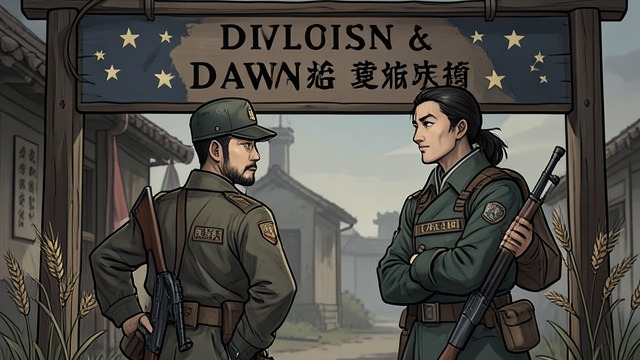
Reading the Emblem
Official symbolism
The Division Commander asks Wu Dawang to interpret the sign’s stars, rifle, canteen, and wheat. Wu responds with the approved account of revolution’s history and promised future.
Competence on display
His fluency helps explain why the Commander trusts him. Political language appears to give the orderly a reliable route through the household’s rules.
A Phrase Becomes Code
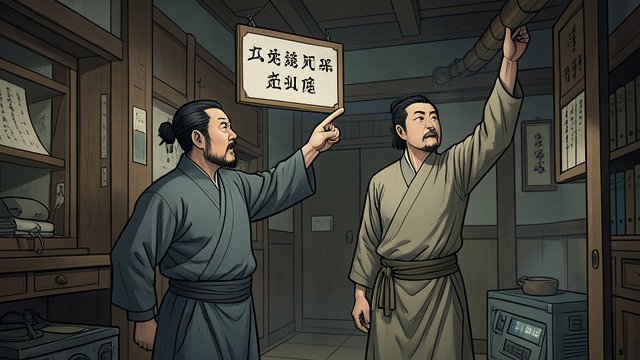
Public Words Reassigned
The sign’s relocation
Liu Lian uses the sign’s new position to call Wu Dawang upstairs without openly explaining her desire. An ideological emblem becomes their first private code.
Ambiguous obedience
Wu Dawang continues to read its words through duty even as his attraction grows. The resulting misunderstanding exposes the distance between official meaning and lived experience.
A Quotation Underfoot
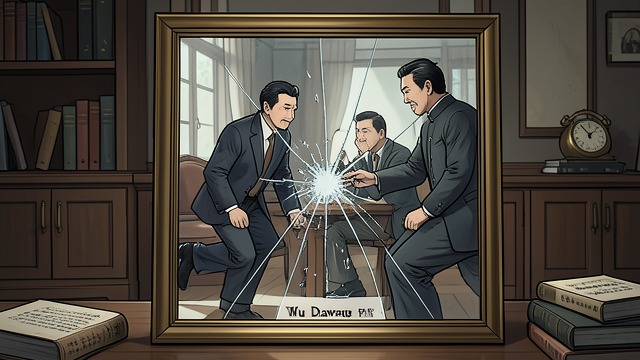
Doctrine Meets Desire
A broken frame
During a hurried encounter, Wu Dawang steps on a framed Mao quotation and breaks its glass. Their intimate conduct has crossed into visible damage to political household decor.
Reversal of status
Rather than submit to Liu Lian’s threat to call Security, he argues that she summoned him. Their private interpretation of “Serve the People” starts to unsettle the authority it once represented.
The Images Destroyed
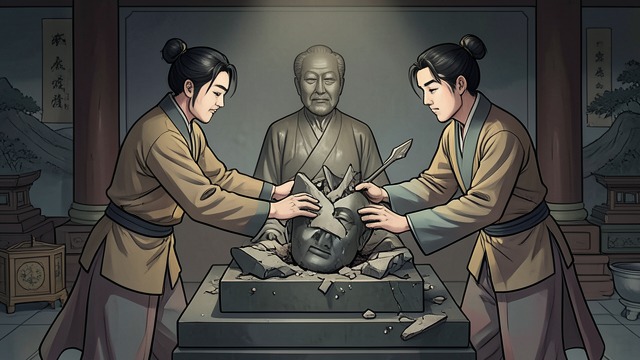
An Escalating Rebellion
From accident to choice
After another Mao statue breaks, Wu Dawang prevents Liu Lian from reaching the telephone. Their struggle turns accidental damage into deliberate defiance.
Shared desecration
The lovers tear, stamp on, or deface the household’s revolutionary images. Their actions are simultaneously a declaration of attachment and a dangerous attack on the symbols that govern their lives.
A Text Beyond the Novel
Political Doctrine Reconsidered
The original speech
The book closes with Mao Zedong’s address honoring Zhang Side, which defines service, criticism, sacrifice, and care for comrades as political duties. The speech restores the doctrine’s historical seriousness.
An uneasy afterimage
After the lovers have used the same vocabulary to disguise desire, the speech’s ideals invite comparison with their exploitative hierarchy and the officers’ self-interest. The ending leaves the slogan morally unsettled.
At the opening of the story
Three days before the affair begins
During the lovers’ first week of intimacy
The final afternoon of the three-day confinement
In the book’s closing pages
