The Division Headquarters’ Dissolution
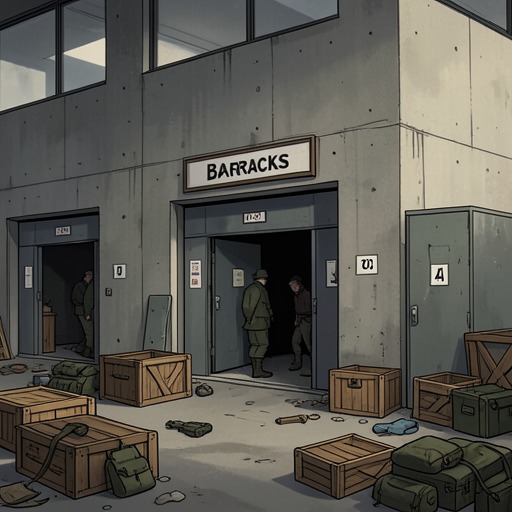
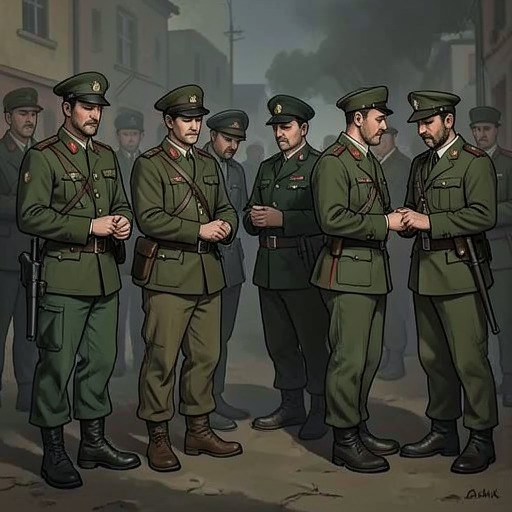
Serve the People!The Division Headquarters’ Dissolution is the institutional turning point that dismantles the military organization around which Wu Dawang has built his ambitions and daily life. Officially, it is a pilot scheme to streamline and restructure the army; in practice, it means the division will disappear from the People’s Liberation Army’s structure, while its personnel face cancelled promotions, transfers, and demobilization. The change also gives the story’s private relationships and public military procedures sharply unequal consequences.
Background and Institutional Decision
The dissolution is announced to Wu Dawang after he returns from leave. The Political Instructor explains that, at a seminar in Beijing organized and directed by the Central Military Commission, the Division Commander volunteered his division for a pilot scheme intended to streamline and restructure the entire army. No other division had been willing to take on the assignment. The decision therefore arrives not as a local administrative adjustment but as a centrally authorized experiment with consequences for the whole unit.
For Wu Dawang, the announcement lands against a long effort to advance through military service. His premarital pledge to Zhao Ezi had tied marriage to a timetable: commendations within a year, Party membership within two, and official rank within three, with a move to a city in Henan Province as the promised reward. The pledge became a pressure on his career, not simply a private promise. After years of striving, his transfer to the Catering Squad and later appointment as a full Sergeant and Party member brought him close to, but not into, officialdom. The restructuring now threatens the rank he still hopes to attain for reasons unrelated to his performance.
Effects on Careers and Household Assignments
With most companies marked for demobilization and a minority for transfer, promotions are cancelled for the time being. The change interrupts the ordinary career path just as Wu Dawang’s long-awaited advancement appears possible. Yet he is granted an exception: because he is a favorite of the Division Commander and Liu Lian, the Commander has ordered a city job in Wu Dawang’s native province, a move for his family, and suitable work for his wife. The promised urban future is thus secured not through promotion but through a personal arrangement made amid institutional upheaval.
The reorganization also unsettles the Division Commander’s household. Staff turnover is high, and successive orderlies have incurred the Commander’s anger despite trying to act discreetly; Liu Lian has attempted to smooth over the problems. In this unstable personnel situation, Wu Dawang is told not to return to his former post or visit the house unless there is an urgent reason. The restriction separates him from the household where his service and private relationship with Liu Lian had become entangled, while leaving the relationship undiscovered in the moment of his return.
Administrative Control and Unequal Outcomes
The unit’s handling of Wu Dawang shows how formal measures coexist with individual discretion. The Political Instructor welcomes him back with hot water, scented soap, and egg noodles, then explains that Liu Lian had personally told the officers that serious family problems required Wu Dawang to receive three months of home leave. The leave has been extended, with his return left conditional on urgent military need. The explanation reassures Wu Dawang that the affair has not been exposed, but it also makes his absence part of the same administrative process that is dismantling the division.
Other officers manage what Wu Dawang is allowed to know and do. The Captain orders him to tell no one what he has heard or seen, warning that disclosure to the Division Commander would put them all at risk. Wu Dawang remains confused by the reorganization and concentrates instead on the concrete benefits arranged for himself. Within a week, he and his family have work and housing in the city nearest their village; while his comrades worry about their prospects, he needs only to complete and sign the forms the army gives him. The contrast makes the consequences of dissolution uneven: collective uncertainty surrounds a personally protected exit.
Dissolution as a Public Performance
Wu Dawang’s departure is organized with conspicuous speed and care. Once the arrangements are settled, the division supplies cardboard boxes, wooden crates, and rope for his belongings. His company holds a final supper and farewell meeting before the train scheduled to leave at 12:30 that night. These practical details make the division’s administrative reach visible even as the organization itself is preparing to disappear.
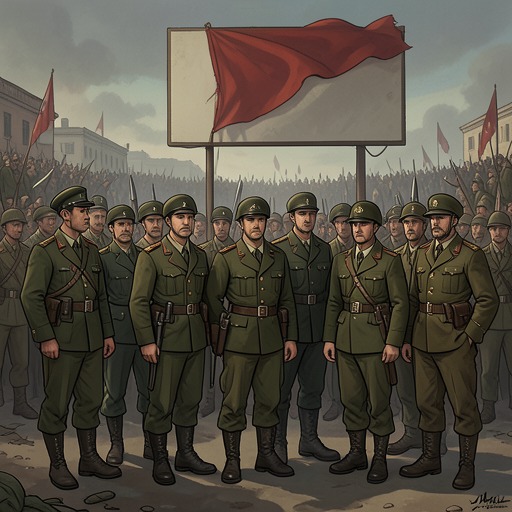
At the gathering, the Political Instructor announces that Wu Dawang is receiving an early discharge to take a factory job in the city. The Head of Management, unusually present to bid him farewell, publicly awards him the Third Order of Merit. He is also named an Exemplary Servant of the People, described as the division’s only soldier to receive that accolade. The commendation presents his departure as the result of study, revolutionary character, and service, although none of Wu Dawang, the Captain, or the Political Instructor had known beforehand that the evening would end with this recognition. The ceremony supplies an official account of his exit even as the underlying arrangements have been made beyond his understanding.
Consequences and Significance
During Wu Dawang’s six-week leave, the division’s leadership is preparing to remove the unit from the state military system. The narrative describes an authorized effort to make the division vanish from view and to erase the Catering Squad Sergeant’s service history; forgetting becomes the institution’s new watchword. The dissolution therefore means more than closing a headquarters: it brings organizational disappearance together with the planned disappearance of an individual’s record.
The division’s fate is connected to Wu Dawang’s affair with Liu Lian, but the narrative does not reduce the dissolution to that relationship. It cautions that the affair alone did not destroy an entire division, while observing that, without it, events would have dealt his comrades a different hand. His relationship helps shape the personal decisions that place him on an exceptional path out of the unit; the central restructuring supplies the larger machinery in which those decisions acquire force. The result is an ending in which Wu Dawang receives a city job and housing while the institution that formed his identity withdraws from the official record.