
The Bridger Willow World
Silent SpringThis flow traces how a spray intended to change range vegetation dismantles a habitat built around willows and beavers.
increasing Bearing strength in each event
 decreasing
Bearing strength in each eventdecreasingA Streamside Refuge
Life Along the Stream
Willows and Moose
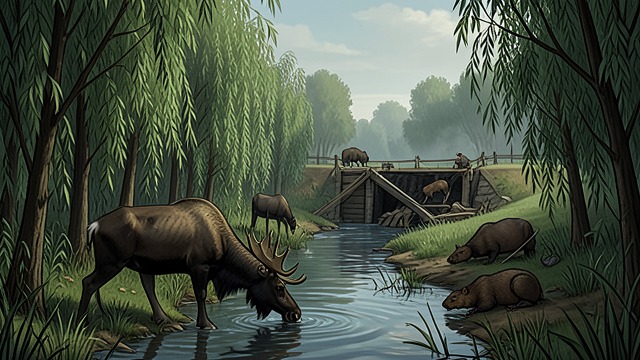
Willows followed small streams across the sage country, providing food and shelter for moose. Their narrow ribbon of vegetation distinguished the watercourse from the exposed plains.
Beaver Engineering
Beavers fed on the willows and built dams that backed water into a lake. The lake supported large trout and attracted waterfowl, creating a varied landscape valued for recreation as well as wildlife.
The Spray Reaches Willows
A Broader Casualty
The Intended Change
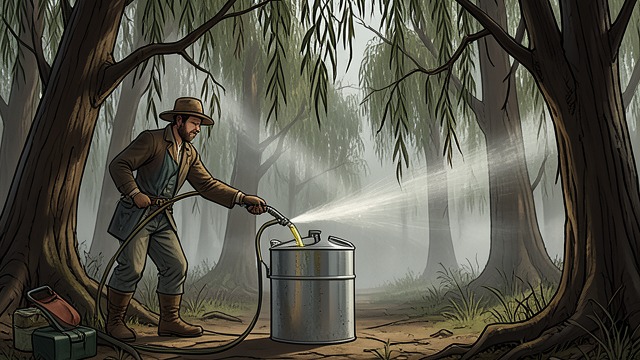
The United States Forest Service sprayed sagebrush to create more grassland. The treatment also killed the streamside willows, plants that were not the central target of the range-improvement effort.
An Ecological Warning
William O. Douglas later described the damage as vast and visible. A vegetation program had reached a second habitat, showing how an indiscriminate treatment could spread consequences beyond its stated purpose.
Moose and Beavers Depart
The Architects Leave
Food and Shelter Vanish
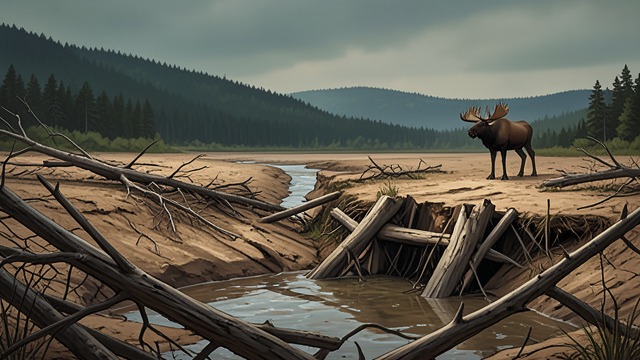
With the willows dying, the moose lost a key food source and the beavers lost the material on which their streamside life depended. Both disappeared from the area.
A Dam Neglected
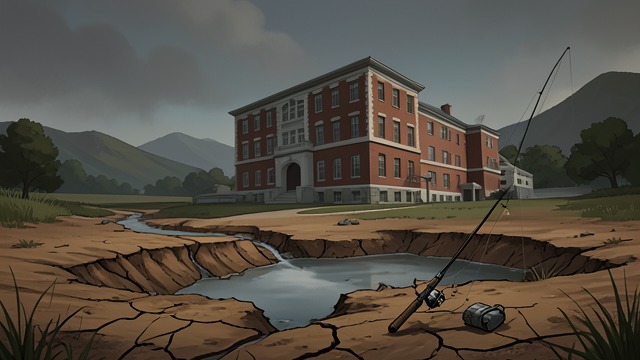
The principal beaver dam failed for want of its builders’ care. The lake drained, revealing that the beavers had maintained a landscape on which many other species relied.
The Lake’s Fishery Collapses
Water and Shade Lost
Trout Habitat Changes
Large trout that had thrived in the beaver-backed lake were gone after the water drained. The remaining creek ran through exposed ground without the shade once supplied by willows.
A Recreational Loss
The change erased fishing and other wildlife values along with the original habitat. A project intended to benefit grazing had transformed a diverse streamside world into a diminished one.
A Landscape Shattered
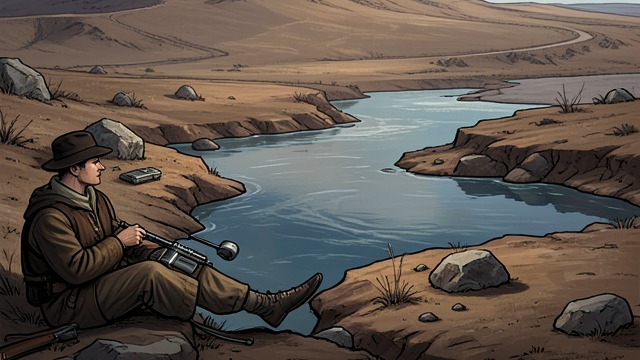
The Cost of Simplification
Linked Consequences
The disappearance of willows, moose, beavers, the lake, and large trout formed one chain of effects. None of those losses could be understood as an isolated side effect.
A Management Lesson
The episode makes ecological interdependence tangible: remove one element and the conditions supporting others may unravel. Carson uses it to challenge management that counts grass while ignoring the life built around water and vegetation.
Before the 1959 spraying
1959
By the year after spraying
On Douglas’s return visit in 1960
After the habitat loss became visible
