
Fire Ant Eradication and Its Reversal
Silent SpringThis flow traces the rise and failure of a mass chemical campaign against fire ants in the southern United States.
increasing Bearing strength in each event
 decreasing
Bearing strength in each eventdecreasingA Minor Nuisance
A Limited Problem
Local Complaints
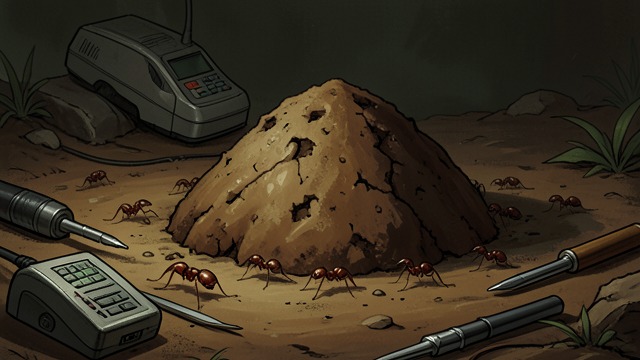
The imported fire ant spread through southern states and built mounds that could interfere with farm machinery. Many affected places regarded it chiefly as a nuisance.
Claims Reconsidered
Carson contrasts the campaign’s later urgency with earlier assessments that did not rank the ant among the most important pests. The difference raises questions about how a modest problem became a justification for regional eradication.
A Government Campaign

The Eradication Promise
An Expanding Case
The United States Department of Agriculture presented fire ants as threats to crops, livestock, wildlife, and human health. Publicity and appropriations supported plans to treat millions of acres.
Evidence Disputed
Alabama researchers and wildlife specialists disputed important claims about the ant’s damage. Some evidence suggested that fire ants consumed other insects and could serve useful ecological functions.
Persistent Poisons Applied

Treatment at Scale
Little Advance Testing
Large areas received heptachlor or dieldrin before adequate field research had established the effects of those chemicals on wildlife and other species. The operation made communities the setting for a vast experiment.
Warnings Unheeded
Conservationists and scientists urged delay and better testing. Their concerns were not enough to stop the initial campaign, which proceeded at heavy dosages.
Wildlife and Farms Suffer

The Aftermath Spreads
Non-Target Deaths
Biologists reported losses among birds, mammals, livestock, and pets. In treated areas, ground-dwelling birds and quail could suffer especially severe mortality.
New Agricultural Problems
In Louisiana, treatment was followed by increased sugarcane-borer damage after natural enemies had been killed. The campaign thus injured wildlife while sometimes worsening the agricultural problem it claimed to solve.
Retreat to Local Control
A Costly Failure
The Target Persists
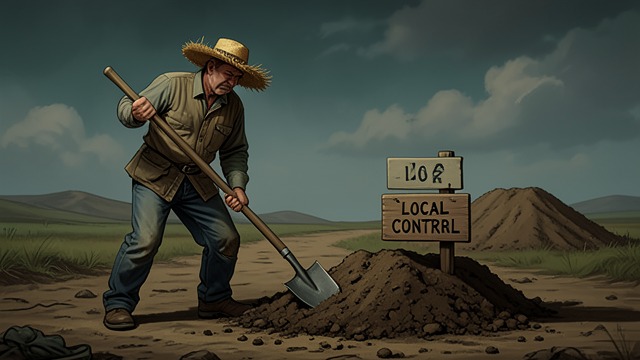
After years of treatment, Louisiana had more infested acres than when the program began. States increasingly questioned broad eradication and considered localized measures instead.
A Different Scale
Treating individual mounds or using targeted equipment offered a cheaper and less destructive approach. The reversal showed that control could be more proportionate when policy matched the actual scale of the problem.
For decades after the fire ant’s arrival
1957
Beginning in 1958
During the early years of treatment
By 1962
