
Nature’s Checks and Balances
Silent SpringThis flow follows Carson’s account of how insect control can weaken natural restraints and provoke resurgence.
increasing Bearing strength in each event
 decreasing
Bearing strength in each eventdecreasingA Dynamic Balance
Nature Is Not Static
Relationships in Motion
Carson rejects the idea that ecological balance means an unchanging arrangement. Populations shift, but living things remain connected through food, competition, predation, and habitat.
Humanity Within the System
People are part of this balance, not outside it. Their interventions may favor one interest temporarily while shifting conditions against other species and, ultimately, against human welfare.
Natural Enemies Hold Populations
Environmental Resistance
Multiple Restraints
Food supply, climate, competitors, parasites, and predators all limit population growth. Insects are often held in check by other insects and by broader environmental conditions.
An Overlooked Service
These protections can remain invisible until they are damaged. Carson argues that killing predators and parasites removes forms of control that chemical programs rarely count in advance.
Chemical Control Breaks the Checks
Allies Become Casualties
Nonselective Action
Many pesticides kill beneficial insects alongside the species targeted. Large-scale spraying can also poison birds and other organisms that would otherwise help restrain pest populations.
A System Exposed
The treatment removes parts of the living community that kept populations stable. Its immediate success may conceal the loss of ecological services needed for long-term control.
Resurgence Follows Suppression
The Target Returns
A Changed Community
Some pests recover in greater numbers after their natural enemies have been eliminated. Other species, formerly too scarce to cause trouble, may rise into pest status.
A Self-Defeating Method
Carson describes chemical control as capable of creating the conditions for new outbreaks. Treating each resurgence with another chemical can deepen the ecological disturbance rather than resolve its cause.
A Different Goal
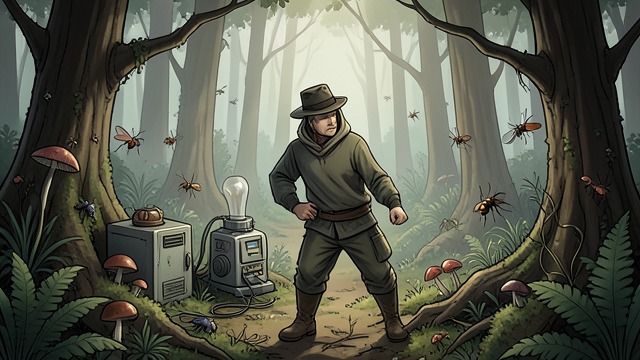
Guide Rather Than Conquer
A Biological Approach
The chapter favors using knowledge of living populations to guide conditions cautiously. Control should take account of predators, parasites, and the wider habitat.
A Change in Outlook
Carson’s challenge is philosophical as well as practical: the aim should not be an insect-free world. A durable accommodation with other forms of life offers a more realistic path than repeated force.
As Chapter 15 opens
Before a pesticide campaign disrupts a habitat
During broad-spectrum spraying programs
After repeated insecticide treatments
At the close of Chapter 15
