
The Screw-Worm Eradication Trial
Silent SpringThis flow follows Edward Knipling’s sterile-insect approach from theory to successful regional application.
increasing Bearing strength in each event
 decreasing
Bearing strength in each eventdecreasingA Difficult Livestock Pest
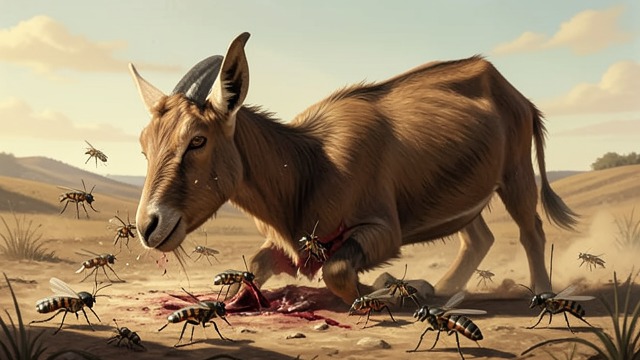
The Screw-Worm’s Toll
A Serious Threat
Screw-worm flies laid eggs in wounds of warm-blooded animals, and larvae could cause severe injury or death. The pest imposed heavy costs on livestock and also threatened wildlife.
A Different Kind of Control
Conventional poison was not the only imaginable answer. The insect’s life cycle suggested that interfering with reproduction might reduce the population without saturating land with insecticide.
Knipling’s Proposal

Sterile Males in the Wild
A Population Idea
Edward Knipling proposed releasing large numbers of sterilized insects. If sterile males competed successfully with normal males, repeated releases could produce infertile eggs and a declining population.
Skepticism and Persistence
The proposal faced scientific doubt and bureaucratic inertia. Knipling continued developing it, although a practical way to sterilize and release enough insects remained necessary.
Curaçao’s Trial
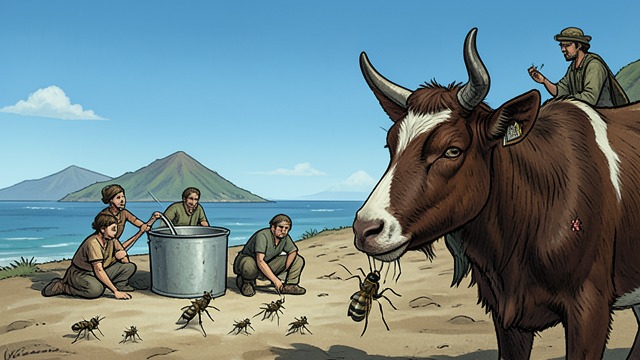
A Remote Island Test
Weekly Releases
Sterile screw-worm flies were reared in Florida and released over Curaçao at a substantial rate. The island’s separation from the mainland made it a practical place to evaluate the method.
Rapid Decline
Egg masses on experimental goats fell, and fertility dropped. Within weeks, investigators found no fertile eggs and eventually no egg masses at all.
A Regional Program
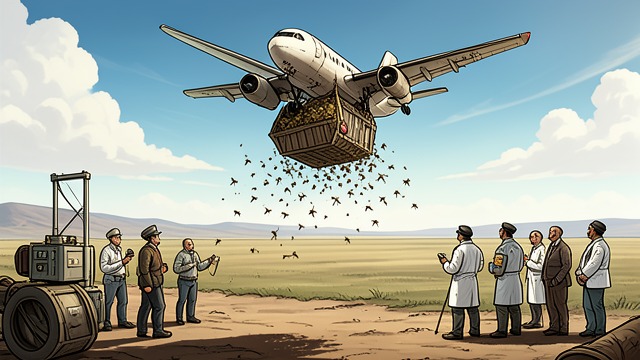
Releases Expand
A Large Operation
The United States Department of Agriculture and Florida supported a program that produced millions of sterile flies each week. Aircraft distributed them over a much larger region than the island test.
Eradication Reported
After billions of releases, the last known infestation in the southeast was recorded in early 1959. The campaign demonstrated that a carefully designed, species-focused method could achieve a result chemical spraying had not offered.
A Model With Limits

Success and Caution
A New Possibility
The achievement stimulated interest in applying sterile-insect methods to other pests. Researchers examined fruit flies, borers, and disease-carrying insects, each with distinct biological challenges.
No Universal Formula
Carson emphasizes that success depended on life history, population size, and practical release conditions. The campaign’s importance lay in opening a path to inventive, selective control—not in promising effortless eradication everywhere.
Before 1950
About a quarter century before the field trial
Beginning in August 1954
From 1957 through 1959
After the southeastern campaign
