
The Fire Ant’s Hidden Ecological Role
Silent SpringThis flow follows the contested picture of the fire ant, from official menace to evidence of its functions and the campaign’s collateral damage.
increasing Bearing strength in each event
 decreasing
Bearing strength in each eventdecreasingA Nuisance Becomes a Menace
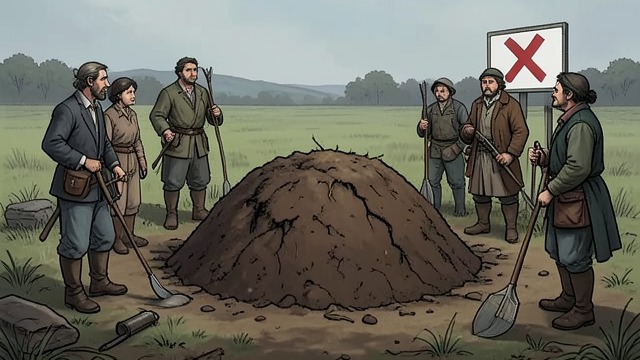
A Sudden Reframing
From Mounds to Crisis
The fire ant had long been known in the South, chiefly for mounds that could interfere with machinery. In 1957 government publicity presented it as a major threat to agriculture, wildlife, and human health.
Claims Require Evidence
Carson compares the dramatic public case with agricultural publications and field observations. The contrast invites readers to ask who benefits when a manageable nuisance is recast as an emergency.
Field Studies Complicate the Story
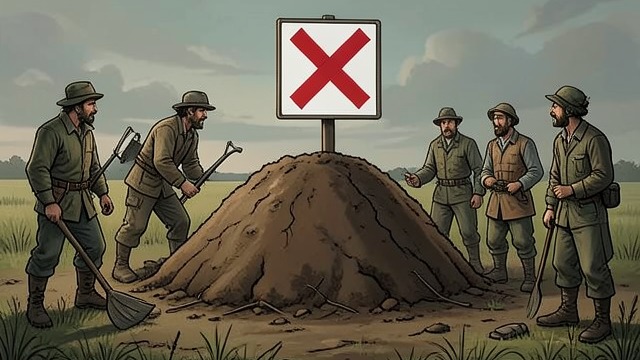
An Ant With Uses
Feeding Habits
Researchers in Alabama reported that fire ants fed on a variety of insects, including species harmful to crops. Their observations did not support broad claims of routine crop or livestock damage.
A Soil Function
The ants’ mound-building could aerate and drain soil. These reported functions made indiscriminate eradication look less like removing a simple enemy and more like disrupting a participant in the local ecology.
Wildlife Takes the Chemical Blow

Non-Target Mortality
Ground-Dwelling Species
Biologists documented severe losses among birds and mammals on treated land. Quail populations could disappear, and dead birds were found carrying residues of the chemicals used against ants.
Livestock and Domestic Animals
Farmers also reported deaths and reproductive problems among livestock and poultry. The campaign’s actual effects undermined assurances that treatment would be confined to its target.
The Pest Balance Shifts
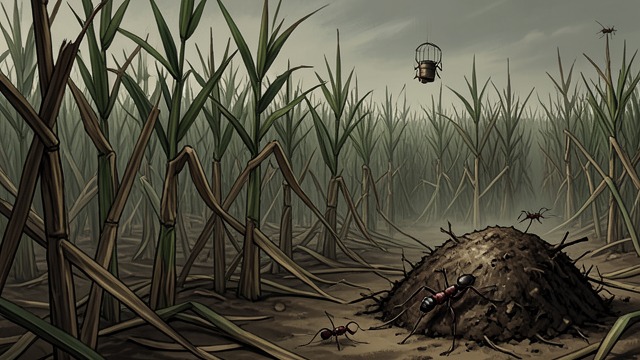
A New Agricultural Outbreak
Natural Enemies Removed
Broad treatment killed organisms that had helped restrain other insects. Sugarcane borer damage increased after fire-ant treatments, creating a new problem for farmers.
A Counterproductive Result
The episode exposed a recurring danger in chemical programs: suppressing one species can release another. The campaign’s ecological effects mattered not only to wildlife but also to the agricultural interests it claimed to serve.
Local Treatment Replaces Eradication

A Smaller Intervention
The Program Falters
States reported that fire ants remained abundant after expensive mass treatment. The promised eradication had not materialized, while concerns about collateral damage grew.
Proportionate Control
Targeting individual mounds could address local problems at much lower cost. Carson’s account supports a general principle: define the problem accurately and choose a method that avoids turning a limited nuisance into widespread harm.
In the federal publicity campaign of 1957
In studies preceding the mass campaign
After treatment began in 1958
After broad treatments in Louisiana
By the early 1960s
