
From Fable to Civic Responsibility
Silent SpringThis flow follows the book’s movement from an imagined poisoned town to a demand for informed public decisions.
increasing Bearing strength in each event
 decreasing
Bearing strength in each eventdecreasingA Town in Harmony
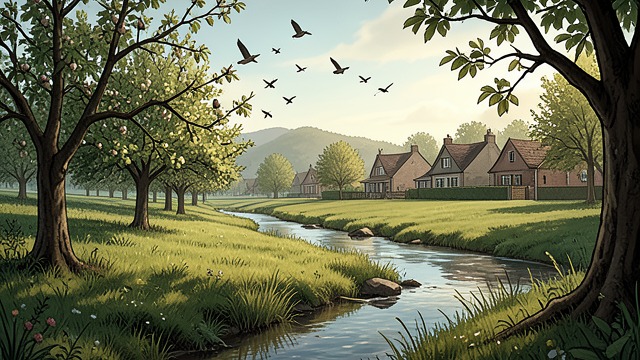
A World Worth Knowing
Familiar Beauty
Carson’s imagined town is made vivid through orchards, migrating birds, clear streams, and seasonal color. Its abundance gives readers an emotional stake in what may be lost.
Community and Place
The town is not presented as untouched wilderness. Farms, roads, homes, and wildlife occupy one shared landscape, making the health of nature inseparable from ordinary human life.
The Silence Arrives
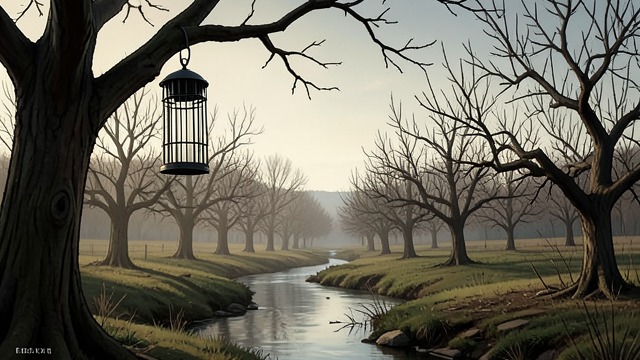
Loss Enters Daily Life
Missing Voices
Bird feeders stand empty, the dawn chorus disappears, and familiar animals die. The crisis is rendered through absences that residents can hear and see.
Broken Expectations
Farmers find that chicks do not hatch and orchards do not set fruit. The disappearance of bees and fish turns ecological damage into a direct disturbance of work, food, and community routine.
Families Seek an Explanation
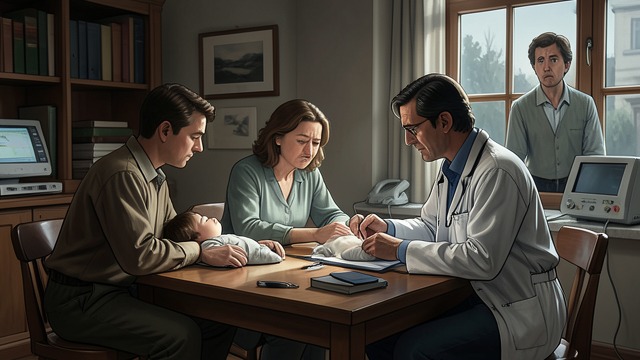
Uncertainty at Home
New Sickness
People fall ill, and doctors encounter unfamiliar conditions. Sudden deaths among adults and children unsettle the community’s belief that its surroundings are safe.
Fear Without a Visible Enemy
The cause is not immediately recognizable, and the chemical trace remains easy to overlook. Carson uses this uncertainty to show why delayed environmental harm can be frightening as well as difficult to prove.
The People’s Responsibility
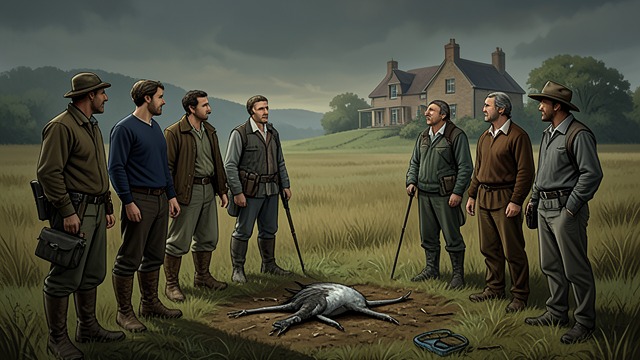
The Cause Is Human
No Outside Attacker
The town’s silence has not been imposed by an enemy or supernatural force. The inhabitants have changed their own world through decisions made in pursuit of control.
Grief Becomes Judgment
The fable turns sadness over lost birds and damaged farms into a question of responsibility. Its emotional force prepares readers to examine real cases rather than dismiss them as remote incidents.
Beauty Becomes a Public Value
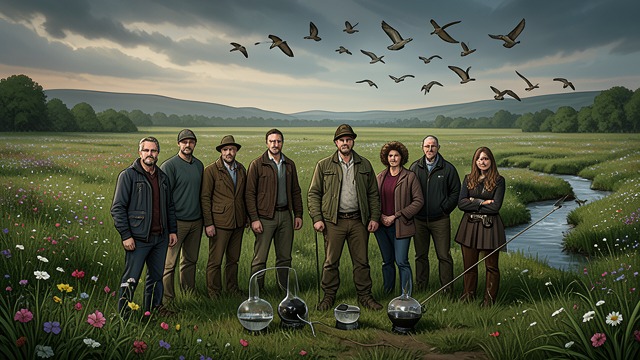
What Must Be Preserved
Beyond Utility
Carson argues that wildflowers, shrubs, birds, and pollinators have value beyond immediate commercial use. Their beauty and ecological function belong to a shared inheritance.
A Civic Bond
The desire to preserve birdsong and living landscapes becomes part of the case for public action. Emotional attachment is not a substitute for evidence; it is one reason the evidence matters.
At the beginning of Chapter 1
As the fable’s season changes
During the imagined town’s illness
At the close of the fable
Near the conclusion of Chapter 6
