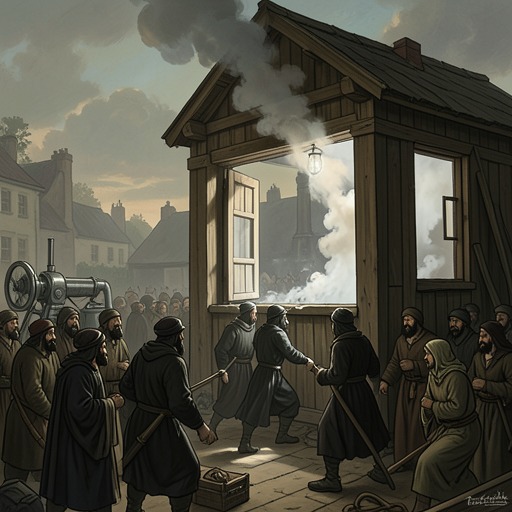
Allied forces in Italy during World War II DDT lice extermination operation
Silent SpringThe Allied anti-typhus campaign in Italy in 1943 was an early medical use of modern insecticides: the Allied Military Government dusted enormous numbers of people with DDT and successfully attacked typhus. The episode also begins a compact history of chemical control’s reversal: within a year, mosquitoes and flies were showing resistance, and the insecticides used to sustain control soon faced resistance of their own.
Emergency Use and Immediate Success
In 1943, during the Second World War, the Allied Military Government launched a campaign against typhus in Italy by dusting enormous numbers of people with DDT. The book identifies this as probably the first medical use of modern insecticides. It describes the attack as successful, presenting the intervention as a striking demonstration of the immediate public-health promise attributed to the new chemicals.
The campaign was followed in 1945 by extensive application of residual sprays to control malaria mosquitoes. The move from dusting people against typhus to spraying for mosquitoes extended chemical control from an emergency assault on disease to continuing efforts against its insect vectors.
Resistance and the Limits of Chemical Control
The early success did not last without complication. Only a year after the residual spraying began, houseflies and mosquitoes of the genus Culex showed signs of resistance. The chronology gives the reversal particular force: the chemical method had produced good control, but the target insects began to withstand it almost immediately.
In 1948, chlordane was introduced as a supplement to DDT. It provided good control for two years, but by August 1950 chlordane-resistant flies had appeared. The sequence—DDT use, resistance, a supplementary chemical, renewed control, and resistance again—illustrates how a successful chemical intervention could generate pressure for further chemical measures without securing a lasting solution.
Place in the Book’s Wider Argument
The episode appears in a broader account of pesticide resistance and the expanding use of persistent poisons after the war. Its importance lies not only in the scale of the 1943 dusting or its immediate success, but also in the rapid appearance of resistance after the subsequent spraying campaigns. In the book’s chronology, Italy offers an early warning that chemical control may change the conditions of the problem it is meant to solve: the insects remain, but become harder to control with the chemicals already in use.