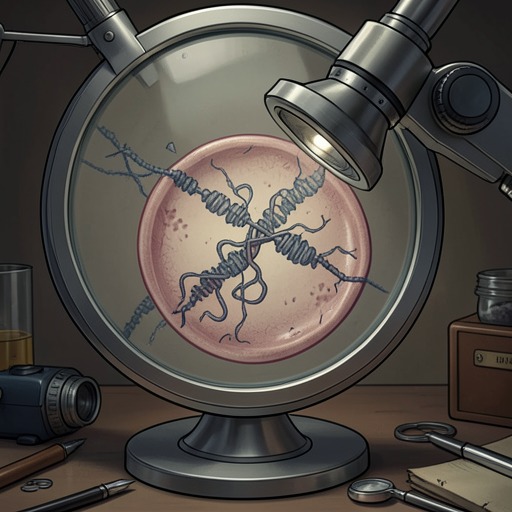
Chromosomal abnormalities
Silent SpringChromosomal abnormalities are changes in chromosome number, structure, or behavior during cell division that can alter development or damage particular cells. In Silent Spring, they form a crucial bridge between the book’s account of chemical exposure and its warning about possible inherited and developmental harm: the evidence does not establish one pesticide as a cause, but the known capacity of environmental chemicals to affect chromosomes makes their growing presence a risk the author argues cannot responsibly be ignored.
Definition and biological significance
The book describes genetic injury in terms of several distinct kinds of cellular disruption. Radiation, for example, can prevent a living cell from dividing normally, change chromosome structure, or produce sudden changes in genes, the carriers of hereditary material. This comparison frames chromosome damage as a concrete biological mechanism rather than a remote speculation: an assault on genetic material may interfere with the instructions that guide cells and their descendants.
The account distinguishes inherited differences from damage arising during an individual’s life. In discussing a chromosome loss affecting blood-cell precursors, it suggests that the missing material may have deprived those cells of instructions for normal behavior. The implication is not that every abnormality is inherited, or that every case shares a cause, but that changes to chromosomes can matter at the level of particular cells as well as in conditions present from development.
Findings reported in 1959
In 1959, independent studies by several British and French research teams pointed toward a common conclusion: some human illnesses and abnormalities were associated with disturbance of the normal chromosome number. The book gives an extra chromosome in typical individuals with Down syndrome as an example. Usually the extra chromosome is separate; occasionally it is attached to another chromosome, so the total count remains 46 despite the altered arrangement.
Other conditions illustrate that chromosome abnormalities take different forms. Klinefelter syndrome involves duplication of one of the sex chromosomes, while Turner syndrome is associated with the absence of a sex chromosome and a range of resulting characteristics. Both conditions had been described in medical literature before their chromosomal causes were understood. Their history underscores a change in medical knowledge: observable conditions could be recognized long before the underlying chromosome pattern was identified.
The research was expanding rapidly beyond the boundaries of earlier medical investigation. At the University of Wisconsin, a group led by Dr. Klaus Patau was studying congenital abnormalities, often involving mental and developmental defects. The text presents this work as part of an international effort to understand chromosome disturbances, not as proof that environmental pesticides caused the conditions under study.
From chemical exposure to possible genetic injury
The book’s environmental concern rests on a question of biological plausibility and public risk. It notes that chemicals in the environment can strike directly at chromosomes and affect them in ways that could produce abnormalities. This possibility is set beside the accumulating presence of chemicals in everyday surroundings: the warning is about exposure to agents with the power to cause such damage, rather than a claim that any particular disorder has been traced to one specific pesticide.
That caution matters because the book also describes exposure as cumulative and complex. DDT can enter the body through food or the lungs, collect in fatty tissues and organs, and remain there as small intakes build over time. It further warns that people are not exposed to only one chemical at a time; interactions among insecticides and other chemicals may have serious effects. These points establish the broader context for concern, but they do not demonstrate that stored DDT or mixed exposure caused the chromosome abnormalities discussed.
Limits of attribution and the stakes
The author explicitly resists assigning chromosome damage or erratic cell division to a single agent. That restraint separates the book’s warning from a settled causal finding: the existence of chromosome abnormalities and the capacity of some chemicals to affect chromosomes support concern, but the evidence presented does not identify a definitive chemical cause for the conditions described.
The argument culminates in a comparison between the possible biological cost and the modest conveniences offered by chemical control. If environmental chemicals can damage chromosomes in ways that may contribute to developmental conditions, the author asks whether that risk is an acceptable price for a sproutless potato or a patio without mosquitoes. Chromosomal abnormalities therefore function not only as a medical subject but as a test of judgment: uncertainty about exact causation, the book argues, is not a reason to disregard a plausible threat when the consequences may reach fundamental cellular processes and human development.