Colorado River (Texas)
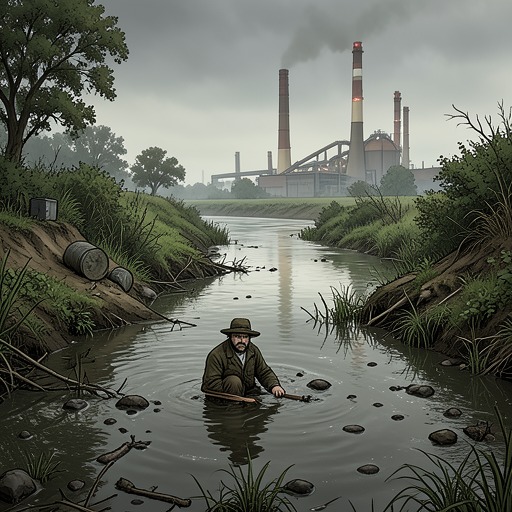
Silent SpringThe Colorado River (Texas) is presented as the site of a far-reaching fish kill in January 1961. A poisonous wave moved downstream from Austin, and later testing linked the contamination to insecticides flushed from material accumulated in Town Lake. The river’s course carried the lethal effects far beyond the apparent point of origin, turning a local event into a disaster across hundreds of miles.
The River and the 1961 Fish Kill
The event began shortly after daylight on Sunday, January 15, 1961, when dead fish appeared in Austin’s new Town Lake and in the river for about five miles below it. None had been seen the day before. By Monday, reports placed dead fish 50 miles downstream, making clear that a poisonous substance was moving with the river water.
The wave continued to travel. By January 21, fish were dying 100 miles below Austin, near La Grange; a week later, the chemicals were killing fish 200 miles downstream. During the final week of January, the locks on the Intracoastal Waterway were closed. The spread of the kill made the river not merely the site of contamination but its means of transport.
How the Poison Entered the Water
The account connects the release to the flushing of Town Lake to clear accumulated debris. That operation released insecticides lodged in layers of gravel, sand, and rubble, carrying them into the lake and then into the Colorado River. Chemical tests later established the presence of insecticides in the material moving through the water.
The sequence underscores the difference between a pollutant’s presence and its release. Insecticides had accumulated in debris; flushing mobilized them, and the river conveyed them downstream. The account identifies this pathway without naming a single responsible source for the original deposits.
Scale and Consequences
For 140 miles below the lake, the fish kill was almost complete. Later attempts to determine whether any fish had survived came up empty when seines were used. Dead fish from 27 species were observed, amounting to about 1,000 pounds per mile of riverbank. The losses included channel catfish, described as the river’s chief game fish, as well as blue and flathead catfish, bullheads, sunfish, shiners, dace, and stone rollers.
The episode gives the river a double role in the book’s account of pesticide pollution: it is a living habitat, with many fish species dependent on its waters, and a transport route through which chemicals can carry harm downstream. The distance and scale of the kill show how an action undertaken to clear a lake could have consequences extending far beyond the lake itself.