Commercial shrimp
Silent SpringCommercial shrimp enter the account as a measure of the reach of pesticide pollution beyond fields and forests. Their life cycle draws young shrimp into estuaries and bays for months, making them vulnerable precisely where chemical contamination can arrive through rivers or direct spraying over marshes. Laboratory tests cited in the book found that concentrations measured in parts per billion could kill young shrimp, grounding the warning in a specific susceptibility rather than in a general fear of pollution.
Life cycle and coastal dependence
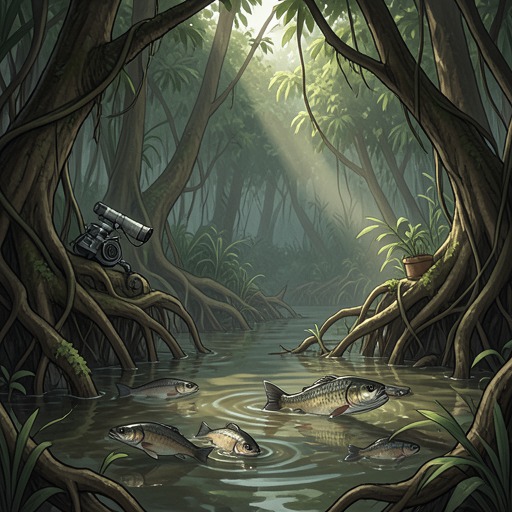
The book emphasizes that the early stages of fish are especially susceptible to direct chemical poisoning, then turns to shrimp as another species dependent on inshore feeding grounds. Spawning occurs at sea, but young shrimp enter estuaries and bays when only a few weeks old. There they undergo successive molts and changes of form, remaining from May or June until fall and feeding on detritus at the bottom. This extended inshore phase makes the condition of coastal waters consequential to the shrimp population: the species’ development depends on habitats exposed to both river-borne pesticides and direct spraying over bordering marshlands.
That dependence links an individual animal’s development to a much wider commercial system. The book describes one abundant, widely ranging shrimp species as supporting the entire commercial fishery of the southern Atlantic and Gulf states. The young shrimp are therefore not a peripheral concern in the account. Their vulnerability at the estuarine stage bears on the continuity of a fishery whose reach extends across two major coastal regions.
Laboratory evidence of toxicity
The risk is sharpened by experiments conducted by the Bureau of Commercial Fisheries. Young commercial shrimp just past larval life had an exceedingly low insecticide tolerance, measured in parts per billion rather than the more commonly used parts per million. In one experiment, dieldrin at a concentration of only 15 parts per billion killed half the shrimp tested. The result places the hazard at a scale far below the concentrations ordinarily used to express pesticide levels.
Endrin proved more toxic still: half the shrimp were killed at only half of one part per billion. The contrast between these minute concentrations and the shrimp’s reliance on shallow inshore habitat makes the laboratory findings directly relevant to the book’s account of contamination reaching estuaries. The reported outcomes are experimental, not a claim that a particular wild shrimp population had already suffered a measured loss; their force lies in demonstrating how little of these chemicals the young animals could tolerate.
Pollution pathways and public stakes
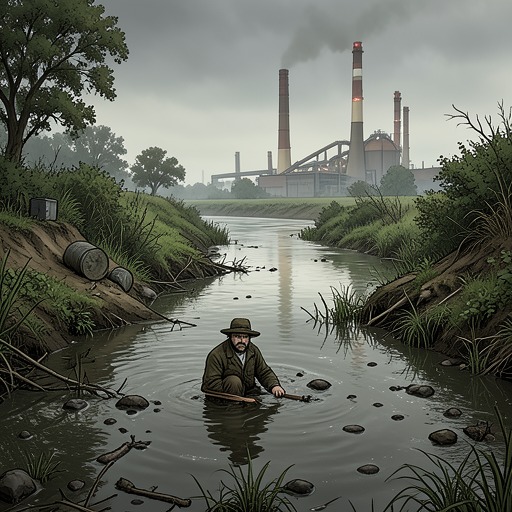
The account locates the danger in two routes by which pesticides can reach aquatic environments: entry through rivers and direct application over marshlands bordering the waters where young shrimp feed and develop. Because the animals spend much of their early life in estuaries and bays, the period of exposure overlaps with a vulnerable stage of growth. The book’s focus on this pathway makes the shrimp an example of how land-based spraying can have consequences beyond its intended target area.
The wider setting is one in which aerial distribution of lethal chemicals across millions of acres had prompted public misgivings. The shrimp evidence gives those doubts a concrete coastal dimension: pesticide use is not confined to the places where it is applied, and its effects may matter to animals whose life histories connect the open sea to estuarine feeding grounds. The fishery stakes deepen that concern. If the young stages of a species supporting a large regional commercial fishery are highly susceptible, contamination of its inshore habitat raises a potential threat not only to wildlife but to a human food and economic resource.
Significance in the book
Commercial shrimp extend the book’s argument about pesticide hazards from terrestrial habitats into coastal waters. Their life cycle supplies the connection: spawning takes place at sea, but development and feeding carry the young into bays and estuaries, where they remain through the warmer months. Laboratory results then establish an unusually narrow margin of tolerance, including lethal effects at parts-per-billion concentrations.
The episode’s significance rests on the convergence of biological dependence, chemical vulnerability, and human reliance. The account does not present a documented shrimp-fishery collapse; instead, it shows why contamination pathways and early-life sensitivity matter before a collapse can be established. In that sense, the shrimp’s story is both ecological and evidentiary: it reveals the scale at which pesticides may act, and why protection of inshore waters bears on a fishery sustained by animals that spend their most vulnerable months there.