Ecological interdependence
Silent SpringEcological interdependence describes the relationships through which living things and their habitats shape one another, so that changing one part of a community can alter the lives of others. In Silent Spring, the concept is both an explanation of how poisons travel and a criticism of control programs that treat a single species as though it could be removed without consequences. The target is never the only life in the field: predators, prey, plants, soil, and water belong to connected systems, and disrupting those connections can undermine the very control an intervention is meant to achieve.
Natural checks and chemical disruption
In a functioning community, predatory insects, birds, and small mammals help limit insect populations. Chemical spraying breaks into that system without reliably distinguishing a supposed pest from its enemies. When spraying destroys both insects and the organisms that prey on them, a later resurgence may find fewer natural checks. The result is a cycle in which the original intervention damages the relationships that might otherwise have kept the population in bounds.
The account of birds protecting orchards makes this contrast concrete: Chickadees and other birds that remain through winter can help protect trees against cankerworms. Yet in a chemical-drenched environment, spraying can kill the birds along with the insects. Once insect numbers rise again, the predators that might have curbed them are absent. The short-term appearance of control thus risks producing a longer-lasting vulnerability, while leaving communities with the question of how to manage the new pests that follow.
Owen J. Gromme, Curator of Birds at the Milwaukee Public Museum, expressed the contradiction in a letter to the Milwaukee Journal. He called predatory insects, birds, and small mammals the greatest enemies of insect life, and argued that DDT kills indiscriminately, including what he described as nature’s safeguards. His warning was not simply that spraying harms wildlife; it was that destroying the organisms that control insects can make people vulnerable to later infestations. The intervention may provide temporary comfort while weakening the system on which durable control depends.
Habitats as living systems
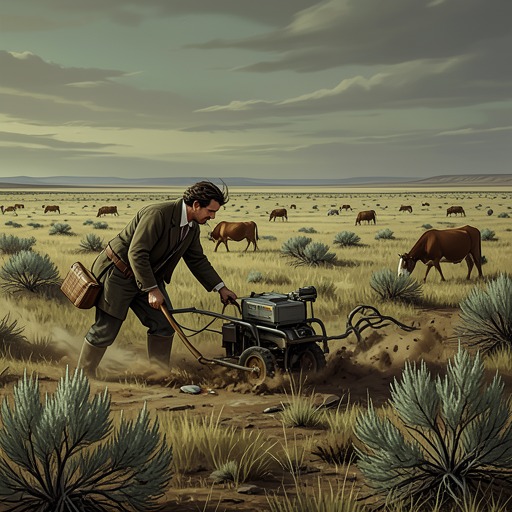
Interdependence also operates across landscapes, where the plants that appear to obstruct a human use may sustain other species and help define a habitat. The western sage lands, formed through long geological change and harsh climatic conditions, are described as a place in which animal life evolved in relation to its vegetation. The pronghorn antelope and sage grouse belong to this setting; sage is not merely a plant occupying land that could be converted to grass, but part of the conditions to which its animal life is adapted.
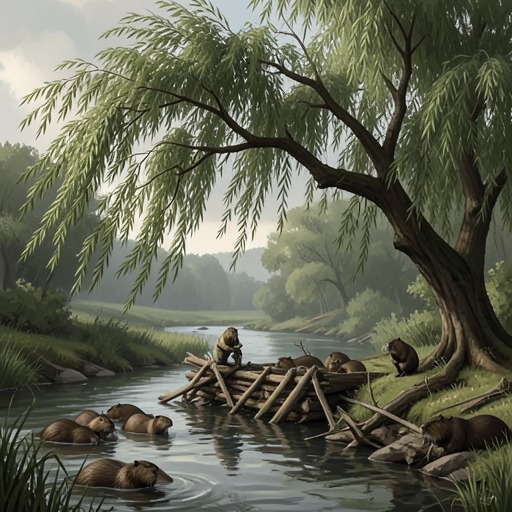
Land-management agencies sought more grazing land in response to cattlemen’s demands, treating sage as vegetation to be cleared for grass. This conception of improvement obscures the existing relationships that make the landscape a functioning system. At Bridger National Forest in Wyoming, the United States Forest Service sprayed roughly 10,000 acres of sage land. The intervention also killed plants beyond its intended target. When the willows died under the same spray, the beavers that depended on them lost their support as well; the area’s previous recreational value, including its fishing and hunting, was bound up with those habitats. The damage therefore extended beyond the plant the program meant to remove.
The example makes ecological interdependence a matter of land use and management, not only of species biology. A landscape cannot be reduced to a single desired crop or grazing condition without accounting for the other forms of life supported by its existing structure. What seems like a local improvement can dismantle relationships that sustain animals, vegetation, and human uses of the same place.
From leaves to birds
The elm and robin example traces interdependence as a chain of transfer. Spraying elms does not have to strike robins directly to affect them: poison moves from elm leaves into earthworms and then to the birds that feed on them. The following spring’s absence of robin song is presented as the visible result of this indirect route, the familiar elm leaf–earthworm–robin cycle. A local act of tree spraying thereby reaches beyond its immediate target and becomes a consequence of how organisms feed and connect.
The book places such observable ecological relationships beside less immediately visible effects within human bodies. Its wider point is that a cause and its consequence need not appear in the same place or at the same time. A poison can travel from one link to another, and the resulting harm may seem disconnected from the decision that set the chain in motion. Ecological interdependence therefore changes what counts as evidence of an intervention’s effects: the target alone cannot reveal the full cost.
Variety and the balance of nature
The concept also supports a case for preserving variety. Charles Elton’s phrase, “the conservation of variety,” names a principle applied to communities of trees as well as to the broader relations among organisms. If a community depends on a narrow range of species, a future epidemic could deprive it of its trees; planting a variety, including resistant European elms, is presented as a way to avoid placing the whole community at the mercy of one vulnerability. Variety is thus not ornamental diversity but a practical condition of resilience.
Across these examples, the balance of nature does not mean that every community is motionless or that humans can never intervene. It means that living things are connected by dependencies that intervention must take into account. When a program removes predators, destroys supporting vegetation, or sends poison onward through food relations, it can upset the conditions it claims to improve. The book’s central ecological warning follows from this: nature is not a collection of isolated targets, and control that ignores interdependence can turn an intended solution into the source of further harm.