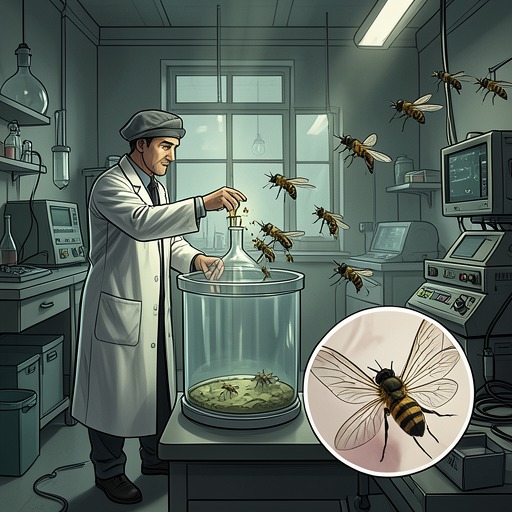
Fruit flies
Silent SpringFruit flies are presented as both evidence of the potential hereditary effects of agricultural chemicals and subjects in research into alternatives to lethal insect control. These two roles place them at opposite ends of the book’s argument: they register the biological costs of chemical exposure, yet also figure in experiments seeking ways to manage insect populations without relying on indiscriminate poisoning.
Evidence of Hereditary Damage
In discussing chemical effects on heredity, the book reports that fruit flies, a classic subject of genetic experiments, developed mutations after exposure to phenol. The account places this finding alongside reported chromosome destruction, gene changes, and irreversible hereditary changes in plants treated with various phenols. The flies thus extend the concern beyond plants: the mutations described in them were damaging enough to become fatal upon exposure to one of the common herbicides or to urethane, a chemical in the carbamate group from which an increasing number of insecticides and other agricultural chemicals were being drawn.
The sequence matters. The fruit flies are not described as having died simply from the initial phenol exposure; the reported danger lies in the mutations it produced and the lethal vulnerability that followed under exposure to other chemicals. Their case gives concrete form to the possibility that chemical injury may alter inherited biological material and that the consequences can emerge through interaction with a later exposure.
Subjects in Sterilization Research
Elsewhere, fruit flies appear in research exploring sterilization as a possible means of insect control. Scientists in the United States had obtained encouraging early results with the melon fly and with oriental and Mediterranean fruit flies, using laboratory tests in Hawaii and field tests on the remote island of Rota. The book also notes that the corn borer and sugarcane borer were being tested, and raises the possibility that insects of medical importance might likewise be controlled by sterilization.
This work places fruit flies within a search for methods distinct from broad chemical killing. The evidence records promising early tests, not a completed control program or a demonstrated long-term outcome. Together with the mutation findings, that limited status makes the flies’ role especially revealing: they are at once experimental organisms through which chemical risks become visible and potential targets of a less indiscriminate approach to insect management.