Kobus kobus
Silent SpringThe pronghorn antelope is one of the animals most closely adapted to the sage country of the American West. The book places it within a living system formed over immense spans of time: sage sustains the pronghorn through winter, while the pronghorn and sage grouse depend on a landscape increasingly altered by human attempts to remove sagebrush and create more grassland. The pronghorn’s fate therefore measures more than the success of a grazing program; it reveals what is lost when land is treated as a single-purpose resource rather than as an interdependent habitat.
A life fitted to sage country
The pronghorn’s home is the high western plains and the lower slopes of the mountains that rise above them, a region formed by the uplift of the Rocky Mountain system many millions of years ago. Its climate is marked by harsh extremes, and the plants and animals of the region evolved in response to those demands. The pronghorn is described as fleet and graceful, but its adaptation is not simply a matter of speed: its seasonal movements and winter feeding connect it closely to the plants of the plains.
In winter, pronghorn that spent the summer in the mountains move down to lower elevations. There, when other plants have shed their leaves, sage remains evergreen. Its gray-green leaves cling to dense, shrubby plants and are bitter, aromatic, and rich in protein, fats, and needed minerals. The tops of the shrubs may remain exposed above the snow; where they do not, the pronghorn can reach them with its sharp hooves, pawing through the snow to feed. Sage is thus not decorative cover or incidental forage. It is a winter resource that helps carry the animal through the season when other food has disappeared.
Interdependence on the plains
The pronghorn’s adaptation belongs to a wider ecological pattern. The sage grouse is equally closely associated with sage country: the bird’s original range coincided with the range of the plant, and the grouse feeds on sage. The relationship is reciprocal in its effects. During their courtship displays, male grouse loosen the soil beneath and around sage, helping grasses invade the shelter of the shrubs. The landscape is not a collection of separate species but a set of relationships in which animal behavior can affect plant growth and vegetation provides food and habitat in return.
Other animals also rely on sage. Grouse feed on exposed shrubs on bare, windswept ledges or follow pronghorn to places where the animals have scratched away snow. Mule deer often eat sage as well, and sage may be crucial to the winter survival of livestock. Sheep graze winter ranges where big sagebrush forms nearly pure stands. These overlapping dependencies make the pronghorn’s feeding ground part of a larger seasonal network: the shrub offers food in winter, while its structure shelters grass and supports a community of wild and domestic animals.
The pressure to replace sagebrush
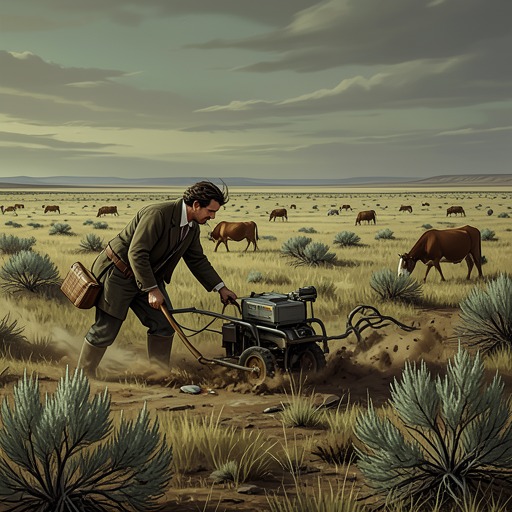
The book contrasts this evolved relationship with a land-management campaign organized around the demand for more grazing land. In the agencies’ understanding of improvement, that means grassland—grass without sage. The effort assumes that removing sagebrush will produce more useful forage, even though the account argues that grasses grow better between and beneath sage than they can in pure stands after the moisture-holding shrubs are gone. The program’s immediate objective is therefore set against the ecological conditions that sustain the land over time.
The anticipated consequences extend well beyond the plant being targeted. If the program succeeds, the pronghorn and sage grouse will disappear along with the sage; deer will suffer, and livestock may also lose the wild winter forage on which they depend. Lush summer grass cannot compensate for sheep left hungry in winter storms without sage, bitterbrush, and other native vegetation. The destruction is presented as a reversal of the promised improvement: a policy meant to benefit grazing can undermine the seasonal resources that make both wildlife and livestock viable.
A warning from altered landscapes
The pronghorn appears in a wider argument against indiscriminate intervention. The book calls the destruction of closely connected forms of life a tearing of the “whole closely knit fabric of life,” and treats the sage country as an example of what such disruption can mean. Its emphasis is not only on the direct removal of sage, but also on collateral damage: a broad-spectrum treatment can eliminate plants that were never intended targets and unravel relationships that managers may not have accounted for.
The account of the Bridger National Forest gives that warning a concrete setting. Under pressure from cattlemen, the United States Forest Service sprayed about 10,000 acres of sage country. Willows also died under the same indiscriminate spray. When William O. Douglas visited the area in 1959, the year of the spraying, he saw shriveled and dying willows. Their loss mattered beyond the plants themselves: beavers depended on them, and the region had been valued for fishing and hunting. The incident shows how an attempt to alter one part of the landscape can carry consequences into other habitats and uses.
The pronghorn’s place in this account is consequently both specific and emblematic. It is a winter browser whose survival is tied to sage, not an abstract symbol detached from its habitat. Yet its dependence also makes visible the stakes of changing that habitat: the same shrubs support grouse, deer, and livestock, and their removal can compromise the land’s capacity to sustain them. Against the language of improvement, the book sets the pronghorn’s seasonal reliance on sage and the wider web of life that land management threatens to break.