Long Island
Silent SpringLong Island is both a populated landscape and a test of the consequences of treating a pest-control boundary as if it were an ecological boundary. In 1957, planes hired by the United States Department of Agriculture and the New York Department of Agriculture and Markets sprayed DDT in fuel oil across an area that included densely settled towns and suburbs, coastal communities, farms, fish ponds, and salt marshes. The campaign’s indiscriminate reach, and the failed attempt by local citizens to halt it, make Long Island one of Silent Spring’s clearest examples of the distance between an agency’s control objective and the lives and habitats exposed to its methods.
A settled landscape in the spray zone
The Long Island area included in the 1957 gypsy moth campaign consisted chiefly of heavily populated towns and suburbs, along with coastal areas bordering salt marshes. Nassau County was described as the most densely settled county in the country. Yet the gypsy moth was a forest insect, not an inhabitant of cities; it did not live in meadows, cultivated fields, gardens, or marshes. The geography of the spraying therefore extended well beyond the pest’s stated habitat.
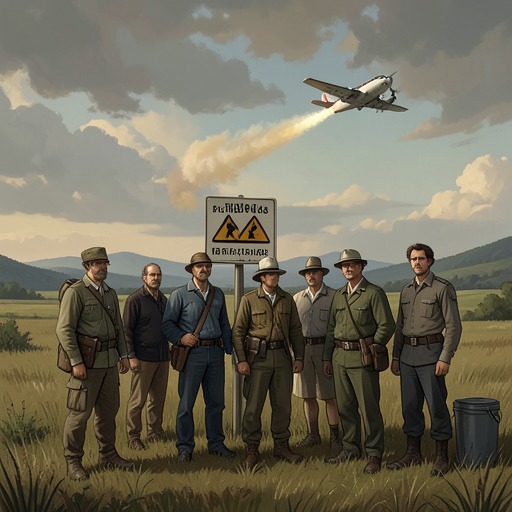
That mismatch became tangible in the places reached by the planes. They showered the prescribed DDT-and-fuel-oil mixture over truck gardens and dairy farms, fish ponds and salt marshes. The treatment did not distinguish between wooded areas where the insect lived and the varied human and natural environments around them. Long Island’s settlement pattern made that failure of distinction especially consequential: the operation entered places of work, food production, and coastal wildlife rather than remaining within a forest-control zone.
The 1957 campaign and its immediate effects
Plans to spray three million acres in 1957 intensified opposition to the gypsy moth program. Agriculture officials dismissed individual complaints as unimportant, even as the planned treatment covered a landscape in which people, farms, and non-target habitats lay alongside the forests. The gap between the announced scale and the local experience was not abstract: the spray reached gardens and dairy farms, and the oily mixture ruined flowers and shrubs.
The reported losses extended beyond cultivated plants. Birds, fish, crabs, and useful insects were killed. Salt marshes and fish ponds were among the places sprayed, so the effects described in the book crossed from terrestrial vegetation into aquatic and coastal life. The campaign’s consequences were thus not confined to the insect it was designed to control; the same broad application that reached the target also harmed organisms and places outside that target.
Citizens, courts, and public attention
A group of Long Island citizens led by the ornithologist Robert Cushman Murphy sought a court injunction to prevent the 1957 spraying. The court denied a preliminary injunction, and the protesters had to endure the prescribed treatment. Their effort did not stop the campaign, but it made the dispute over who could authorize such an operation harder to ignore.
The citizens’ suit focused public attention on the growing practice of mass insecticide application and on control agencies’ power and inclination to disregard private property rights that were supposed to be inviolate. Long Island thereby became more than the site of a pesticide application: it became a legal and civic confrontation over the authority to expose populated places to a government-directed program, even when residents objected.
Significance in Silent Spring
The Long Island episode places the language of pest control against the actual reach of the control measures. A forest insect supplied the rationale, but the spray crossed into towns, farms, gardens, fish ponds, and marshes; the resulting harm included losses among wildlife and useful insects as well as damage to flowers and shrubs. The contrast shows how an operation defined by its target could become indiscriminate in practice.
The attempted injunction and the officials’ dismissal of complaints add a question of public power to the ecological record. Long Island’s importance in Silent Spring lies in the way these strands meet: a large-scale program enters a densely inhabited landscape, damages life beyond its intended target, and prompts citizens to challenge both the method and the authority behind it.