Natural selection
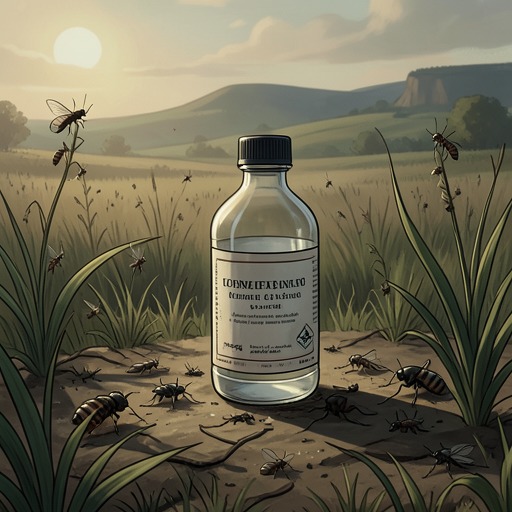
Silent SpringNatural selection is the evolutionary mechanism that turns repeated chemical attack into a source of pesticide resistance: spraying removes more susceptible insects while leaving survivors whose inherited traits help them withstand the poison, so later generations grow harder to control. In Silent Spring, this process is both a biological explanation and a warning about the unintended consequences of treating ecological systems as simple targets. The book connects insect evolution to the postwar expansion of pesticide programs and to landscapes whose plants and animals had developed in relation to one another over long periods.
The evolutionary mechanism
The chapter “The Rumblings of an Avalanche” presents intensive chemical spraying as a force that makes natural selection unusually visible. Insect populations vary in structure, behavior, and physiology; when a chemical is applied, the less resistant members are more likely to die. The insects that survive are not thereby transformed into resistant individuals during their own lives. Rather, their pre-existing qualities give them a greater chance of surviving and reproducing.
The survivors become the parents of the next generation, and their offspring inherit qualities that helped their forebears withstand the chemical. Repeated over successive generations, this changes the composition of the population: instead of a mixture of more and less susceptible insects, the population increasingly consists of resistant strains. The book’s central reversal is that a control measure can strengthen the very population it is meant to suppress.
The precise means of resistance are not presented as fully understood. Some insects may have structural advantages, but the account cautions that actual proof for that explanation is limited. The broader point does not depend on a single mechanism: resistance is an outcome of selection among individuals with different inherited characteristics, even while the details of how particular insects evade particular chemicals remain uncertain.
Generations and the pace of change
The distinction between individual survival and population change is essential to the explanation. Resistance is not something an insect acquires simply because it has been exposed to poison. An individual that possesses less-susceptible qualities from birth is more likely to survive and reproduce; over time, those qualities become more common in the population.
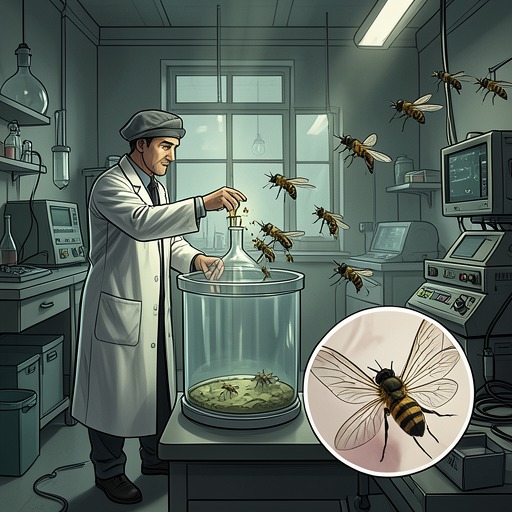
The speed of the process depends on generational turnover. Human populations reproduce at roughly three generations per century, while new insect generations can arise in days or weeks. Consequently, selection under repeated spraying can produce substantial change in insect populations on a timescale far shorter than the corresponding pace of change in humans. The chapter uses this contrast to explain why resistance can emerge quickly enough to frustrate continuing control efforts.
That rapid evolutionary response creates an escalating contest. As chemical measures lose effectiveness, new insecticides and new methods of application are developed, but insects may continue to stay ahead. The result is not simply a sequence of technical failures: each round of treatment changes which insects remain to reproduce, helping produce a population increasingly suited to withstand the next round.
Chemical control in historical context
The argument belongs to the book’s account of the postwar spread of persistent poisons. In 1958, when Rachel Carson began writing Silent Spring, she was fifty and had spent most of her professional life as a marine biologist and writer with the U.S. Fish and Wildlife Service. She and scientific colleagues had become alarmed by the widespread use of DDT and other long-lasting poisons in agricultural control programs. Carson decided to speak out after concluding that these chemicals were destroying wildlife and habitat and endangering human life, even though publishers turned down her proposed magazine article amid concern about advertising and claims that it might cause unwarranted fear.
The book illustrates the scale of the control programs with the fall of 1959, when about 27,000 acres in southeastern Michigan, including suburbs of Detroit, were dusted from the air with aldrin. This example locates chemical intervention not in an abstract laboratory but in inhabited landscapes. Natural selection provides one way to understand the longer-term biological consequence of such intensive treatment: repeated exposure does not guarantee lasting control, because it can favor the insects best able to endure it.
The same concern with intervention appears in the book’s treatment of the western sage country. The land of the sage is described as a harsh environment shaped over long periods, with plant and animal life evolving in response to its conditions. The pronghorn antelope and sage grouse are among the animals adapted to that habitat. When land-management agencies sought more grazing land by removing sagebrush, the program treated a complex landscape as though its vegetation could be divided neatly into useful and unwanted categories.
In the Bridger National Forest, the U.S. Forest Service sprayed about 10,000 acres of sage country after pressure from cattle interests. The account describes the collateral destruction of plants that were not intended targets: willows were killed along with the sagebrush, affecting the habitat on which beavers depended. The loss of willows changed a region previously valued for recreation, fishing, and hunting. This example extends the chapter’s warning beyond insect resistance: powerful, broad treatments can reorder ecological relationships and produce costs outside the original objective.
The argument’s wider significance
Natural selection clarifies why chemical control cannot be understood as a one-way act imposed on passive nature. Insects vary, survive unevenly, and reproduce; their responses alter the population that future control measures will confront. Chemical applications therefore become part of the conditions under which evolution proceeds, rather than a permanent solution imposed from outside it.
The book places that biological process beside other signs of inadequate foresight. In the discussion of heptachlor, research into the chemical’s peculiar nature followed the launch of a control program; the text notes that basic information had already been published, yet it had not been adequately brought to bear beforehand. Across these examples, the recurring problem is not merely that a particular treatment has harmful effects. It is that large-scale intervention can proceed before its consequences and alternatives are properly understood.
By making selection concrete—susceptible insects die, survivors reproduce, and resistant strains accumulate—Silent Spring turns an abstract evolutionary principle into a practical account of why chemical dependence can deepen the problem it promises to solve. The mechanism also gives the chapter its image of an approaching avalanche: each application may appear decisive in the moment, while the population-level change it sets in motion gathers force across generations.