Oyster
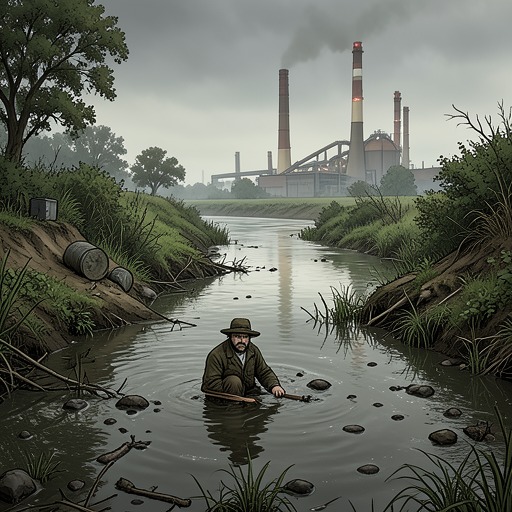
Silent SpringOysters are both vulnerable inhabitants of coastal waters and a possible route by which pesticide residues reach people. Their life cycle exposes them to hazards at two scales: drifting larvae depend on plankton that chemicals may destroy, while adult shellfish can concentrate poisons in tissues eaten whole, sometimes raw. The account makes the oyster a link between environmental contamination and the human food supply, rather than merely another casualty of spraying.
Life Cycle and Exposure
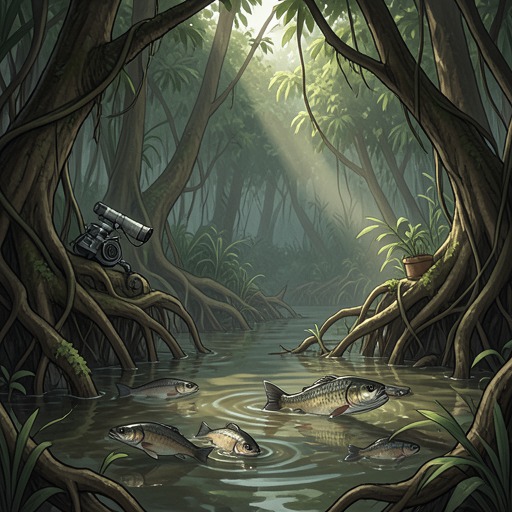
Oysters live on the bottoms of bays, sounds, and tidal rivers, but their reproduction carries them into a very different environment. Adults release spawn into the sea; the young then spend several weeks free-living in the water. At this stage they are exceptionally small and exposed, and the author emphasizes that the early stages are the most vulnerable to toxic chemicals.
The larvae drift among the plant and animal life that makes up the plankton. A fine-meshed net towed behind a boat on a summer day can collect them alongside this microscopic community. Transparent and no larger than grains of dust, they feed on microscopic plant life near the surface. Their survival therefore depends not only on whether a pesticide poisons an individual larva directly, but also on whether it damages the minute vegetation that supplies their food. If that crop fails, young oysters may starve.
The Food-Web Threat
The danger described is not limited to a single exposure route. Pesticides may destroy substantial quantities of plankton, disrupting the food supply on which larvae depend and shortening their hazardous passage toward adulthood by reducing their chances of survival. The shellfish’s life cycle thus makes ecological damage consequential even when an individual adult appears less susceptible to direct poisoning.
The text gives a measure of how potent some compounds can be in aquatic settings: half of the shrimp tested died at an endrin concentration of only half a part per billion. That figure is not an oyster-specific toxicity measurement, but it establishes the broader stakes of pesticide contamination in waters where young shellfish and plankton coexist. The account also identifies dieldrin as toxic to shrimp at a concentration of 15 parts per billion, underscoring that minute quantities can matter to aquatic life.
Human Consumption and Consequences
For adult oysters, the evidence offers no easy reassurance. Direct poisoning may be less of a danger for adults with some pesticides, but oysters may concentrate poisons in their digestive organs and other tissues. Because oysters are normally eaten whole and sometimes raw, contamination retained within the animal could pass directly into the human diet. The concern therefore shifts from visible mortality in the water to residues carried by shellfish that remain apparently available as food.
This possibility belongs to a wider pattern of exposure. DDT can enter the body through food and the lungs, accumulate in fatty tissues and organs, and remain there because small pesticide intakes are cumulatively stored and only slowly excreted. The oyster passage does not claim that every compound behaves identically, nor does it provide a measured human dose from eating oysters. Instead, it places shellfish consumption within the broader problem of persistent residues and chronic exposure.
Significance in the Book
The oyster’s story joins environmental and public-health risks without treating them as separate subjects. The young depend on a living plankton community that chemicals may damage; adults can retain poisons in tissues people eat. The animal is therefore part of a chain of consequences running from pesticide use in the environment, through aquatic food webs, to human consumption.
That chain also helps explain why harm may be difficult to recognize as a single dramatic event. The evidence concerns tiny larvae, microscopic food, low concentrations, and residues stored in edible tissue—processes that can accumulate beyond the point of immediate observation. By following those connections, the account turns a familiar food animal into evidence of how contamination can travel across species and into everyday life.