Pheasant
Silent SpringPheasants are among the clearest recurring examples in Silent Spring of how pesticide exposure can undermine wildlife without producing an immediate, visible collapse among adult animals. The book connects field reports of disappearing or sick birds with controlled experiments in which reproduction fails, and with chemical residues measured in eggs and reproductive tissues. Together, these strands show harm extending beyond individual exposure: a bird population can be compromised by effects that emerge during incubation, after hatching, or in the next generation.
Field Reports and Disappearing Birds
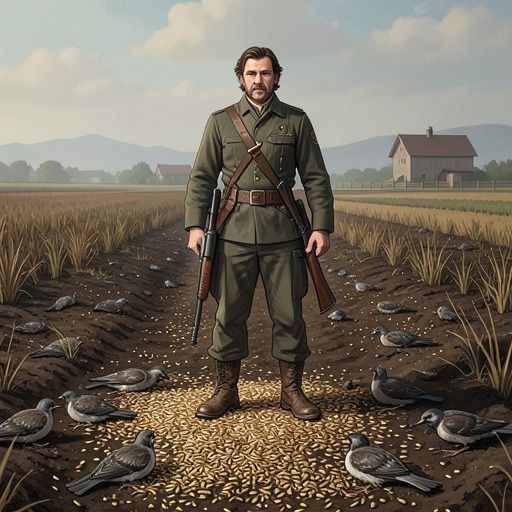
In accounts of pesticide-treated farmland, pheasants appear alongside other birds as casualties of contaminated seed. A gamekeeper reported that dressed corn had wiped out his partridges, killed pheasants and other birds, and left him distressed by the loss. The account locates the damage in a practical detail of agricultural use: treated grain could expose birds feeding in the landscape, making the consequences of chemical application visible not only in laboratory records but in vanished game and familiar wildlife.
The book also describes a recurring spring condition known as pheasant sickness in rice-growing counties. Reports of losses among pheasants, ducks, and blackbirds had accumulated over the preceding decade. Affected birds sought water, became paralyzed, and were found quivering along ditch banks and rice checks. The timing mattered: the sickness appeared when rice fields were seeded, linking a repeated seasonal pattern of illness to the agricultural setting rather than presenting it as an isolated occurrence.
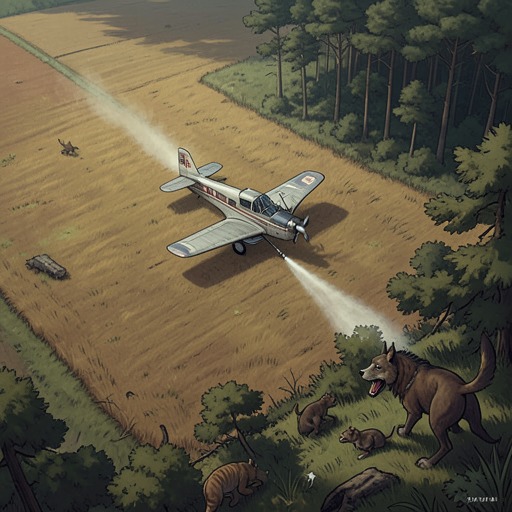
These observations form part of a wider argument about large-scale spraying. The book notes that pesticide campaigns were directed not only over forests and cultivated fields but also across towns and cities, and that mass-spraying efforts in the late 1950s intensified public doubts. Pheasant losses therefore belong to a larger conflict over how broadly lethal chemicals were distributed and whose evidence of harm was acknowledged.
Experiments and Reproductive Failure
Controlled studies sharpen the distinction between an adult bird’s apparent condition and its ability to reproduce. In experiments by James DeWitt of the United States Fish and Wildlife Service, exposure to DDT or related chemicals could impair reproduction even when the parent birds showed no observable harm. Quail and pheasants produced fertile eggs, yet few eggs hatched; embryos that appeared to develop normally in early incubation often died during hatching, and more than half of the chicks that did hatch died within five days.
The effects were more severe under prolonged exposure. When pheasants and quail received insecticide-contaminated diets throughout the year, adults produced no eggs at all. At the University of California, Robert Rudd and Richard Genelly reported a similar reproductive pattern among pheasants fed dieldrin: egg production fell markedly and chick survival was poor. The findings made reproduction itself a sensitive measure of exposure, revealing damage that a simple observation of adult birds could miss.
The evidence also establishes a contrast between short-term appearance and population continuity. Adults could remain outwardly unaffected while their eggs failed to hatch or their offspring died soon after emergence. In other tests, the reproductive process stopped before eggs were produced. These are distinct outcomes, but both point to the same vulnerability: pesticide effects could interrupt the succession of generations without requiring an obvious poisoning episode among the parent birds.
Treated Landscapes and Residues
Field evidence from a chemical-control program adds a population-level counterpart to the experiments. On farms in treated areas, wild turkeys produced few young; few eggs hatched, and almost no young survived. This pattern was not reported on nearby untreated areas. The comparison does not by itself isolate every factor, but it ties poor reproductive results to treated ground and gives the broader claims about pesticide effects a concrete local contrast.
Measurements in eggs provide another line of evidence. Pheasant eggs in a California experiment contained as much as 349 parts per million of DDT. That figure makes the egg more than a record of reproduction: it is also a measure of contamination carried into the next generation. The book reports that residues of DDT and other hydrocarbons were found in the eggs of birds exposed experimentally or in the wild, and emphasizes that concentrations could be heavy.
Pesticides were also detected in tissues associated with reproduction. In controlled studies, accumulations were found in the sex organs of pheasants, mice, and guinea pigs; similar findings came from robins in an area sprayed for elm disease and deer in forests sprayed for spruce budworm. Pheasants accumulated up to 1,500 parts per million in the testes. The book notes that such storage may be connected with observed testicular atrophy in experimental mammals, while presenting that connection as a probable effect rather than a proven explanation for every reproductive failure.
Significance in the Book’s Argument
Pheasants bring together several kinds of evidence that might otherwise be easy to consider separately: reports of dead or missing birds, recurring illness in agricultural districts, experiments on eggs and chicks, and measurements of residues in eggs and reproductive organs. The sequence exposes a weakness in judging pesticide safety only by whether exposed adults appear well. Reproductive loss can be delayed, occur at a different stage of life, and remain difficult to detect until hatching and survival are examined.
The account also places pheasants within an ecological pattern of exposure rather than treating each bird as an isolated case. Dressed seed, rice-field treatments, and wider chemical programs create different routes into the landscape, while the observed outcomes range from sickness to fewer eggs, failed hatching, and poor chick survival. By returning to pheasants across field reports and experiments, Silent Spring makes them evidence of a slower kind of damage: the future of a population can be diminished even when the condition of its adult members offers no clear warning.