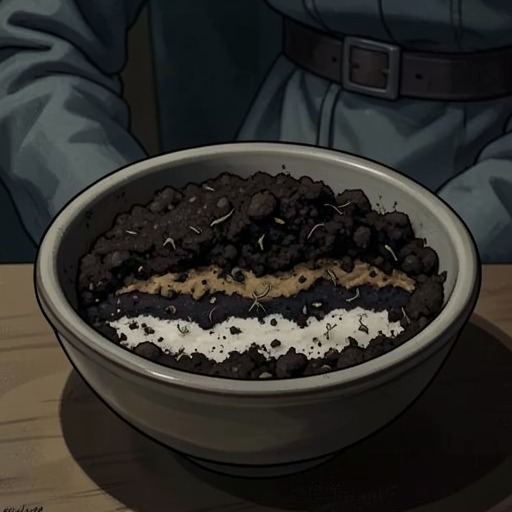
Soil bacteria
Silent SpringSoil bacteria are among the smallest and least visible inhabitants of the soil, yet the book places them at the center of processes on which plants and the larger living world depend. A teaspoon of topsoil may contain billions of them; in the top foot of a single acre of fertile soil, their combined weight may reach a thousand pounds. Their minuteness conceals their ecological scale: these organisms are not incidental residents of the earth beneath the surface, but essential participants in its capacity to support life.
Abundance and Ecological Work
Bacteria belong to the microscopic plant life of the soil, alongside threadlike fungi and small green cells called algae. Together, these organisms are principal agents of decay: they reduce the remains of plants and animals to their component minerals. That work connects death with renewed growth, returning materials from organic residues to forms that living plants can use.
The scale of this activity extends far beyond any single patch of ground. The movement of elements such as carbon and nitrogen through soil, air, and living tissue depends on these microscopic organisms. Soil bacteria thus help make the soil part of a larger circulation of matter, rather than a passive bed in which plants happen to grow.
Nitrogen and Plant Life
The book emphasizes nitrogen-fixing bacteria as a particularly consequential example of this dependence. Although the atmosphere contains abundant nitrogen, plants cannot simply draw on that surrounding supply. Without nitrogen-fixing bacteria, they would starve for lack of nitrogen even while surrounded by nitrogen-containing air. The contrast makes the bacteria’s work easy to overlook but impossible to dispense with: what appears to be an available resource remains inaccessible to plants without the organisms that make it usable.
Some of these bacteria also form necessary root nodules on leguminous plants. The relationship links microscopic life to the visible structure and growth of plants, and makes the condition of the soil depend on interactions among organisms rather than on its mineral contents alone. The book describes this connection alongside other ecological relations that chemicals can disrupt, including the beneficial association between fungi and the roots of higher plants.
Chemical Interference
Evidence discussed in the book raises concern that pesticide treatments can affect soil processes at the heart of the living world. In experiments, BHC, aldrin, lindane, heptachlor, and DDD prevented nitrogen-fixing bacteria from forming the necessary root nodules on leguminous plants. The reported effect is not merely the loss of an individual organism: it interferes with a biological relationship that enables plants to obtain nitrogen.
Other experiments described in the same discussion found changes in nitrification, the process that makes atmospheric nitrogen available to plants. The herbicide 2,4-D temporarily interrupted nitrification. In Florida experiments, lindane, heptachlor, and BHC reduced it after only two weeks in soil; BHC and DDT still had significantly detrimental effects a year after treatment. These findings give the concern a temporal dimension: effects on the soil may persist beyond the moment of application, and the consequences involve fundamental transformations on which plant life relies.
The book presents these results as grounds for apprehension while acknowledging that experimental results vary. Its emphasis is therefore not that every treatment produces an identical outcome, but that evidence of harm is accumulating in processes too important to treat as incidental. Soil bacteria stand at a consequential point in that argument: pesticide use can reach beyond intended targets and threaten the small organisms whose activity sustains the nutrient cycles on which the visible landscape depends.
Significance in the Living Soil
By making soil bacteria legible through their numbers, functions, and vulnerability, the book challenges the assumption that soil is merely an inert medium for agricultural production. The acre’s hidden bacterial mass, the conversion of organic remains into minerals, and the dependence of plants on bacterial nitrogen fixation together reveal an active, interconnected system. A change to that system can affect processes that are difficult to see precisely because they take place beneath the surface.
This account also gives chemical intervention a wider ecological measure. The relevant question is not only whether an application kills its intended target, but whether it alters the soil relationships and transformations on which other life depends. Soil bacteria are both the agents of that largely unseen continuity and a reminder of its vulnerability: minute organisms can carry consequences across the boundary between soil chemistry and the growth of plants.