Toxaphene
Silent SpringToxaphene is a chlorinated hydrocarbon insecticide whose dangers in Silent Spring are made concrete through two environmental findings: runoff from treated fields killed fish in fifteen Alabama streams, and the chemical remained in sandy soil long enough to kill termites ten years after application. These cases place it within the book’s account of pesticides that persist beyond their intended use and move through environments and bodies in ways that make exposure difficult to contain.
Runoff and aquatic harm
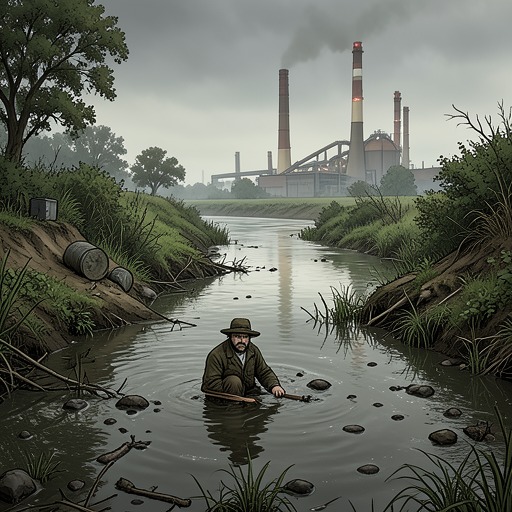
In Alabama, runoff from fields treated with toxaphene killed all the fish inhabiting fifteen streams tributary to the Tennessee River. The damage extended beyond wildlife: two of those streams supplied municipal water. The example turns pesticide application into a problem of connected landscapes, where treatment on farmland can reach waterways and threaten both aquatic life and sources of public water.
Persistence in soil
Toxaphene’s effects were not limited to the immediate aftermath of spraying. Enough remained in sandy soil ten years after application to kill termites. By setting this persistence alongside the fish kills, the book presents toxaphene as a chemical whose consequences could endure in more than one environmental medium: carried by runoff into streams and retained in soil long after use.
Cumulative exposure and the wider argument
The discussion of toxaphene sits within a broader account of pesticide persistence and accumulation. The book describes DDT as entering the body through ingestion or the lungs, being stored in fatty tissues, and accumulating with repeated small intakes because it is only slowly excreted. Those claims concern DDT specifically; they frame the wider warning about long-lasting pesticides without establishing the same bodily storage mechanism for toxaphene. Toxaphene’s own documented examples instead concern lethal runoff and prolonged toxicity in soil.
The book also warns that people encounter mixtures rather than isolated chemicals, and reports that simultaneous administration of malathion and certain other organic phosphates produced poisoning up to fifty times as severe as predicted by adding their separate effects. This is a separate example, not a reported toxaphene interaction, but it sharpens the book’s larger concern that pesticide risks cannot always be assessed one compound at a time. In the toxaphene cases, the central evidence is more direct: fish died in treated-field runoff, and soil remained lethal to termites a decade later.