William O. Douglas
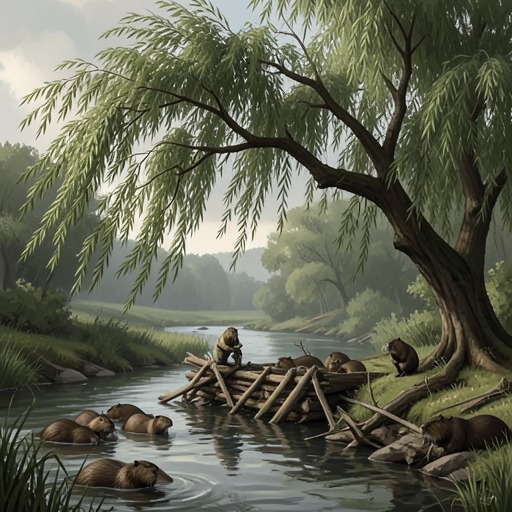
Silent SpringWilliam O. Douglas is presented in Silent Spring both as a Supreme Court justice and as a witness to the consequences of indiscriminate land management. His account of spraying in Bridger National Forest turns an abstract dispute over herbicides into a record of ecological change: sagebrush and willows were killed, beavers lost the willows on which they depended, and a once-attractive recreational area was left with a drained lake and no large trout. His public defense of wilderness also supplies a legal and ethical counterpoint to programs that treat living landscapes as obstacles to human use.
Identity and Public Role
Douglas enters the book through his writing and public interventions rather than as a participant in its central narrative. Rachel Carson cites his book My Wilderness: East to Katahdin for an account of what the United States Forest Service did in Bridger National Forest, Wyoming. His position as a justice gives his observations a public significance, but the force of the episode rests on the particulars he reports: a large tract of sage country treated to satisfy pressure for more grazing land, and damage extending beyond the vegetation the program meant to remove.
The book also presents Douglas as a defender of the values of wilderness. In a discussion of public protests over proposed sagebrush spraying, he recounts a meeting of federal field personnel who treated an older woman’s objection as a joke. Douglas challenges that dismissive response by asking whether a tree’s aesthetic value matters. His argument does not stop at scenery: natural vegetation has an essential place in nature’s economy, while the beauty and integrity of wilderness are part of the public’s inheritance, alongside mineral wealth and forests.
Bridger National Forest and the Effects of Spraying
The landscape Douglas describes was not an empty tract awaiting improvement. Carson sets the western sage country in a long natural history: the high plains and lower mountain slopes formed through the uplift of the Rocky Mountain system, and plants and animals adapted over time to the region’s harsh conditions. The pronghorn and sage grouse belong to that setting. Douglas’s example shows what is at stake when land managers treat sage as a weed and define progress as replacing it with grass for livestock.
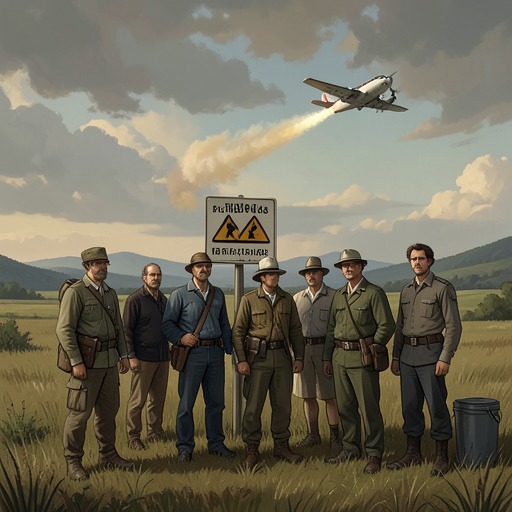
In Bridger National Forest, the Forest Service sprayed about 10,000 acres of sage lands after pressure from cattlemen seeking more grazing country. The intervention did not affect only its intended target. The same spray killed willows, with consequences for the beavers that depended on them. Before the treatment, the region offered fishing and hunting as well as wildlife habitat; afterward, the loss of vegetation altered both its ecology and its use as a recreational area. Douglas’s example makes the central problem of the shotgun approach concrete: a chemical treatment aimed at changing the plant cover cannot reliably confine its effects to a single species or human objective.
Douglas visited the area in 1959, the year of the spraying, and was shocked by what he saw. The willows were shriveled and dying. In the subsequent account of the damaged landscape, the lake had drained away after the natural system that supported it was neglected, and no large trout remained; the small creek left behind ran through exposed, hot country without shade. The sequence is more than a list of losses. Removal of vegetation changed the conditions of the place, and the consequences reached water, fish, and the region’s wider living community.
Protest, Law, and Public Responsibility
Douglas’s defense of natural values appears alongside Carson’s concern about who has power over spraying decisions and who must bear their effects. Elsewhere in the book, Carson argues that people have been exposed to lethal poisons distributed by private individuals or public officials without their consent and often without their knowledge. The principle behind that criticism meets Douglas’s account of citizens protesting proposed sagebrush spraying: those affected could be made objects of a management plan whose decision-makers dismissed their concerns rather than treating the landscape and public interest as matters requiring serious attention.
The Long Island campaign against gypsy moth spraying offers a related example of the limits of legal recourse. Citizens led by ornithologist Robert Cushman Murphy sought an injunction against the 1957 spraying. After the court denied a preliminary injunction, residents endured the treatment and continued seeking a permanent injunction, but the fact that the action had already occurred constrained the remedy. Carson connects the episode to the broader question of whether agencies can disregard citizens’ property rights when conducting mass applications of insecticide. The case does not make Douglas a participant in that litigation; instead, alongside his criticism of dismissive officials, it clarifies the book’s wider concern with public accountability.
The book likewise traces how spraying can reach food and people beyond the target area. During the Long Island gypsy moth operation, milk and farm produce became contaminated. On the 200-acre Waller farm in northern Westchester County, Mrs. Waller had specifically asked Agriculture officials not to spray her property because avoiding contamination would otherwise be difficult. Yet the account notes that, after the department was notified, no instructions were given to prevent the milk from being marketed. Carson points out that although the Food and Drug Administration permitted no pesticide residues in milk, enforcement was inadequate and federal restrictions applied only to interstate shipments; state and county officials were not compelled to follow the federal tolerances. This regulatory gap echoes the central question raised by Douglas’s wilderness advocacy: whose interests count when official programs define a place, its inhabitants, or its resources as expendable.
Significance in the Book
Douglas’s role is not to supply a technical assessment of every herbicide or a comprehensive legal ruling on pesticide policy. His importance lies in the authority and specificity of the example Carson draws from his writing. A named forest, a measured area of treated land, a visit in the year of spraying, and the linked losses of willows, beavers, lake water, and trout give material form to her criticism of chemical management. The landscape’s transformation is presented as the result of treating a complex ecological community as a problem that could be solved by removing one plant.
His defense of aesthetic value deepens that criticism by refusing to make usefulness the only measure of land. Sagebrush country is not valuable merely when it can be converted to pasture, just as wilderness is not reducible to mineral deposits or timber. Douglas’s argument joins beauty to ecological function and public inheritance; Carson’s account of the damaged forest shows why those values cannot be separated from the living relationships that make a place what it is. The episode therefore gives his public voice a lasting role in the book: it stands against the presumption that administrative power to alter a landscape amounts to wisdom about what should be preserved.