Anna Karenina
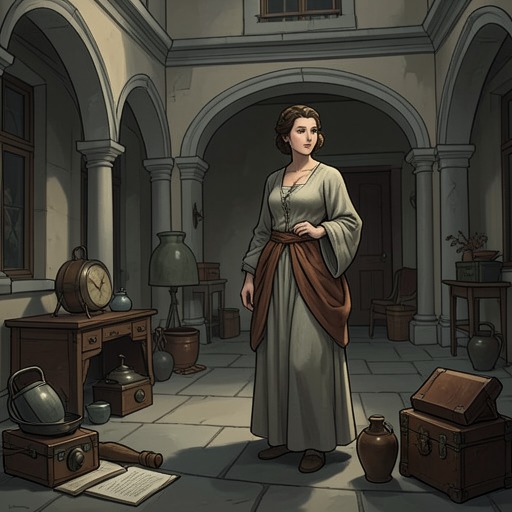
Simple PassionAnna Karenina is not merely a book the narrator remembers reading while A was present: its pages have become a possible repository of the waiting and dreams of their relationship. The narrator imagines that reopening it might restore the passion intact, yet delays doing so, treating the turn of a page as if it could bring ill fortune. The book makes the afterlife of the affair tangible: memory persists, but returning to it is not the same as recovering it.
A book bound to the affair
While A was there, the narrator skimmed through Anna Karenina and other books. After his departure, the books acquire a different weight. The narrator feels that the waiting and dreams of that period have crystallized within their pages, and that rereading them could recover the passion in its former completeness. The imagined recovery is striking precisely because the narrator does not act on it: the book holds a promise, not proof, that the past can be made present again.
Hesitation and superstition
The narrator postpones opening Anna Karenina, almost superstitiously, as though the book were esoteric and turning a particular page could bring misfortune. This hesitation gives an ordinary act of reading the force of a threshold. The anticipated return to the pages is also a return toward the emotional state associated with A, so the possibility of rediscovery comes with a risk the narrator would rather defer. The novel is not described as causing the fear; it becomes the object through which the narrator’s reluctance to revisit the past is expressed.
Reading, memory, and time
The narrator’s relation to the book belongs to a larger difference between lived passion and later recollection. During the affair, particular moments remain vivid, including the circumstances of the relationship and even small details; writing about that period, by contrast, cannot be tied to a particular page or to a specific event in the world. The narrator explicitly distinguishes the altered perception of time in passion from the time of writing. Anna Karenina marks that temporal divide: it was read during the relationship, but after A’s departure its pages are contemplated as a vessel of memory that may or may not restore what has passed.
The book as an unfinished return
The narrator’s hesitation to reread the novel resembles the inability to leave A when desire and waiting were continual. Yet the analogy does not make reading equivalent to the relationship. The narrator knows that writing, unlike life, excludes the unexpected; the book’s imagined power to return the past is therefore shadowed by the knowledge that no page can reproduce the contingency of living it. Anna Karenina remains unopened in the account, and its significance rests in that postponement: it preserves the hope of renewed access to passion while making visible the distance between recollection and experience.
From private memory to readers
The narrator’s later struggle over whether to share the writing clarifies the book’s place in a movement from private experience toward an audience. After satisfying the need to write, the narrator looks at the pages with astonishment and something resembling shame, feelings absent while living the passion and writing about it. Publication would bring the work closer to other people’s judgment and society’s conventional values. The narrator also distinguishes the work from a book about A or a book about the self: it puts into words how A’s existence affected the narrator’s life, as an offering intended for others rather than for him. Anna Karenina, by contrast, remains associated with the earlier, private wish that a book might hold an experience intact; the writing that follows accepts that memory can be communicated without being recovered unchanged.