Florence
Simple PassionFlorence is not simply a destination in the narrator’s account: a trip arranged to endure separation from A becomes a way of organizing desire, memory, and time around his absence. Its streets and artworks are read through the narrator’s private story, and the eight days away come to seem like an ordeal undertaken for love rather than an escape from it.
A Departure Planned Around Return
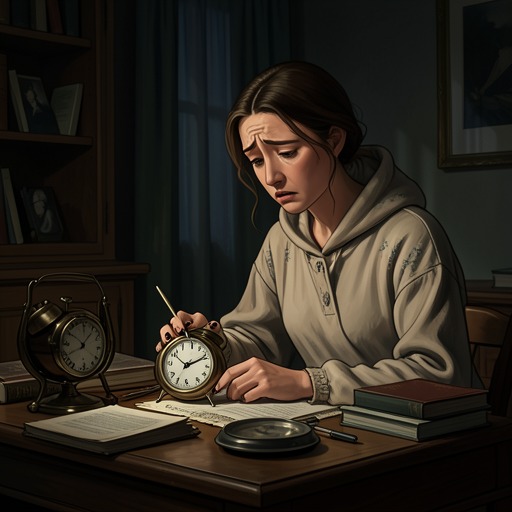
The narrator does not want to spend the summer away from Paris, where each morning would bring the prospect of a day without waiting for A’s call. Yet giving up a holiday would disclose the intensity of the attachment more eloquently than saying that she was crazy about him. During a moment when she wants to end the relationship, she instead books a train ticket and hotel room in Florence for a date two months ahead. The planned absence offers a compromise: she can leave temporarily without having to leave A.
Even before departure, the journey takes the shape of an ordeal. The narrator anticipates it with the despondency of a student enrolled for an exam she has not prepared for. On the sleeping car, she imagines herself already on the return train to Paris, eight days later. The promised happiness of coming back is shadowed by the possibility that she might die in Florence or never see A again; the interval between the two journeys therefore becomes an interminable wait rather than a stretch of free time.
Sightseeing as a Practice of Waiting
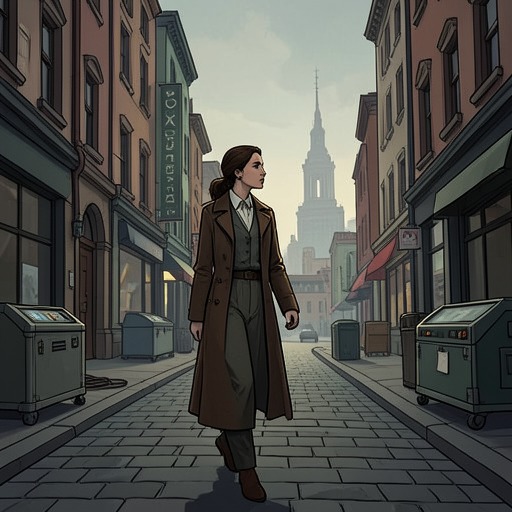
Once in Florence, the narrator cannot simply stay in her room waiting for the train home. She has to justify the trip by visiting cultural sites and walking: through the Oltrarno and the Boboli Gardens, up to Piazza San Michelangelo and San Miniato, and into every open church. In each church she makes three wishes, all connected to A, trusting that one will come true. Even travel and sightseeing remain bound to the relationship through imagined scenarios, including a trip to Florence together or a meeting at an airport ten years later.
The narrator’s attention to art is emotional rather than historical. She cannot understand why visitors consult guidebooks for the dates and histories of paintings, which seem unrelated to their own lives. She returns to La Badia because Dante met Beatrice there, and the partly erased frescoes in Santa Croce move her as an image of what her own story may become: fading fragments in both her memory and A’s. Florence’s artworks do not stand apart from her life; she uses them to give that life a possible future form.
A Body Remembered Through Art
In museums, the narrator is drawn to works that represent love and to statues of naked men. Their forms recall A’s shoulders, loins, and the hollow along the inner thigh; above all, Michelangelo’s David holds her attention. She marvels that a man, rather than a woman, has represented the beauty of the male body so sublimely. Although she considers whether women’s oppression might explain this, she feels that something has nevertheless been irretrievably lost. The encounter makes the museum a site where her attachment shapes what she sees, while also prompting a reflection on who has been able to represent the male body.
The Journey Recast as an Investment
On the train back, the narrator understands that she has, in a sense, written out her passion in Florence. She has walked its streets, visited its museums, and imagined sharing the city with A; she remembers eating and sleeping with him in a noisy hotel beside the Arno. The eight days were spent alone and largely without speaking, except to restaurant waiters, yet she experienced them as if A’s image accompanied her. When men approached her, she was astonished that they did not seem to perceive him within her.
She interprets the solitude as an ordeal for the betterment of love: an investment not in physical closeness but in imagination and craving intensified by absence. Florence thus holds two kinds of time at once—the fixed eight-day separation and the anticipated return to Paris. That altered experience of time belongs to a wider understanding the narrator later expresses: she measured time with her whole body. The trip does not resolve the uncertainty of the relationship; it gives that uncertainty a geography, a sequence of walks and visits, and a story the narrator can return to read as her own.