Passion as lived experience
Simple PassionPassion as lived experience names the narrator’s attempt to describe desire from within, as an altered mode of inhabiting time, memory, and the world. The affair is not treated chiefly as a sequence of incidents to explain or judge. Its significance lies in how it changes what the narrator can feel and endure: waiting becomes a condition of life, recollection nearly takes on the force of perception, and an experience that she calls meaningless becomes one of the most violent realities she has known.
Definition and Method
The narrator distinguishes describing a passion from explaining its origins. She refuses to seek its cause in childhood, recent history, or the cultural models that shaped her understanding of emotion. Those models include Gone with the Wind, Phèdre, and Edith Piaf’s songs, which she places alongside the Oedipus complex rather than treating literary and popular influences as less decisive. Explanation, she argues, would imply that the passion was a mistake or a disorder requiring justification. Her project is instead an inventory of what the experience was like.
That inventory is not a conventional account of a liaison. A precise date or an approximate chronology cannot capture the narrator’s experience, because, within the relationship, time seems to divide into absence and presence. She describes the signs of passion as wavering between “one day” and “every day.” The list does not reconstruct a complete story; it tries to grasp the reality of the experience without pretending that a retrospective narrative can recover everything that happened or was felt.
This method also rules out the irony and derision that might enter when someone recounts an experience after it has passed. The narrator presents them as retrospective ways of telling events to other people—or to oneself—not as attitudes available to her while she was living the passion. Description therefore preserves the pressure of the experience before later judgment can reduce it to a cautionary tale, a diagnosis, or an explanation.
Time, Waiting, and Presence
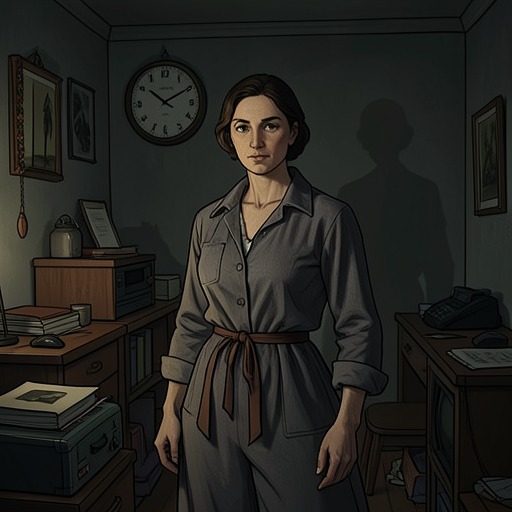
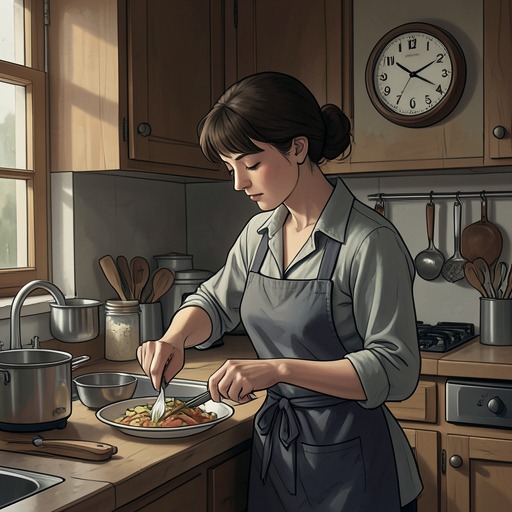
Time becomes concrete and divided by the expected duration of A’s visits. The narrator removes her watch before he arrives, while he keeps his on; she dreads the discreet glance that will signal time running out. When she goes to the kitchen for ice, the clock above the door gives the visit its diminishing measure: two hours left, then one, then the prospect that within an hour he will be there and gone. Her question about where the present is arises from this countdown: even the visit’s current moment is shadowed by its ending.
The narrator’s experience of time is not confined to those hours. She says she measures it with her whole body, as though duration has ceased to be merely an abstract count. The contrast between her abandoned watch and the clock she consults gives this altered temporality a material form: she tries to escape measurement, yet repeatedly turns toward a clock that divides presence into what remains before absence.
Waiting also shapes her choices about whether the affair should continue. She longs to end it so that she will no longer be at the mercy of a phone call or exposed to the suffering of separation. But she immediately sees what ending would bring: a succession of days with nothing to wait for. Against that emptiness, even jealousy seems like a fragile privilege. She would rather continue despite the possibility that A might have another woman, or several, than exchange the torment of waiting for a void. She knows that the affair will end beyond her control, if A leaves the country or decides to stop seeing her; the prospect of that unavoidable end does not make her choose it sooner.
Memory and the Body
In places where there is nothing to do—railway platforms, the Metro, and waiting rooms—the narrator begins to daydream about A as soon as she sits down. The onset brings a shudder of happiness, and the repeated images and memories seem capable of producing physical pleasure. Her comparison of the brain to a sexual organ makes recollection an embodied act rather than a detached mental review: remembered images do not simply represent the absent person but affect the narrator in the present.
Her effort to retain A’s body is equally exact. She recalls his green eyes, the lock of hair on his forehead, and the curve of his shoulders, as well as details of his mouth, thighs, and skin. Yet the vividness of this reconstruction unsettles her: she sees little difference between it and a hallucination, or between memory and madness. Passion thus makes absence both painful and strangely permeable. The remembered person remains intensely available to thought, but the force of that availability also blurs the boundary between recollection and perception.
After A leaves, the room’s disorder becomes a material record of the visit. The narrator sits among glasses, plates and leftovers, an overflowing ashtray, clothes and lingerie scattered through the bedroom and hallway, and sheets spilling onto the carpet. She does not tidy at once because each object evokes a caress or a particular moment, and together they form a still life whose intensity and pain she believes no museum painting could capture. She delays washing until the next day, wanting to retain the physical trace of the encounter. The objects are not incidental clutter: within her account, they preserve the visit’s particulars against the suddenness of A’s departure.
Writing and the Meaning of the Ending
The narrator experiences the passion as she might write a book: with determination to get each scene right and minute attention to detail. This parallel makes writing more than a later record of the affair. The same impulse to attend closely governs both the living of the passion and its description. She even accepts the thought that she could die after having lived the passion through to its end, while leaving “to the very end” undefined; she makes a comparable allowance for dying after finishing the book. The comparison ties the completion of experience to the completion of writing without claiming that either can be neatly defined.
The final visit, dated 20 January, seems to the narrator almost not to have happened. It belongs less to the story she carried within herself than to the bare fact of a date. The man who returned that evening was not the man she had carried inside her during the year he was there and while she was writing about him; she says she will never see that man again. The visit’s near-unreality does not diminish the affair’s force. Instead, it gives the passion its particular meaning: it was meaningless, yet for two years it was the most violent and unaccountable reality she had known.
Consequence and Significance
The narrator does not measure the affair by whether A was worth it. Although the experience gradually slips away from her as if it had happened to another woman, she retains one consequence as certain: through him, she approached the boundary separating her from other people and sometimes believed she could cross it. Passion changes her relation to the world not by supplying a stable explanation for herself, but by making her encounter the extent of what people can do and believe.
That discovery includes sublime and deadly desires, a loss of dignity, and attitudes or beliefs she had once considered absurd in others, but later adopted herself. A brought her closer to the world without knowing it. The passion’s significance therefore outlasts the relationship while resisting a moral verdict: its value is not established by whether the affair was justified or whether its object deserved the devotion. Its legacy is the narrator’s altered understanding of human possibility, reached through an experience she insists on describing rather than explaining.