The narrator goes alone to Florence
Simple PassionThe narrator’s solo journey to Florence is less an escape from A than a way of continuing to wait for him at a distance. Booked for a date two months ahead, the trip makes separation bearable by giving it a return date; across eight days, she turns sightseeing into a private story of love, and the journey back to Paris carries that story home.
Planning a Managed Separation
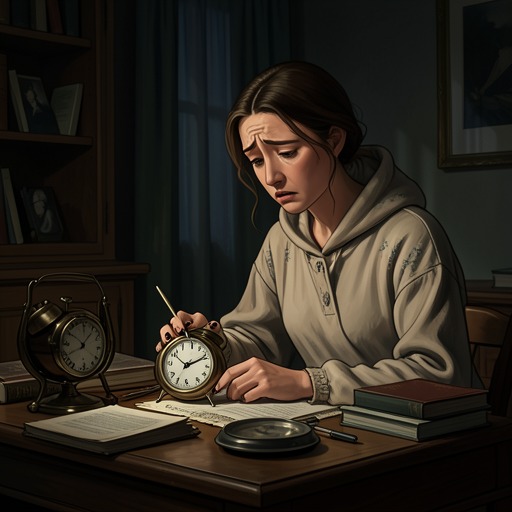
That summer, the narrator does not want to go on holiday, because each morning away from home would mean facing a whole day without waiting for A’s phone call. Yet refusing the trip would have declared her passion more eloquently than telling him she was crazy about him. When, in a moment of wanting to break up, she instead books a train ticket and hotel room in Florence, she chooses a separation that does not require her to leave him emotionally.
The advance booking makes departure feel less like a free choice than an obligation she has already incurred. She anticipates leaving with the despondency of someone facing an exam long scheduled and left unstudied. On the sleeping car, she imagines the return journey to Paris eight days later, when she might see A again. That promised return offers the possibility of happiness, but the prospect that she might die in Florence or never see him again intensifies her dread as the train carries her farther from Paris. The time between the two journeys becomes an extended wait.
Florence Recast as a Landscape of Desire
Once in Florence, she cannot simply remain in her room waiting for the train home: she feels obliged to justify the trip by visiting places of cultural interest and going for walks. She walks through the Oltrarno and the Boboli Gardens, climbs to Piazza San Michelangelo and San Miniato, and enters every open church. In each, she makes three wishes, all related to A, sustaining herself with the belief that one might come true.
The city’s landmarks matter to her through personal association rather than historical information. She cannot understand why other visitors consult their guidebooks for dates and histories of paintings; that information has no bearing on their lives. She returns to La Badia because Dante met Beatrice there, and the partly erased frescoes in Santa Croce move her as an image of what her own story may become: fragments fading from both A’s memory and hers.
In museums, she looks chiefly for representations of love and for statues of naked men. Their bodies call to mind A’s shoulders, loins, and the curve of his thigh. Michelangelo’s David holds her attention: she marvels that a man, rather than a woman, represented male beauty so sublimely, and senses that something has been irretrievably lost. Art does not take her out of the affair. It becomes another means of seeing it, and of measuring her own experience against images of love and the male body.
The Return and the Meaning of Absence
On the train back to Paris, she understands the eight days as a story she has written through movement and imagination. Walking Florence’s streets and visiting its museums, she felt she was sharing everything with A, even imagining that they ate and slept together in the noisy hotel on the banks of the Arno. The journey has given her a story she can return to and read: that of a woman in love with a man.
The reality of the trip was solitude. For eight days she spoke only to restaurant waiters, remained haunted by A’s image, and was astonished when men approached her; she wondered how they could fail to see him silhouetted inside her body. Rather than freeing her from the attachment, the separation becomes an ordeal undertaken for love’s sake—a further investment, this time in imagination and craving produced by absence.
The trip’s shape echoes the affair’s larger bodily measurement of time: the anticipated hours before a meeting, the diminishing time during it, and the long interval after departure. In Florence, that altered duration is stretched across two scheduled train journeys. The city supplies places to walk and look, but the journey’s emotional destination remains the return to Paris and the hope attached to it.