The narrator's intense obsession with A
Simple PassionThe narrator’s passionate attachment to A reorganizes time, attention, and the meaning of ordinary life. She resists explaining it as a psychological error or tracing it to a definitive origin; instead, she inventories its signs, from waiting and cultural recognition to bodily memory and grief. The affair becomes both an experience that overtakes her and material she can offer to others in words.
A passion described through its signs
The narrator does not present the affair as a plotted sequence with a recoverable chronology. She says that precise dates and approximate spans do not enter the relationship as she experiences it: what matters is absence or presence. Her account therefore moves between “one day” and “every day,” listing and describing the signs through which the passion becomes legible. The form follows the condition: rather than reconstructing a complete story, it gathers repeated experiences that can suggest the reality of the attachment without turning it into a conventional narrative.
This method also governs her refusal to explain the passion. She declines to search for its cause in childhood, recent events, or the cultural standards that have shaped her feelings. Stories and songs, she acknowledges, can be as decisive as a psychoanalytic complex, but this does not make the affair a mistake requiring justification. Her stated aim is description. In that distinction, the writing protects the experience from being reduced to a diagnosis or judged from the distance of hindsight.
Waiting and the body's time
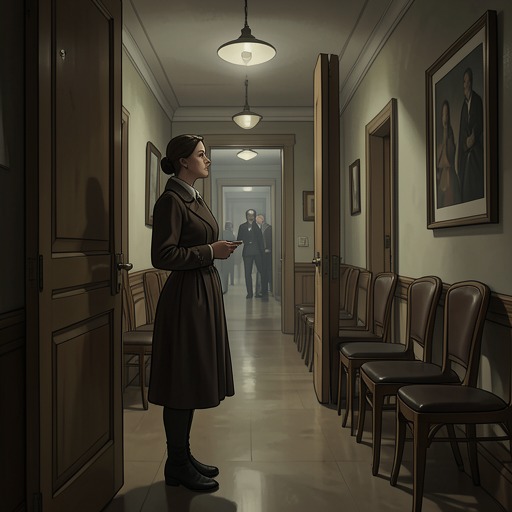
During meetings with A, the narrator measures duration physically and anxiously. She removes her watch before he arrives while he keeps his on; when she goes to the kitchen for ice, the clock above the door registers the dwindling time. His eventual departure makes time feel less like an abstract measure than something passing through her body. The contrast between her attempt to suspend measurement and his watch makes their limited time together palpable without changing its endpoint.
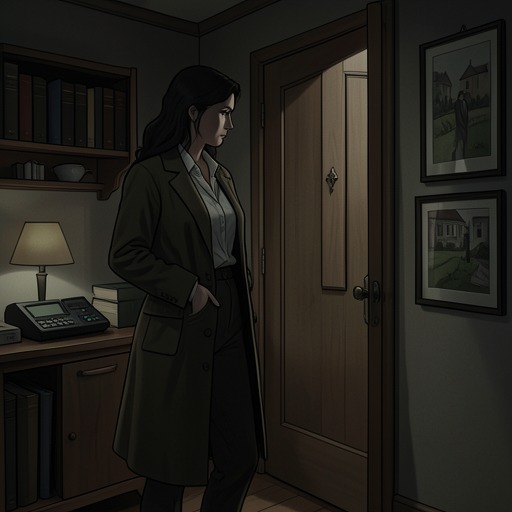
The body also becomes a site of aftermath. Once A has gone, fatigue overwhelms her, and she sits among the glasses, plates, clothes, and unmade bedding rather than immediately restoring the room. Those objects preserve the meeting in her imagination as particular moments and gestures; their disorder becomes a private record of an intensity that she believes no museum painting could capture. The attachment is thus registered not only in memory but in the altered meaning of the room and its things.
Her daydreaming extends this bodily experience beyond the meetings themselves. In places where she can sit without needing to act, including railway platforms, the Metro, and waiting rooms, memories and imagined scenes recur until thinking seems to acquire the force of physical pleasure. The attachment narrows attention, yet also changes what the narrator can recognize: she describes discovering through it how far people may go in desire, and how readily they may adopt attitudes they once found absurd.
Cultural scripts and imagined reciprocity
The narrator finds public forms that make her experience feel shareable. Sentimental songs, previously dismissed, move her because they speak plainly about passion’s absolute and universal character; Sylvie Vartan’s song reassures her that she is not the only woman to feel this way. Songs accompany and legitimize the attachment. In women’s magazines she turns first to the horoscope, while films can seem to encapsulate her own story. When a film she wants to see is no longer showing, she feels bitterly disappointed, as though a possible mirror of her experience has been lost.
Film also gives her a means to imagine reciprocity. Watching television, she wonders whether A is watching the same program, particularly when its subject is love or sex. She imagines the two of them in La femme d’à côté, and if A says he has seen it, she is inclined to believe he chose it because of their situation. A represented passion might, in her imagining, make their own seem more intense or legitimate. Yet this projection sits beside her awareness that passion outside marriage in films tends toward disaster; she soon dismisses the possibility that he regards their liaison as dangerous.
Her attachment does not give her reliable access to A’s thoughts. She sometimes imagines him spending an entire day without thinking of her, going about ordinary routines as if she did not exist. The possibility astonishes her because her own thoughts remain fixed on him from morning to night, but she does not claim her intensity is more justified than his. Instead, she recognizes an asymmetry: she is, in one sense, luckier, because the passion gives her an experience of extraordinary intensity even as she cannot know whether it is returned in equal measure.
Absence, grief, and memory
When A leaves France and returns to his own country, the attachment persists in a harsher form. The narrator wakes at night in despair, feels overwhelmed by pain, and struggles to keep herself occupied during the day. Ordinary media become difficult to face because advertisements appear to her to repeat the image of a woman waiting for a man. She also avoids lingerie shops. The signs that once belonged to anticipation now sharpen the awareness of absence.
Memory becomes an effort to preserve A in precise physical detail. The narrator summons his green eyes, the lock of hair falling over his forehead, the line of his shoulders, and other features of his body. She recognizes how little separates this reconstruction from hallucination, or memory from madness. That uncertainty does not make the recollection less important; it shows how the vanished relationship continues to occupy perception, nearly crossing the boundary between remembering someone and experiencing his presence.
Even as the affair gradually recedes and seems to concern another woman, the narrator does not retract its significance. Whether A was worth the cost is, she says, beside the point. Through the passion she approached the frontier separating her from other people and sometimes believed she could cross it. What began as an intensely private attachment thus becomes a means of recognizing the breadth of human desire and the experiences that connect people across differences.
Writing as an offering
A had told the narrator that she would not write a book about him. Her account answers that prediction by distinguishing its subject: it is neither a book about A nor simply one about herself, but a translation into words of how his existence affected her life. She does not intend those words for him, who will probably never read them. Instead, she describes the writing as a kind of offering bequeathed to others.
That purpose gathers the account’s formal choices into a larger significance. Listing signs rather than imposing an explanatory cause allows the narrator to preserve the passion’s lived contradictions: its bodily intensity, its dependence on absence and presence, and its transformation into grief and memory. She concludes that luxury can include the freedom to live out a passion for a man or a woman. The attachment matters, finally, not because it can be defended as sensible or because it lasts, but because it changes what the narrator experiences and what she can make available to other people through language.