Waiting
Simple PassionWaiting is not a pause in the narrator’s affair with A but the structure that gives its days their shape. From the first phone call to the hours before a visit, ordinary life is redirected toward his availability; when he leaves France, the anticipated call becomes an impossible hope that writing can preserve but cannot satisfy.
Daily Life Reorganized
From September onward, the narrator says she did little but wait for A to call and come to her home. She continued shopping, going to the cinema, taking clothes to the dry cleaner’s, reading, and marking essays, but these familiar actions seemed to happen without conscious intention. Her attention and deliberate effort gathered instead around A: she read about his country, chose clothes and make-up, wrote letters, changed the bed sheets, arranged flowers in the bedroom, and noted subjects she could bring up at their next meeting. The contrast is decisive: daily life continues on the surface, while the work of wanting reorganizes it from within.
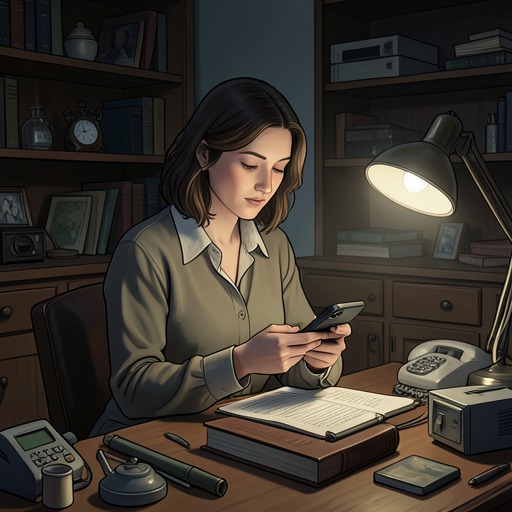
Her need to remain available shaped even the quiet mechanics of the home. She tried not to leave the house except for work, because A knew her working hours and might call while she was away. She avoided using the vacuum cleaner and hairdryer so their noise would not drown out the telephone. Each ring briefly opened the possibility of his voice; when it proved to be someone else, hope collapsed into dejection and resentment toward the caller. A’s actual voice could restore her so quickly that she was startled by how much importance she had given it. Waiting thus attached overwhelming emotional weight to an ordinary sound, then made that weight vanish or return with the next call.
The affair also made waiting a form of practical coordination. A was married, and the narrator could not phone or write to him freely, give him gifts that might need explanation, or rely on a schedule of her own. Her sons had to call before coming to stay, and, if they were already at home, agree to leave when A announced a visit. She wanted to keep her children outside the liaison, partly because she feared their judgment and regarded parents and children as unable to accept one another’s sexuality freely. The arrangements show how the secret relationship depended on her managing the household and accommodating A’s timetable.
The Call, the Visit, and the Clock
A call announcing that A would arrive in an hour did not end the wait. It began a different, more agitated phase in which the narrator could scarcely organize simple preparations: showering, setting out glasses, painting her nails, or mopping the floor. She anticipated the car braking, the door slamming, and footsteps on the concrete porch, while also dreading the crucial moment of his arrival. The prospect of the meeting could intensify anxiety rather than settle it; even the question of whether she would be able to experience pleasure entered the disorder of expectation.
If several days separated a call from a visit, she imagined the work and social engagements she would have to endure before seeing him. She feared that some accident or interruption might prevent the meeting and once, while driving home and expecting him within half an hour, fleetingly considered whether she would stop if she had an accident. The thought registers the extremity of her preoccupation, not a developed plan: for her, whatever stood between the present and the appointment seemed an obstacle to the only event that mattered.
Before A arrived, she dressed, put on make-up, did her hair, and tidied the house. If time remained, she could not return to reading or marking essays, and did not want to focus on anything except the wait. She sometimes wrote the date and time on a sheet of paper, followed by the assurance that he was going to come and by fears that he might not, or might no longer desire her. After the meeting she returned to the page to record that he had come and to jot down details. The two brief records bracketed an interval that made other concerns seem trivial, including the writing intended to capture it. The notes turn anticipation and aftermath into a small private record, but cannot contain the meeting itself.
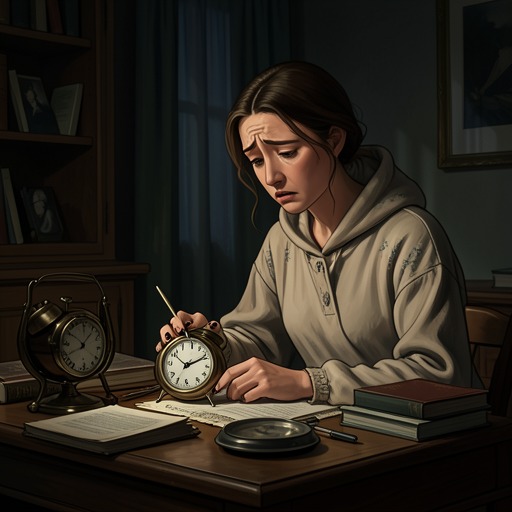
Time during the visits was measured against their ending. The narrator took off her watch before A arrived, while he kept his on; she dreaded seeing him glance at it. When she went to the kitchen for ice, the clock above the door counted down the remaining hours. She could experience the present only as time running out, and wondered where it had gone. After a meeting, she counted how many times they had been together, feeling both that each encounter added something to the relationship and that the accumulated intensity consumed the time available to it. The more physical intensity they gained, she felt, the less time remained.
Desire Sustained by Uncertainty
Waiting continued after the visit ended. A lethargic aftermath would gradually give way to renewed expectation, increasingly painful as the last meeting receded. The narrator compared this to the growing conviction that an exam had gone badly while its results were delayed: as days passed without a call, she became certain A had left her. Yet even an eagerly awaited call could fail to relieve her. At one point, his voice had no effect on the anxiety already in progress; only being together seemed to interrupt the emptiness, and even pleasure was shadowed by the coming separation.
The married arrangement imposed restrictions that sharpened, rather than dissolved, desire. A called from telephone boxes, some of which did not work. The narrator came to recognize that a silent call could mean he had tried and would call again, once he found a working booth; the second call might follow within fifteen minutes. That interval turned a failed connection into a prelude to the real one and made the soundless first call an unlikely promise. She could not contact him at will, and the letters she handed him as he left might be destroyed after he read them. She avoided leaving traces on his clothes or body and avoided places where his wife might be present, both to protect the secrecy and to avoid the pain of seeing them together. The conditions of concealment made waiting dependent on signs that were uncertain, brief, and largely outside her control.
This dependence coexisted with the recognition that she did not know what the affair meant to A. She could be certain only of his desire or its absence, and imagined that he might pass a day without thinking of her while she thought of him from morning to night. The difference astonished her, but did not make her feel her own attitude was more justified. At times she imagined him in particular places or activities, and knowing where he might be comforted her, as if locating him could protect the relationship from infidelity. She also pictured possible rivals after reading about a Cuban dancer touring Paris, becoming convinced without evidence that A had met her. Such fantasies show how waiting gave uncertainty room to generate scenes that felt compelling despite having no confirmation.
The narrator did not simply seek release from this condition. She sometimes decided to stop seeing A, especially when ordinary sights made him seem anonymous and absorbed in his career, but the resolve dissolved as she looked at clothes and lingerie in shop windows in anticipation of their next meeting. She rejected extra work and avoided books or social engagements that could draw her away from the sensations and fantasies of the affair. When she longed to end the relationship so she would no longer depend on a phone call, she immediately understood that separation would mean days with nothing to await. She preferred continuing, even if A had another lover, to an emptiness she imagined as worse than jealousy. Waiting was painful, but it also supplied a fragile privilege: a future still organized around the possibility of his return.
Waiting After A’s Departure
When A left France for his own country, the familiar cycle lost its practical endpoint. The narrator says she would probably never see him again. She struggled to keep busy and maintain her appearance, and ordinary advertisements became hard to look at because they seemed to show a woman waiting for a man. She even avoided shop windows selling lingerie. Waiting was no longer preparation for a scheduled visit; it persisted as grief, while the everyday images that had once accompanied desire now repeated its absence.
In this period she considered consulting a fortune-teller, searching an electronic directory and copying down names and numbers. The act of making a list briefly recreated the excitement she had felt while trying on a dress for A, as if she were still doing something for him. She did not call, afraid of being told that he would never return. The small episode captures the continued pull of the future she wanted: even a possible prediction mattered because it might settle the question that waiting had kept open. She also thought of getting tested for AIDS, framing the possibility as something A might at least have left her. The relationship remained the measure through which she understood what might come after it.
Writing does not end the wait or relieve the grief. Once she puts down her pen, she again longs for A’s voice and foreign accent, for his touch, and for the real man living an unknown life in a cold city. She plays patience, gives a ten-franc coin to a beggar at Auber Metro station, and makes the wish that he will call and come back. Even a trip to Copenhagen for a seminar becomes a means of sending him a postcard: she arrives thinking about buying it, copying out sentences prepared in advance, and finding a letter box, then recognizes on the return flight that she had traveled to Denmark simply to send news to him.
The written account both preserves and postpones what waiting has become. The narrator sees that writing cannot provide the unexpectedness of real life, yet she cannot resolve to part with the pages, just as she had been unable to leave A while desire and waiting were continual. She continues writing partly to delay the trauma of letting others read the work. The movement from private notes before and after meetings to pages that might be published repeats a central tension: writing makes the experience available for preservation, but publication exposes it to other people’s judgment and to the social values she had kept at a distance while living the affair. Waiting begins as anticipation of A’s call and ends without a promised reunion; it survives instead as a hope, a grief, and a written record that cannot restore the person it names.