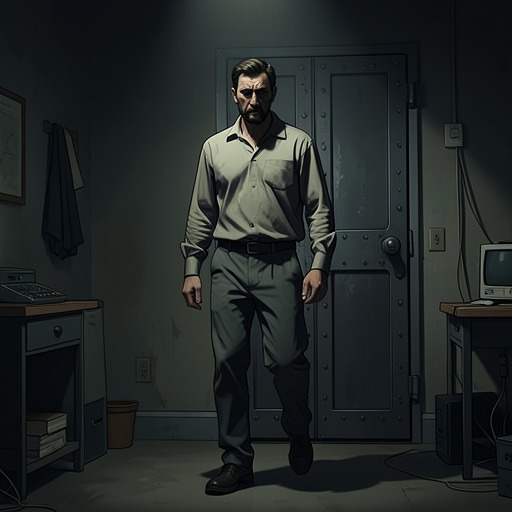
Duan Jeffries’s investigation into Edward Villarosas
SpontaneousDuan Jeffries’s investigation into Edward Villarosas turns two unresolved missing-person cases into an urgent inquiry with consequences for Kimani Cannon’s family. It begins when Duan learns that Villarosas is engaged to Kim’s mother, Wynona, and ends up testing the limits of suspicion: the old cases offer troubling patterns and a detective’s intuition, but also airtight alibis and no bodies. As Duan’s team reopens the investigation, testimony from an old girlfriend and an admission by Stein Green transform the case; meanwhile, Villarosas’s jealous behavior toward Wynona brings the danger out of the past and into the present.
The Cold Cases and Their Reopening
Before Villarosas’s impending marriage brought the matter back to him, Duan knew the case through his colleague Landon Chestnut’s frustration. The two former wives had disappeared five years apart. Investigators had found no bodies and no evidence connecting Villarosas to either disappearance. He maintained that the women had left him for other men, and the investigations reached dead ends. Landon had worked on the second case while still a detective; the first had occurred five years before he joined the force. His inability to resolve the cases was one reason he later left the police department to join Duan’s private-investigation firm.
Duan had already left the department and was building Peachtree Private Investigative Firm when Landon handled the Villarosas case. Years later, after learning that Villarosas had moved from Atlanta and was about to marry Wynona, Duan called Landon from the airport. The name immediately revived Landon’s sense that a consequential suspect had slipped through his grasp. Duan, too, had a hunch that this was the same man, but the connection to Wynona made the old suspicion newly consequential: before she married Villarosas, Duan wanted to determine whether he had killed his former wives.
A Deliberately Open Inquiry
Duan brought the matter to Landon and the firm’s other investigators, Antron Blair, Brett Newman, and Chevis Fleming. Their first steps were practical rather than conclusive. They planned to contact a detective at the Atlanta Police Department about reopening the two cases, trace Villarosas’s activities since his move from Atlanta, and speak with the missing women’s relatives and friends to learn whether either had been seen or heard from. The possibility that both women had left their marriages voluntarily remained in view, even as the investigators recognized that the same explanation occurring twice deserved scrutiny.
Kim challenged the investigation’s reliance on instinct. She noted that, in neither case, could Villarosas collect insurance money if the women were merely missing rather than legally established as dead. Duan agreed that this removed an apparent financial motive. Her objection sharpened the distinction between a reason to investigate and evidence sufficient to establish guilt. Duan explained that previous detectives had not been able to make a case: Villarosas had alibis, and he and his wives were not even in the same cities when the women disappeared. The earlier investigations had also been constrained by elapsed time and police budget cuts, which kept investigators from following every plausible lead. The lack of a prosecutable case did not prove the suspicion correct; it meant the new inquiry had to find something more substantial.
New Leads and Independent Testimony
The investigators pursued possible evidence surrounding the women’s lives and last known movements rather than treating Villarosas as the only possible explanation. In one line of inquiry, they sought photographs taken at a reunion, where Mandy Villarosas had supposedly flirted with a man. Women who had travelled with Mandy believed he was the same man she planned to meet on the day she disappeared. If that identification proved accurate, it raised the possibility that another person was involved. Duan made clear that Villarosas remained a suspect, not an established perpetrator; considering a second man kept the investigation open to an alternative account of the disappearance.
A separate lead came from Villarosas’s former girlfriend, whom Landon interviewed. She supported an account dating back more than twenty years: Villarosas had a jealous streak and repeatedly threatened to get rid of her when he believed she was unfaithful. She said the accusations were false and that she left after tiring of his allegations and threats, which she believed he might carry out. Her account did not itself establish what had happened to the two wives, but it gave investigators independent testimony about a pattern of jealousy and threats. It made the old disappearances harder to treat as isolated mysteries while still leaving the central question to be answered with evidence.
From Suspicion to a Confession
The strongest breakthrough came when Chevis visited Stein Green in a Florida prison. After intensive questioning, Green admitted that Villarosas had hired him to get rid of both wives because Villarosas believed they were unfaithful. The admission changed the investigation’s evidentiary position: the inquiry was no longer resting only on Landon’s lingering unease, Duan’s hunch, or a repeated pattern of disappearances. It had an account from a person who said he had been hired to kill the women. The disclosure also linked Villarosas’s jealousy, described by the former girlfriend, to the alleged motive Green attributed to him.
The confession is the investigation’s decisive revelation, but the sequence matters. The earlier alibis and absence of bodies had prevented suspicion from becoming a supported homicide case; the team’s work widened the inquiry to include witnesses and possible third-party involvement, then produced Green’s account. The investigation therefore turns not on intuition being vindicated by itself, but on new testimony altering what the investigators could substantiate.
Wynona and the Present Danger
The case’s stakes became immediate when Wynona called Kim from Las Vegas. Travelling with Villarosas, she had used a woman’s phone at a fast-food restaurant after her own phone battery died and Villarosas accused her of wanting to call Bennie. She told Kim that Villarosas had begun acting strangely and accusing her of things, especially an affair with Bennie. Kim urged her mother not to return to his car and to call 911 with her location. Wynona initially minimized the danger, saying Villarosas needed time to think about what he was saying.
That call brings the investigation’s past and present together. The old girlfriend’s account described jealousy escalating into threats; Wynona’s report showed Villarosas making jealous accusations against her while they travelled together. Kim’s urgency contrasts with her mother’s attempt to soften the situation, and the proposed marriage that first reopened the cold cases now carries an immediate safety concern. The investigation thus serves both as a search for what happened to two missing women and as a reason to take seriously the risks surrounding Villarosas’s next relationship.