Edward Villarosas's pending murder prosecution
SpontaneousEdward Villarosas's pending murder prosecution marks the shift from years of suspicion about his two missing wives to a case supported by a hired killer's account, the discovery of the women's remains, and Villarosas's own admissions. The investigation's history explains why suspicion alone had never been enough: earlier inquiries produced ironclad alibis and no bodies, while the later evidence changed both the legal status of the case and the danger facing Wynona Cannon-Longleaf-Higgins-Gunter, his fiancée.
Background: Two Disappearances, No Homicide Case
Villarosas's two wives disappeared five years apart. The cases became associated with him, but investigators could not establish a connection to either disappearance or find a body. He maintained that the women had left him for other men. The absence of remains and the lack of evidence to disprove that account left the cases classified as missing-person investigations rather than homicides.
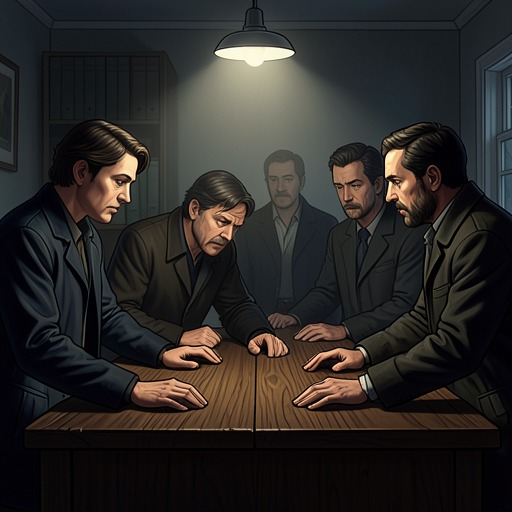
The unresolved cases had lasting consequences for the investigators who pursued them. Landon Chestnut had worked on the second investigation and was frustrated by repeated dead ends; the failure was among the reasons he left the police force to join Duan Jeffries's private-investigation firm. Duan recalled that neither inquiry had produced solid grounds to move from missing persons to homicide. Villarosas had alibis that placed him and his wives in different cities when they disappeared, and two investigations had failed to produce evidence on which to act.
When Duan learned Villarosas was engaged to Wynona, the old case acquired a new personal urgency. The engagement concerned the mother of Terrence Jeffries's wife's best friend, rather than someone Duan knew directly. Landon recognized the name immediately and wanted to reopen the cases, but both investigators understood that their prior suspicions did not establish guilt. The question was no longer only whether Villarosas seemed culpable; it was whether any evidence could withstand the distance between suspicion and a charge.
The Evidentiary Barrier
Duan insisted on the presumption of innocence even while explaining why he remained suspicious. The earlier investigations had yielded ironclad alibis, and the missing wives were not even in the same cities as Villarosas when they disappeared. He also acknowledged that no sufficient motive had been established: if the women were alive, as Villarosas claimed, he could not collect insurance on their deaths. Intuition, however strongly held, was not a substitute for evidence.
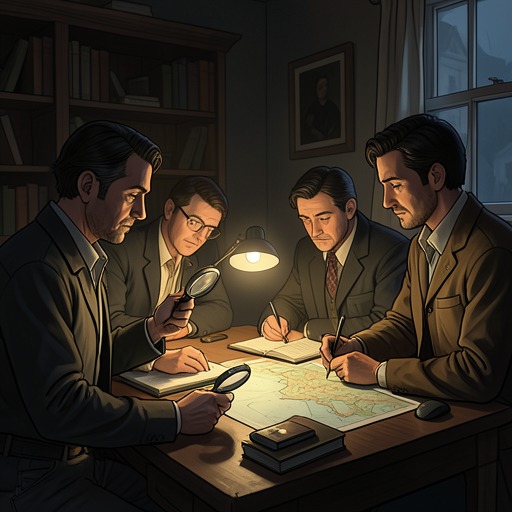
The investigation also had to consider that someone other than Villarosas might have been involved in one disappearance. Women who had traveled with Mandy Villarosas recalled that she had flirted with a man at a reunion and believed he was the person she planned to meet on the day she disappeared. If that account was accurate, the man could have been responsible. Investigators sought photographs taken at the reunion to identify him. This possibility mattered because a lead could broaden the inquiry without resolving who was responsible; the investigators continued to describe Villarosas as under suspicion, not as a person already proved guilty.
A later account from Villarosas's former girlfriend supplied a different kind of information. She said that, more than twenty years earlier, he had shown a jealous streak and threatened to get rid of her when he believed she was unfaithful. She had left because she feared he would carry out those threats. The account helped investigators understand a possible pattern, but its age limited its legal value: Duan later said the incidents would not be admissible in court. It could inform the investigation without serving as proof of the murders.
The Hired Killer's Account and the Search
A major change came when Chevis Fleming visited Stein Green in a Florida prison. Green, a convicted killer serving life without parole for an armed robbery in which a police officer was shot, admitted that Villarosas had hired him to get rid of both wives because Villarosas believed they had been unfaithful. The admission reinforced the investigators' suspicions, but its source created an obvious evidentiary problem. Green was a life prisoner with a serious criminal record, and, as Duan warned, a court could not be expected to base charges on his word alone.
Investigators had also obtained old telephone records showing calls between Green and Villarosas. The records established contact, not what the men had discussed: there were no recorded conversations. Without further support, Green's account could be disputed, and the investigators anticipated that a jury might hesitate to trust a prisoner serving a life sentence over a man who appeared to be a model citizen. Finding the bodies was therefore not incidental to the case; it could independently substantiate that the missing women had been killed and test Green's account against physical evidence.
Green gave investigators locations where he said the remains were buried. Local and federal officers searched wooded areas near Orlando, Florida, and Atlanta, Georgia. Villarosas was to be brought in for questioning, and Atlanta Police Department detectives traveled to do so. The investigators explained that locating the remains would allow Villarosas to be charged and extradited to Georgia. The case had moved beyond intuition and an uncorroborated statement, but the search and its results remained decisive to whether suspicion could become a prosecutable homicide case.
Charges, Confession, and Pending Trial
The search led to the recovery of the remains, and the hired killer's information gave investigators grounds to move forward. During a call with Kimani Cannon, an officer explained that Villarosas needed to be brought in for the murders of his two wives and that the hired killer had told authorities where to find their bodies. Law enforcement in Las Vegas was contacted because Wynona was there with Villarosas; officers were on their way to her location.
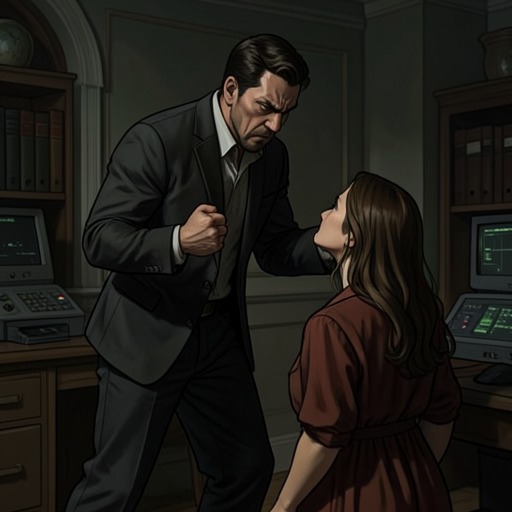
Vynona had become alarmed after Villarosas began accusing her of having an affair with Bennie. Her phone battery had died, and Villarosas would not let her use his phone, so she persuaded him to stop at a fast-food restaurant by saying she needed a bathroom. From the women's room, she called using another woman's phone. When she was advised not to return to his car and to call 911, she initially minimized the danger, saying he needed time to think. The responding officer advised her to keep the bathroom door locked while help came; Villarosas knocked twice, and she and the woman who had lent her the phone stayed inside.
Wynona returned home four hours later after questioning by the Las Vegas, Shreveport, and Atlanta police departments. Villarosas was transported from Las Vegas directly to Atlanta. He did not deny the charges when he later saw Wynona; instead, he tried to persuade her that his wives deserved to die and confessed his crimes to her and the Las Vegas detectives. His account thus supplied evidence beyond Green's allegation and the telephone records, while revealing that he continued to justify the killings rather than express remorse.
By the later account of the case, Villarosas had been charged in connection with his wives' deaths and was awaiting trial. He remained unremorseful and continued to tell people he had valid reasons for what he had done. The prosecution was therefore pending, not concluded: the investigation had produced recovered remains and confessions, but the available account does not report a verdict. The contrast between the earlier years of missing-person files and the later murder charges underscores the case's evidentiary turning point. Suspicion had endured; corroboration changed what the authorities could do.