
Strange Case of Dr Jekyll and Mr Hyde
Strange Case of Dr Jekyll and Mr Hyde is a Gothic horror novella by Scottish author Robert Louis Stevenson, first published on 5 January 1886 by Longmans, Green & Co. in London. Though only around 140 pages long, the book has become one of the most enduring works of Victorian literature, blending elements of detective fiction, science fiction, and psychological horror. Its central theme—the duality of human nature and the conflict between the civilized self and the repressed primitive self—has resonated with readers across cultures and generations.
The story is told primarily from the perspective of Gabriel John Utterson, a staid London lawyer. While walking with his cousin Mr. Enfield, Utterson hears about a disturbing incident: a brutish, dwarfish man named Mr. Hyde trampled a young girl in the street late at night, then paid off her family with a cheque signed by a respected doctor, Henry Jekyll. Utterson soon discovers that Jekyll has made a will leaving everything to Hyde, and he suspects blackmail. He and Dr. Lanyon, a mutual friend, investigate, but Hyde’s crimes escalate: he brutally murders Sir Danvers Carew, a distinguished Member of Parliament, with a walking stick. After the murder, Hyde vanishes, and Jekyll becomes increasingly reclusive, locking himself in his laboratory. Lanyon dies in shock after receiving a letter revealing the truth. Eventually, Utterson and the butler Poole break into the laboratory, where they find the body of Hyde—dressed in Jekyll’s clothes—dead by suicide. The final chapter is a full confession written by Jekyll, explaining that he had long been tormented by the two sides of his nature. He invented a potion that could separate his virtuous self from his evil urges, allowing him to transform into the monstrous Hyde. But the transformation grew uncontrollable, and Hyde’s personality began to dominate. Faced with permanent loss of his identity, Jekyll (or Hyde) ended his life.
The novella explores themes of repression, hypocrisy, addiction, and the limits of science. Stevenson wrote it during a period of ill health, drawing inspiration from a nightmare in 1885. He wrote the first draft in three days, but his wife Fanny read it and urged him to burn it and rewrite it as a more profound allegory; he followed her advice and spent six weeks crafting the final version. The book was an immediate commercial and critical success, selling over 40,000 copies in its first six months. Its cultural impact has been immense: the phrase “Jekyll and Hyde” has entered the English language as a shorthand for split personalities or moral duality. The story has been adapted countless times for stage, film, radio, and television, influencing everything from psychology to popular culture. It remains a cornerstone of the Gothic literary tradition and a haunting exploration of the darkness that lurks behind the mask of respectability.
The novella was written in Bournemouth, Dorset, where Stevenson moved in 1884 for his stepson's schooling and the mild climate. He rewrote the story in three to six days, possibly inspired by hallucinations from ergotine medication for lung hemorrhages, though there is no evidence he was under the influence of drugs during writing. The initial revision was followed by four to six weeks of refinement. Notable illustrated editions include S.G. Hulme Beaman's 1930s version and Mervyn Peake's 1948 illustrations for the Folio Society.
About the Author
Robert Louis Stevenson (born Robert Lewis Balfour Stevenson, 13 November 1850 – 3 December 1894) was a Scottish novelist, poet, and travel writer, and a leading figure of the Neo-Romantic movement in English literature. He was born in Edinburgh, Scotland, into a family of lighthouse engineers: his father Thomas Stevenson and grandfather Robert Stevenson were both renowned for their work on coastal beacons. Expected to follow the family profession, Stevenson instead developed a deep passion for writing from an early age. Frail and sickly, he suffered from a chronic lung condition (likely tuberculosis) throughout his life, which forced him to spend long periods indoors and later drove him to travel in search of a healthier climate.
Stevenson enrolled at the University of Edinburgh at age 17 to study engineering, but soon realized he had no interest in the subject. After a compromise with his father, he switched to law and was called to the Scottish bar in 1875. However, he never practiced law seriously. Instead, he devoted himself to literature, producing essays, travelogues, and short stories. His first published book, An Inland Voyage (1878), recounted a canoe trip through France, followed by Travels with a Donkey in the Cévennes (1879). In 1880, he married Fanny Van de Grift Osbourne, an American divorcée, and the couple settled in various locations around the world.
Stevenson’s major works include the adventure novel Treasure Island (1883), which brought him his first great success; A Child’s Garden of Verses (1885), a beloved collection of poetry for children; Kidnapped (1886), a historical adventure set in Scotland; and Strange Case of Dr Jekyll and Mr Hyde (1886), his masterpiece of psychological horror. He also wrote The Master of Ballantrae (1889) and, during his final years in the South Pacific, The Beach of Falesá and other stories set in the islands.
In 1888, Stevenson and his family set sail on a yacht through the Pacific, eventually settling in 1889 on the island of Upolu in Samoa, where he built a house called Vailima. He became deeply involved in Samoan local politics and was beloved by the indigenous people, who called him “Tusitala” (storyteller). He died suddenly of a cerebral hemorrhage on 3 December 1894 at the age of 44, and was buried atop Mount Vaea, overlooking the sea.
Although Stevenson’s work was often dismissed as mere entertainment by early 20th-century modernists, later critics and writers such as Ernest Hemingway, Jorge Luis Borges, Vladimir Nabokov, and Italo Calvino have praised his artistry and narrative skill. Today he is regarded as one of the great storytellers in English literature, whose works have been translated into dozens of languages and continue to captivate readers worldwide.
StoryFlow
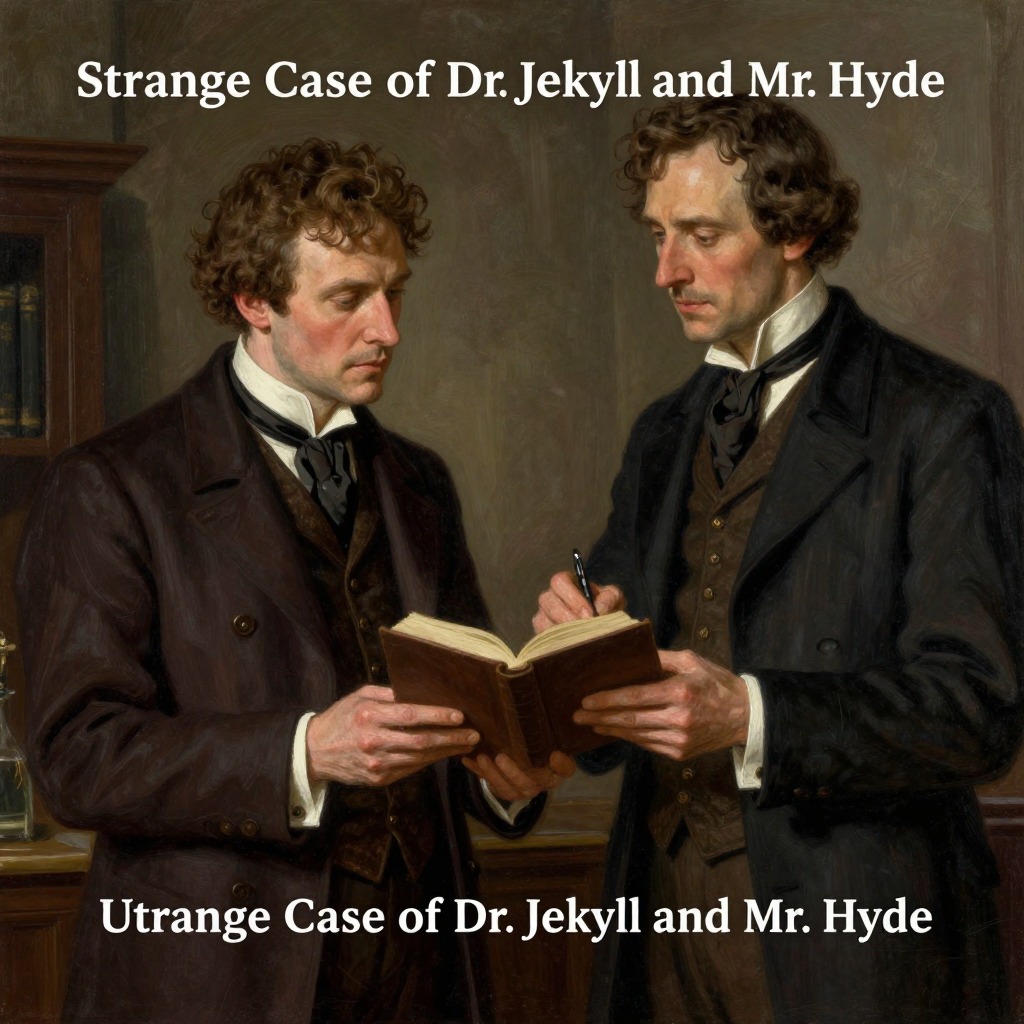
Utterson's Investigation
Mr. Utterson's methodical quest to uncover the truth behind his friend Dr. Jekyll's strange connection to the sinister Mr. Hyde.
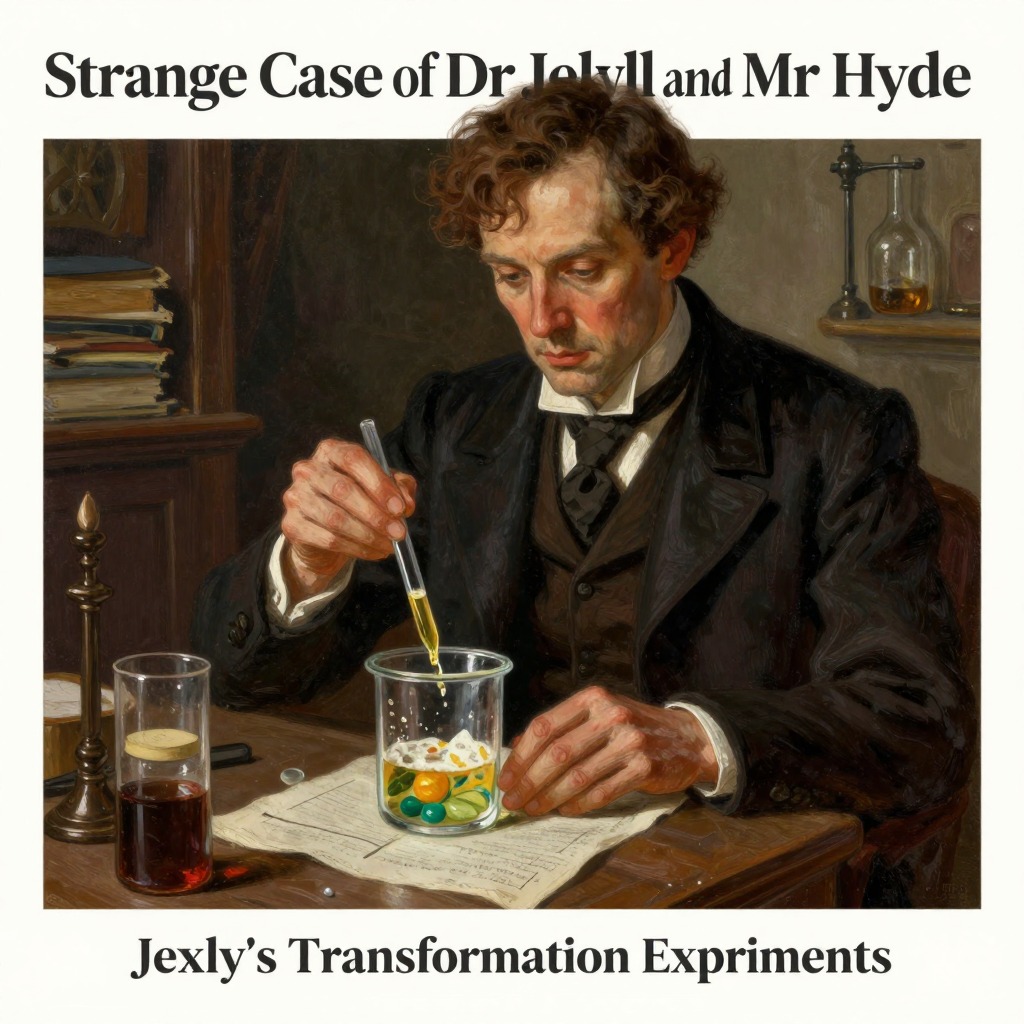
Jekyll's Transformation Experiments
The scientific journey of Henry Jekyll as he discovers and refines the drug that separates his dual nature, leading to catastrophic consequences.
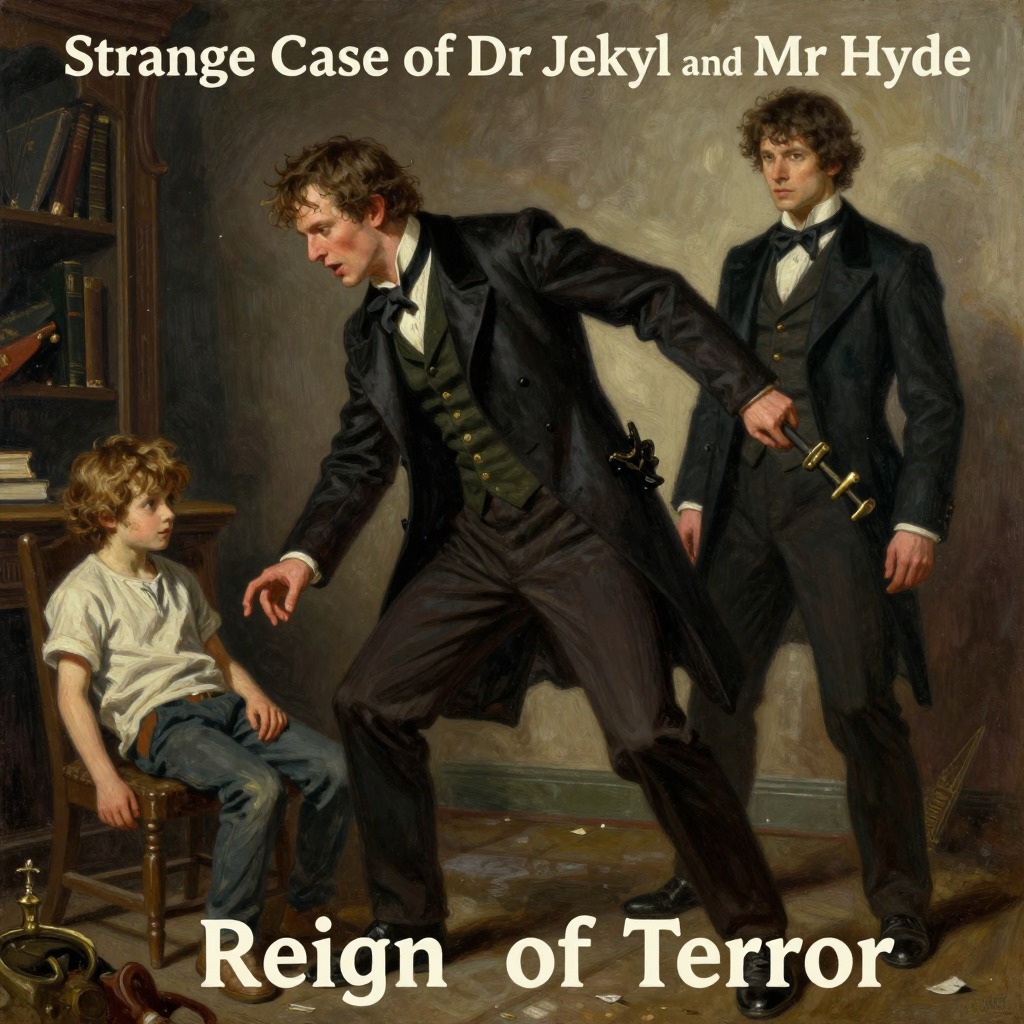
Hyde's Reign of Terror
The emergence and violent actions of Edward Hyde, from the trampling of a child to the murder of Sir Danvers Carew and his eventual suicide.
