
The Meaning of Discorporation
Stranger in a Strange LandThis thread traces the novel’s challenge to human fear of death through Martian practice, Smith’s beliefs, and the final community response.
increasing Bearing strength in each event
 decreasing
Bearing strength in each eventdecreasingA Different Death
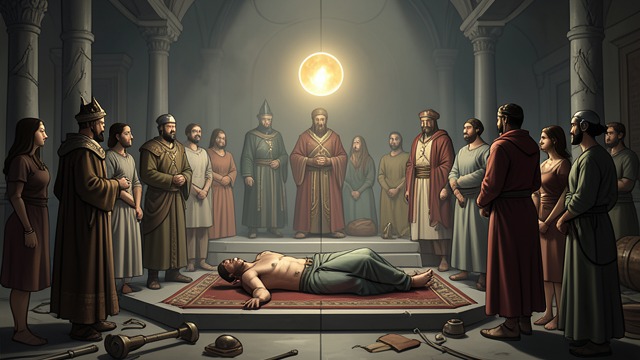
Death as Chosen Passage
Martian practice
Martians treat discorporation as a chosen transition rather than an enemy to be resisted at any cost. Friends and ancestors participate in a process humans would find unsettling.
A moral difference
Smith has learned to accept death without terror, but this does not mean he is indifferent to life. The distinction challenges human assumptions about what counts as courage or care.
Human Anxiety
Hope Against Extinction
Beliefs without agreement
Human religions offer divergent accounts of what follows death. Smith has trouble understanding why people rely on incompatible claims, but he sees that these beliefs answer deep emotional needs.
Harshaw’s uncertainty
Harshaw cannot prove or disprove an afterlife. His agnosticism is not indifference; it acknowledges the importance of questions for which evidence remains incomplete.
A Chosen End
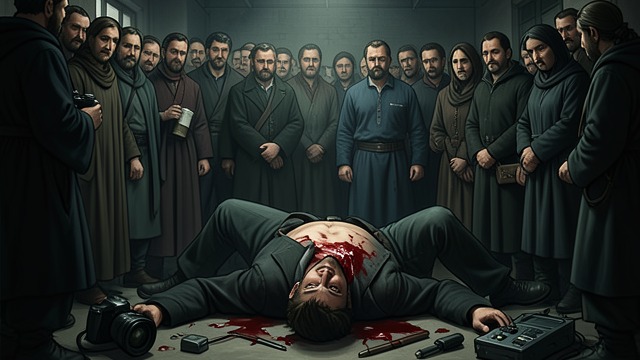
The Mob’s Violence
A public killing
Smith offers fellowship to the crowd and refuses to answer violence with violence. The mob wounds and kills him in front of cameras.
Death transformed by belief
His last words frame the act as a transition, but the scene remains physically brutal. The novel does not let spiritual language erase the historical fact of public murder.
Harshaw’s Despair
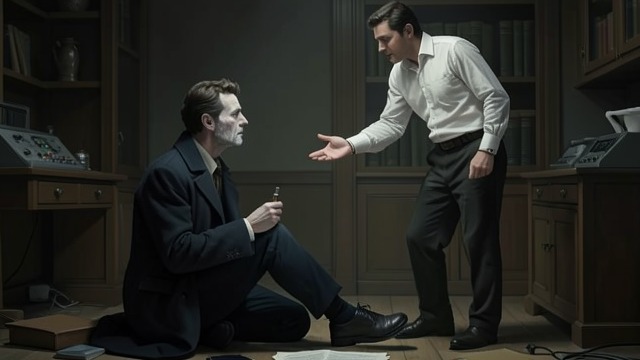
Grief Becomes Self-Destruction
A father’s collapse
Harshaw believes Smith has died needlessly and blames himself for urging him toward the confrontation. His grief temporarily overwhelms his skepticism and self-command.
The rescue
He takes poison, but Smith returns and saves him. The moment makes Harshaw confront the difference between believing a philosophy and being able to live through loss.
A Shared Passage
The Community Continues
Ritual without denial
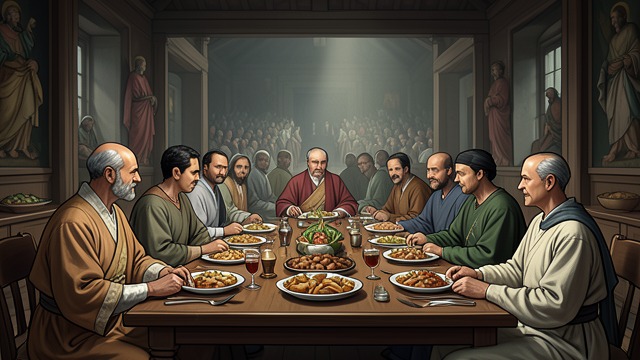
The group shares a meal and treats Smith’s death as a passage into a larger reality. Their ritual gives grief a communal form without requiring Harshaw to abandon his personality.
An open question
Smith’s final fate is not resolved in human terms. The novel leaves readers with the tension between material loss and the possibility that identity persists beyond the body.
During the account of Martian society
During Smith’s lessons about human religions
At the climax in St. Petersburg
Immediately after the broadcast of Smith’s death
After Harshaw recovers
