Envoy
Stranger in a Strange LandEnvoy is the first human expedition to Mars and the vessel whose disappearance leaves Valentine Michael Smith as the sole survivor of its crew. Its primitive technology makes the journey a test of endurance, but the disaster that ends it is not simply a failure of machinery or navigation: decades later, the ship’s fate and the recovered account of its crew reveal a human tragedy at the beginning of Earth’s encounter with Mars.
Mission and Design
Envoy was selected for an expedition conceived around a grim judgment: the greatest danger to humans in space was other humans. Only eight Terran years had passed since the founding of the first human colony on Luna, and a voyage to Mars required nearly three Earth years. The outbound passage took 258 days in free fall along doubly tangent semi-ellipses; the ship then had to wait 455 days at Mars for the planets to realign before beginning the equally long return journey.
The ship’s limits made that duration a practical hazard at every stage. Envoy could make the crossing only by refueling at a space station and then tacking almost back into Earth’s atmosphere. Once at Mars, a return depended on a safe landing, finding water to replenish reaction-mass tanks, and locating food, among a thousand other contingencies. The expedition’s planners considered these physical dangers less serious than the psychological strain of eight people living together in close quarters for almost three years. An all-male crew had been rejected as socially unstable; four married couples were judged the best arrangement, if the necessary specialties could be found among them.
The Voyage and Silence
Envoy departed on schedule and initially reported without incident. Private listeners received the early daily transmissions; as the ship receded and its signal weakened, Earth’s radio satellites picked them up and rebroadcast them. The crew appeared healthy and happy. Ringworm was the worst reported medical problem, the crew adapted quickly to free fall, and after the first week they needed no antinausea drugs. Captain Michael Brant reported no disciplinary problems.
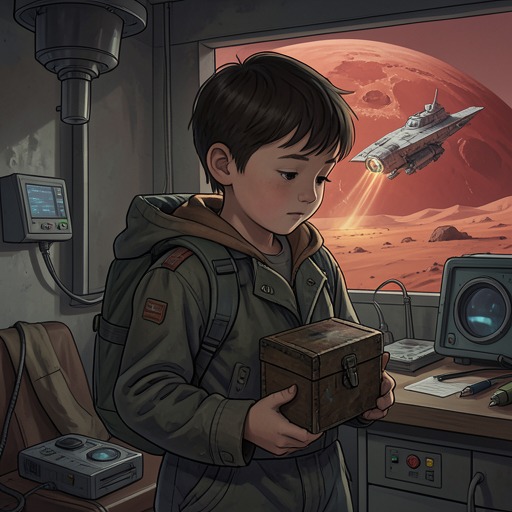
Envoy eventually reached a parking orbit just inside Phobos and spent two weeks conducting photographic surveys. Captain Brant then announced an intended landing just south of Lacus Soli. His transmission, stating that the landing would be attempted at noon GST the next day, was the last message ever received from the ship. The abrupt silence transforms the earlier record of routine health and apparent harmony into a narrative of suspense: the expedition had seemed to withstand the very isolation its designers feared, yet no further news came from its crew.
Recovery and the Survivor
Humans did not return to Mars for a quarter of an Earth century. Six years after Envoy fell silent, the uncrewed Zombie probe crossed the void, orbited through the waiting period, and returned photographs showing a harsh landscape and an atmosphere unsuitable for human life. Its images also revealed engineered canals and what appeared to be ruined cities. A major human expedition was delayed by World War III; when it eventually came, it was faster and better equipped than Envoy.
The Federation ship Champion reached Mars under Lyle Drive in nineteen days. It landed south of Lacus Soli, with Captain Willem van Tromp intending to search for the missing expedition. The returning reports first declared that Envoy had been located and that there were no survivors. A later correction announced that one survivor had in fact been found. That reversal gives Envoy’s disappearance its human consequence: the lost expedition was not only a wreck and an unanswered radio call, but also the origin of Smith’s isolated life among the Martians and his unexpected arrival in human society.
Crew, Records, and Aftermath
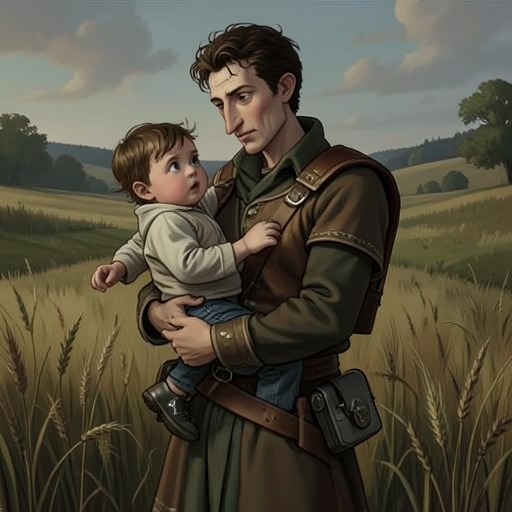
The eight people aboard Envoy were four married couples, among them Captain Brant and Mrs. Brant, and Dr. Ward Smith and Mary Jane Lyle Smith. Later genetic evidence identified Mary Jane as Smith’s mother and Brant as his father. Smith’s unusual parentage links the ship’s family arrangement to the identity of the only person recovered from its expedition, turning what had initially been a crew manifest into a clue to his beginnings.
The crew had also signed a carefully drafted Gentlemen Adventurers contract. It made them mutual heirs to one another and to one another’s issue, and their estates included substantial holdings, among them Lunar Enterprises stock. Smith’s status as a surviving issue could therefore carry financial and corporate consequences far beyond the question of his parentage. The contract extended Envoy’s presence into the later struggle over the ship’s legacy: its disappearance had not erased the legal and material claims created by those aboard.
The ship’s recovered log remained unavailable to the public, but Ben Caxton said he had heard enough from an informant to learn the final catastrophe’s outline. Dr. Ward Smith delivered his wife’s child by Caesarean section, and she died on the operating table. Ward then used the same scalpel to cut Captain Brant’s throat and kill himself. The account recasts the crew’s reported compatibility and the expedition’s apparent calm: the silence that followed the planned landing concealed an intimate disaster aboard the ship, not merely the hazards of an alien planet. Envoy thus stands at once as an early spacecraft, a vanished expedition, and the sealed record of the deaths from which Smith’s life began.