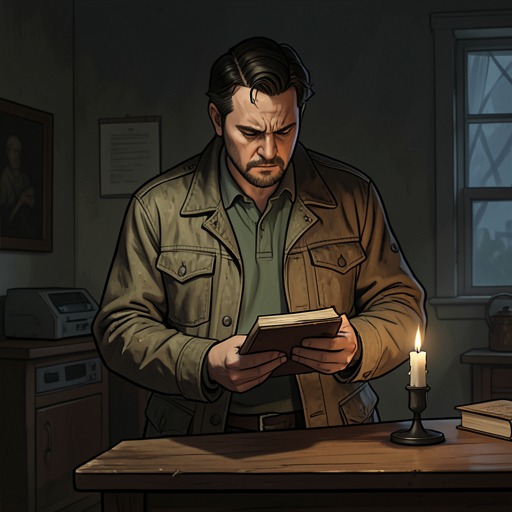
Jubal’s Suicide Attempt and Rescue
Stranger in a Strange LandJubal Harshaw’s suicide attempt and rescue turn the aftermath of Mike’s martyrdom into a second crisis of life and death. Believing his own words helped drive Mike toward an unnecessary sacrifice, Jubal tries to follow him; Mike instead intervenes, tending to him and insisting that his time has not come. The rescue does not undo the loss, but it interrupts Jubal’s despair and brings him back among the others.
Grief and self-reproach
Alone in his room, Jubal refuses the invitation to sit with Dawn and the others. He bolts the door and grips the foot of the bed, mourning Mike as his son and imagining that he should have died in his place. His grief quickly turns into accusation against himself: he calls himself an old fool who goaded Mike into a needless, useless martyrdom. The thought that Mike gave the world Truth rather than something entertaining such as stereo or bingo makes Jubal’s despair bitterly ironic. He laughs through his sobs, unable to separate grief from the painful conviction that people will not value what Mike gave them.
The attempt
Jubal eventually stops both the sobbing and the bitter laughter and searches his traveling bag for what he needs. He has kept a supply of tablets in his toilet kit since Joe Douglas’s stroke reminded him that human life is fragile. Now he treats his own condition as a stroke he cannot bear: he prescribes himself three tablets to make death fast and certain, washes them down with water, and lies on the bed. The preparations are deliberate and practical, a stark contrast to the emotional upheaval that precedes them. Soon the pain goes away, but the apparent quiet is not the end of the scene.
Mike intervenes
From far away, Jubal hears a voice calling his name. At first he tells it not to bother him; when it calls again and addresses him as Father, he recognizes Mike. Mike wakes him and says, “Fullness is not yet,” then offers to help. That declaration directly overturns Jubal’s assumption that death is the only escape from grief: the moment is not complete, and Jubal still has a place in what follows.
Mike’s rescue is immediate and physical. He leads Jubal into the bath, holds his head while he vomits, and gives him water to rinse his mouth. Jubal accepts the help rather than resisting it. When Mike asks whether he is all right, Jubal answers that he is and thanks his son. Their exchange marks a turn from isolation toward care: the person Jubal thought he had lost is present long enough to bring him through the crisis.
Return to the others
Before leaving, Mike tells Jubal that he has things to attend to, says he loves him, and affirms “Thou art God.” Jubal answers with love and the same affirmation. The exchange places tenderness and religious recognition beside the practical work of survival; neither cancels the grief, but Jubal is no longer alone with it. He makes himself presentable, changes his clothes, and takes a short brandy to remove the lingering bitter taste in his stomach before going back out to join the others.
The ending is deliberately modest after the attempted death and rescue. Patty is alone in the room with the babble tank switched off, and she asks Jubal whether he wants lunch. The ordinary invitation locates his return in everyday company rather than in a grand resolution. Mike’s intervention has not erased Jubal’s bereavement; it has prevented grief from becoming his ending and returned him to the unfinished life signaled by “Fullness is not yet.”