Mike's hotel hideout
Stranger in a Strange LandMike's hotel hideout is a beach hotel converted into a concealed refuge for Jubal Harshaw and members of the Nest after the community's sanctuary is raided. Mike's layered ownership, a private landing flat, and an entrance guarded by cobras make the hotel both a place of exceptional comfort and a practical defense against pursuit. Its security is real but provisional: when authorities begin to suspect Mike is there, a sky car lands on the pad and vanishes before it can report what it has found.
Setting and Access
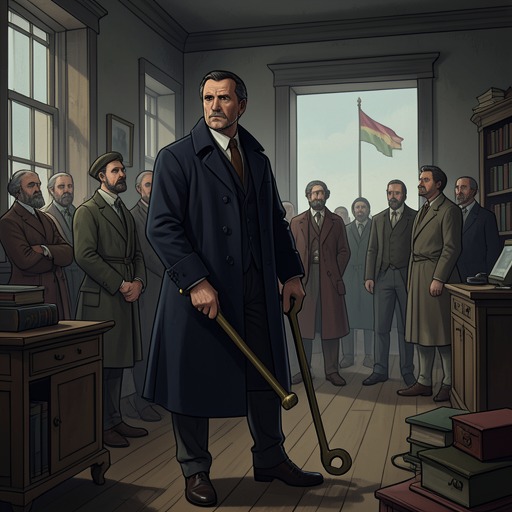
The refuge occupies a private landing flat on one wing of a large beach hotel, separate from the hotel's own landing flat on another wing. A pilot sets the cab to home in without further direction, takes Jubal's bag, and escorts him inside. The arrangement avoids the ordinary lobby, whose foyer on that floor is filled with dangerous cobras. The pilot warns Jubal that he should not try to go down to the street without asking someone first; the warning establishes that this is a protected but controlled space, not simply a hotel room available for independent comings and goings.
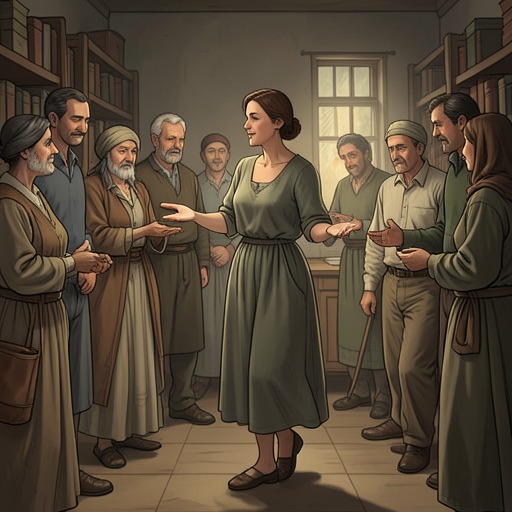
Inside, Jubal is led through an extremely luxurious suite into a bedroom with its own bath. The side table has water, glasses, ice, and an opened but untouched bottle of Jubal's preferred brand of brandy. The precise hospitality suggests that the refuge has been prepared for him personally, down to familiar comforts. A woman brings sandwiches, starts a bath, and checks the bedroom and bathroom before asking whether he needs anything. Her plain dress initially seems to Jubal like a hotel chambermaid's uniform, but the attentive service belongs to the community's own welcome rather than to an ordinary hotel encounter.
Ownership and Concealment
The hotel is not merely a convenient building borrowed for a night: Mike owns it. Ben explains that Mike acquired it through several layers of dummy ownership, while the owner of record is one of the Church's clandestine Ninth Circle. The concealed arrangement lets the nominal owner reserve an entire floor for the season without requiring the manager to investigate the guests or their movements. The manager is well paid, likes his position, and has no reason to ask questions; hotel staff do not come up to the occupied floor.
The arrangement also exploits the difference between what the hotel appears to be and who controls it. Mike's purchase is a sound investment that makes money, while the hidden ownership shields the refuge from routine scrutiny. Ben adds that Joseph E. Douglas does what Mike wants and does not inquire into the reasons, so Mike's financial reach supplies a form of protection that is neither a public confrontation nor a conventional escape. For Jubal, however, the ownership initially sounds like a liability: if the police discover that the hotel belongs to Mike, the building might point directly to the people hiding in it. Ben's account reverses that suspicion. The concealment lies precisely in the ordinary business structure and the lack of incentive for staff or management to investigate.
Refuge for the Dispersed Nest
The hotel houses the survivors after the Nest is cleared ahead of the threatened attack. Mike had moved parents and children to other cities, apparently places where he intended to open temples, nearly two weeks before Jubal's arrival. Maryam and her baby remain behind because she is needed for her assigned work. As a result, when the time comes to move the remaining group, only about a dozen people need to be relocated. The hideout therefore depends on advance dispersal as much as on the building's physical defenses.
The escape does not mean the community has saved every possession. Ben says that Mike took clothes and some available cash, while the group left behind items they did not consider essential, including Stinky's language tapes, Maryam's trick typer, and an unflattering Madame Tussaud picture of Jubal. The specific losses make the evacuation feel hurried but organized: people and necessities take priority, and the hotel provides a temporary base from which more people are already flocking in. Ben cautions that the four suites on the floor—the Secretarial, Presidential, Royal, and Owner's Cabin—may be needed as the group grows. Their scale is not simply extravagance; it gives a swelling refuge room to absorb arrivals.
Exposure and Limits
The hotel's hidden ownership gives the group a useful hideout only for the time being. Ben expects Mike to understand where they should go next, making the hotel a waypoint rather than a permanent sanctuary. That temporary quality becomes explicit when a sky car lands diagonally in front of Jubal. As its skids touch the private landing flat, the vehicle disappears. The episode turns the refuge's apparent security into a demonstration of Mike's immediate ability to prevent a report: he says the car had no chance to communicate, even by radio.
Mike explains that people are beginning to suspect that he is at the hotel, though they believe the rest of the Innermost Temple's members are dead. Other Church circles are not being targeted as intensely, and many have left the city until the danger passes. The city, meanwhile, is filling beyond capacity with Bishop Short's shock troops. The hotel remains attractive enough that its rooms could command a good price, but commercial value is beside the point as the pressure around it mounts. Mike says he is watching closely and that his ability to protect the group has changed: now that Jill understands his conditions for removing people who embody wrongness, he can act without the elaborate precautions he previously needed. The landing pad thus marks both the hideout's vulnerability and the extraordinary force that temporarily keeps it secure.
Narrative Significance
Mike's hotel hideout translates the Nest's communal refuge into an urban structure designed to resist discovery. The arrangement joins shared care—the prepared room, food, bath, and welcome—with secrecy built from private transport, restricted access, concealed ownership, and the threat at the foyer. Its luxury contrasts with the loss of the Nest and the danger of the city's encroaching forces, but it does not erase either. The survivors have escaped, not reached safety for good.
The building's double identity gives the refuge its central tension. To hotel management it is a profitable property with an unusually well-funded owner; to the people gathering there it is a protected extension of the endangered community. Yet the sky car's arrival shows that even an elaborate disguise cannot stop suspicion from reaching the door. Mike can make the vehicle disappear, but the group is already preparing to move again. The hotel is therefore a carefully engineered pause between expulsion and the next stage of flight, not a final home.